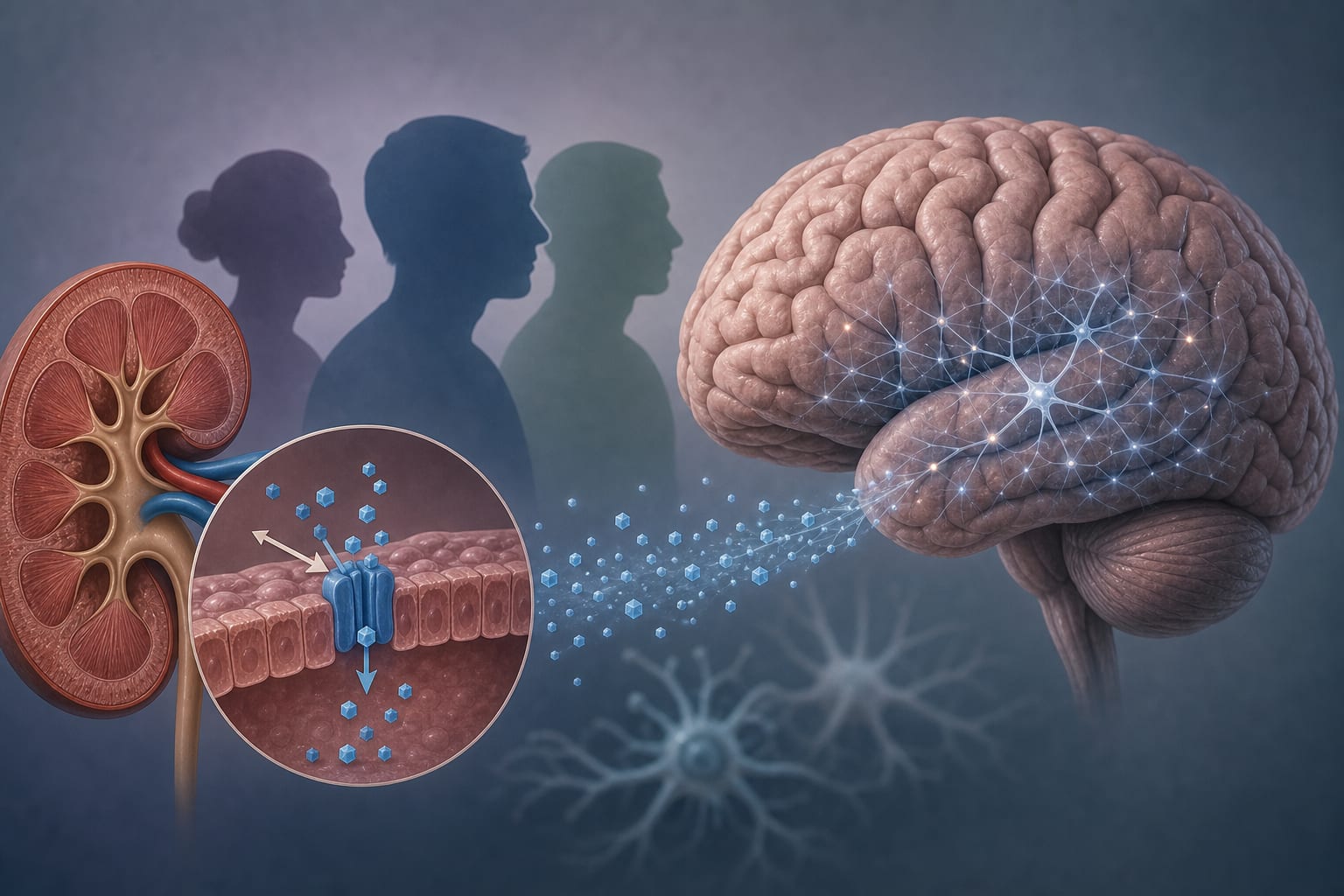
Impact of Sodium-Glucose Cotransporter 2 Inhibitors on Dementia Risk Among Individuals with Psychiatric Disorders
By
David T. Liebers
Tianshe He
Rebecca A. Betensky
Chunlei Zheng
Kaitlin N. Swinnerton
Sean Jacobson
Linden Huhmann
Mary T. Brophy
Nhan V. Do
Paola Gilsanz
Ricardo S. Osorio
Nunzio Pomara
Antonio Convit
Donald C. Goff
Dan V. Iosifescu
Nathanael R. Fillmore
Jaime Ramos-Cejudo
June 30, 2026
Clinical Scorecard: Impact of Sodium-Glucose Cotransporter 2 Inhibitors on Dementia Risk Among Individuals with Psychiatric Disorders
At a Glance
Category Detail
Condition Dementia risk in psychiatric disorders Key Mechanisms SGLT2 inhibitors improve neuronal energetics and reduce inflammatory cytokines. Target Population Individuals aged 65 and older with major depressive disorder, bipolar disorder, or schizophrenia spectrum disorder. Care Setting VA health care system
Key Highlights
SGLT2 inhibitors may reduce the risk of incident dementia in psychiatric populations. The study utilized a dynamic target trial emulation approach. Inclusion criteria focused on individuals aged 65 and older with specific psychiatric diagnoses. SGLT2 inhibitors are associated with improved brain energetics and reduced depressive symptoms. Retrospective studies indicate lower dementia risk compared to other antidiabetic medications. Guideline-Based Recommendations
Diagnosis
Use ICD codes to identify dementia and psychiatric disorders. Management
Consider SGLT2 inhibitors for patients with psychiatric disorders at risk of dementia. Monitoring & Follow-up
Monitor for incident dementia and psychiatric outcomes in patients on SGLT2 inhibitors. Risks
Exclude patients with prior dementia diagnoses or personality disorders. Patient & Prescribing Data
Patients aged 65 years or older with MDD, BD, or SSD.
SGLT2 inhibitors should be prescribed for at least 3 months to assess impact.
Clinical Best Practices
Utilize comprehensive covariate adjustment in studies of SGLT2 inhibitors. Implement dynamic trial emulation methods for better interpretability of outcomes. Consider metabolic dysfunction as a core feature in managing psychiatric and neurodegenerative diseases. Related Resources & Content