Nighttime intramedullary nailing of femoral fractures is not associated with worse outcomes: a 13-year Level I trauma center cohort - Scorecard - MDSpire
Clinical Scorecard: Nighttime Intramedullary Nailing for Femoral Fractures Shows Comparable Outcomes: Analysis from a 13-Year Level I Trauma Center Study
At a Glance
Category
Detail
Condition
Femoral fractures
Key Mechanisms
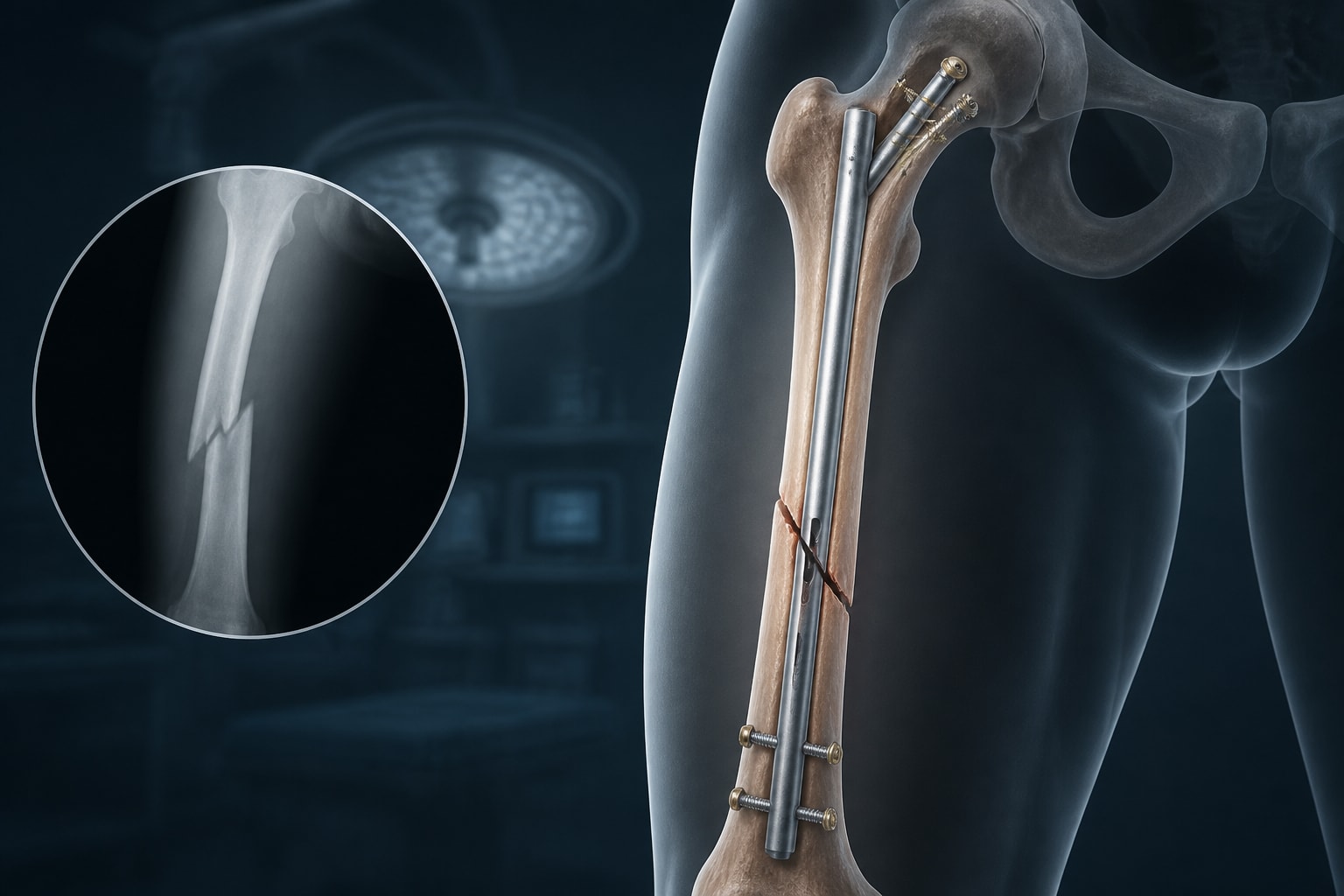
Intramedullary fixation for alignment and stability
Target Population
Adults with nonperiprosthetic femoral fractures
Care Setting
Level I trauma center
Key Highlights
Study included 288 adult procedures for nonperiprosthetic femoral fractures.
Nighttime procedures had a higher prevalence of high-energy trauma.
No significant difference in complication rates between daytime and nighttime surgeries.
Nighttime surgeries were performed sooner after injury compared to daytime surgeries.
Demographic differences noted, with nighttime patients being younger and more often male.
Guideline-Based Recommendations
Diagnosis
Assess fracture type and mechanism of injury.
Management
Utilize intramedullary fixation for femoral fractures.
Monitoring & Follow-up
Monitor for postoperative complications including infection and nonunion.
Risks
Consider potential risks associated with nighttime surgical procedures.
Patient & Prescribing Data
Adults with femoral fractures treated at a Level I trauma center.
Nighttime surgeries may be necessary due to clinical urgency.
Clinical Best Practices
Ensure adequate staffing and access to senior personnel during nighttime procedures.
Evaluate the timing of surgery in relation to injury for optimal outcomes.