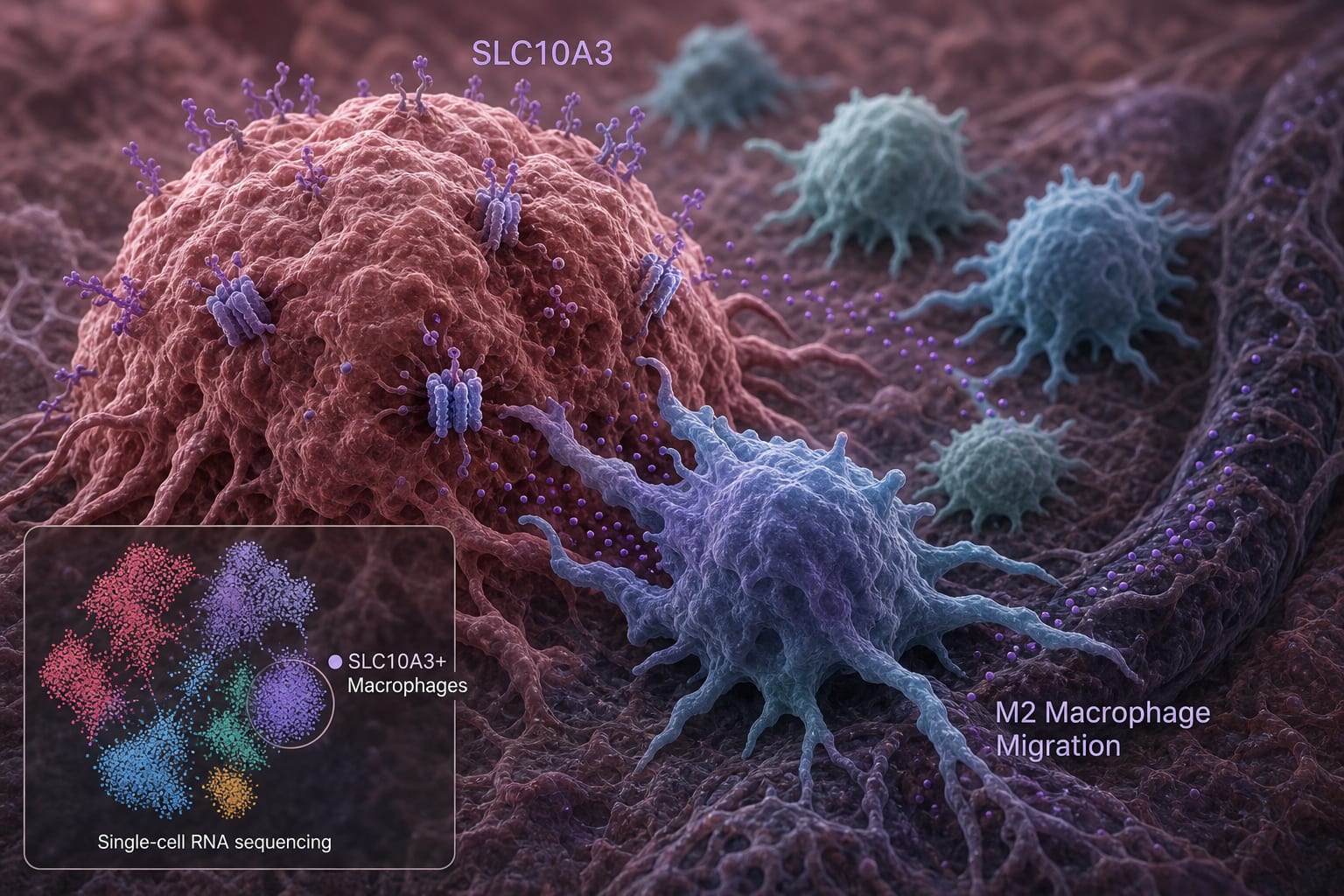
SLC10A3 drives glioblastoma progression by remodeling the immunosuppressive microenvironment and promoting M2 macrophage migration
-
By
-
Shuhui Chen
-
Daogang Qin
-
Hanyang Lin
-
Taohui Ding
-
Wei Liu
-
Ziqi Yan
-
Lingting Wang
-
Bo Kou
-
May 13, 2026
-
Clinical Scorecard: SLC10A3 Facilitates Glioblastoma Advancement by Altering the Immunosuppressive Microenvironment and Enhancing M2 Macrophage Migration
At a Glance
| Category | Detail |
|---|
| Condition | Glioblastoma (GBM) |
| Key Mechanisms | SLC10A3 overexpression linked to PI3K-Akt, NF-κB, HIF-1 signaling, macrophage infiltration, and T-cell suppression. |
| Target Population | Patients with glioblastoma |
| Care Setting | Oncology and neurology clinics |
Key Highlights
- SLC10A3 is significantly overexpressed in GBM and associated with poor prognosis.
- Knockdown of SLC10A3 inhibits GBM cell proliferation, migration, and invasion.
- SLC10A3 enhances M2 macrophage migration and promotes an immunosuppressive microenvironment.
- Single-cell analysis shows SLC10A3 enrichment in tumor-associated astrocytes and macrophages.
- Potential therapeutic target for GBM treatment.
Guideline-Based Recommendations
Diagnosis
- Assess SLC10A3 expression levels in GBM patients for prognostic evaluation.
Management
- Consider targeting SLC10A3 in therapeutic strategies for GBM.
Monitoring & Follow-up
- Monitor changes in SLC10A3 expression in response to treatment.
Risks
- High SLC10A3 expression may correlate with increased tumor aggressiveness and poor patient outcomes.
Patient & Prescribing Data
Patients diagnosed with glioblastoma
Combination therapies targeting SLC10A3 and immune cell interactions may improve treatment outcomes.
Clinical Best Practices
- Integrate SLC10A3 expression analysis in routine GBM assessments.
- Explore immunotherapeutic options that address the immunosuppressive microenvironment in GBM.
Related Resources & Content