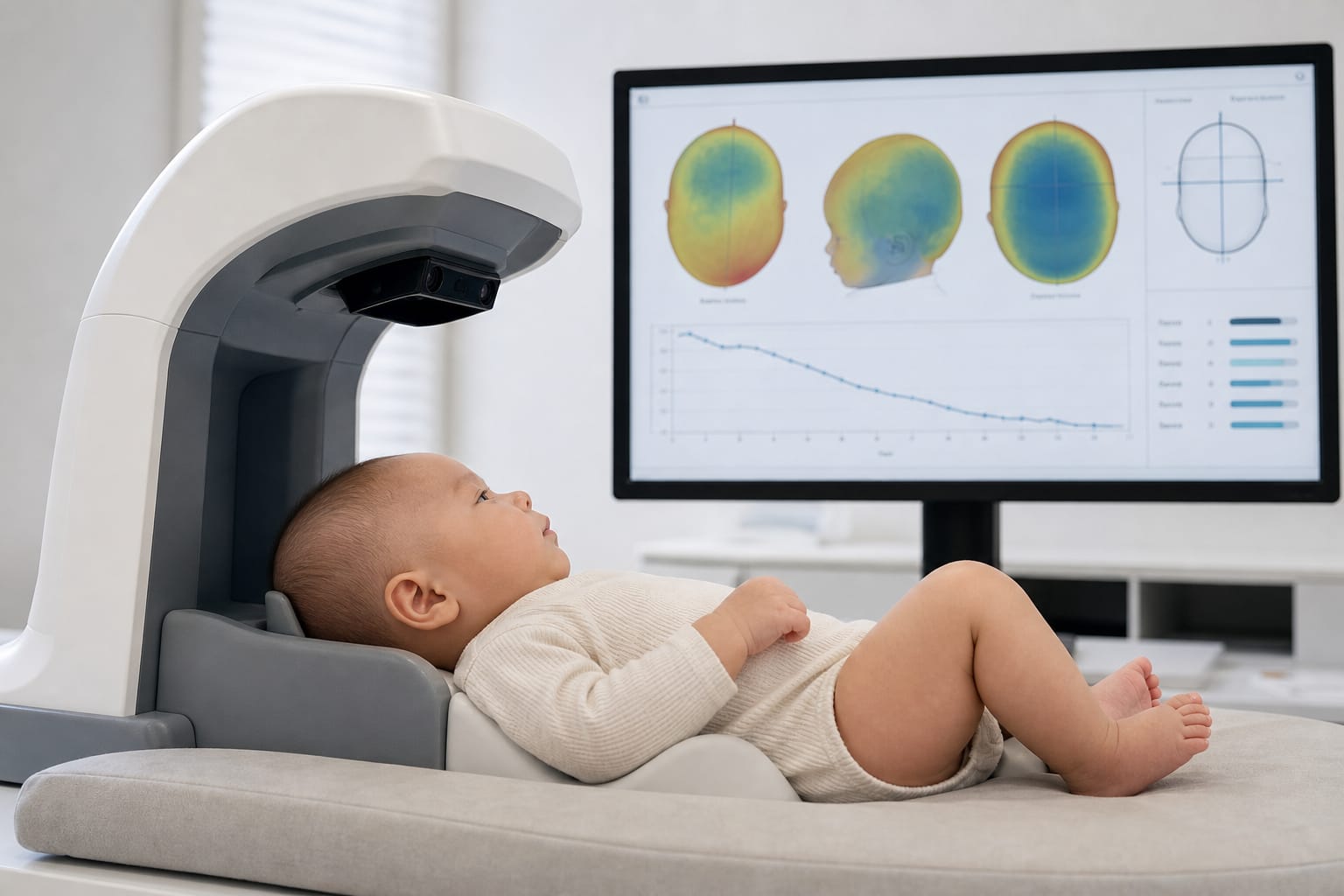
Prognostic factors for cranial deformities in infancy: a retrospective cohort study
-
By
-
Rui Li
-
Qiong Jia
-
Jing Wang
-
Xinyu Huang
-
Jing Yu
-
Jinyang Bai
-
Hua Zhang
-
June 25, 2026
-
Clinical Scorecard: Identifying Prognostic Indicators for Infant Cranial Deformities: A Retrospective Cohort Analysis
At a Glance
| Category | Detail |
|---|
| Condition | Positional cranial deformities in infants |
| Key Mechanisms | Mechanisms or clinical associations described in the source article. |
| Target Population | Infants aged 0-6 months with positional cranial deformities |
| Care Setting | Children's Health Development Center |
Key Highlights
- Younger age at diagnosis is associated with faster recovery from cranial deformities.
- Milder deformity severity leads to quicker natural recovery.
- Sex and cranial shape do not significantly affect recovery time.
Guideline-Based Recommendations
Diagnosis
- Use cranial parameters such as CVA, CVAI, and CR for assessment.
Management
- Targeted management for infants diagnosed at older ages and with severe deformities.
Monitoring & Follow-up
- Regular follow-up for infants with positional cranial deformities.
Risks
Patient & Prescribing Data
Infants diagnosed with positional cranial deformities
Natural recovery is possible, especially in younger infants with mild deformities.
Clinical Best Practices
- Implement individualized clinical guidance for high-risk infants.
- Conduct survival analysis to estimate recovery times.
Related Resources & Content