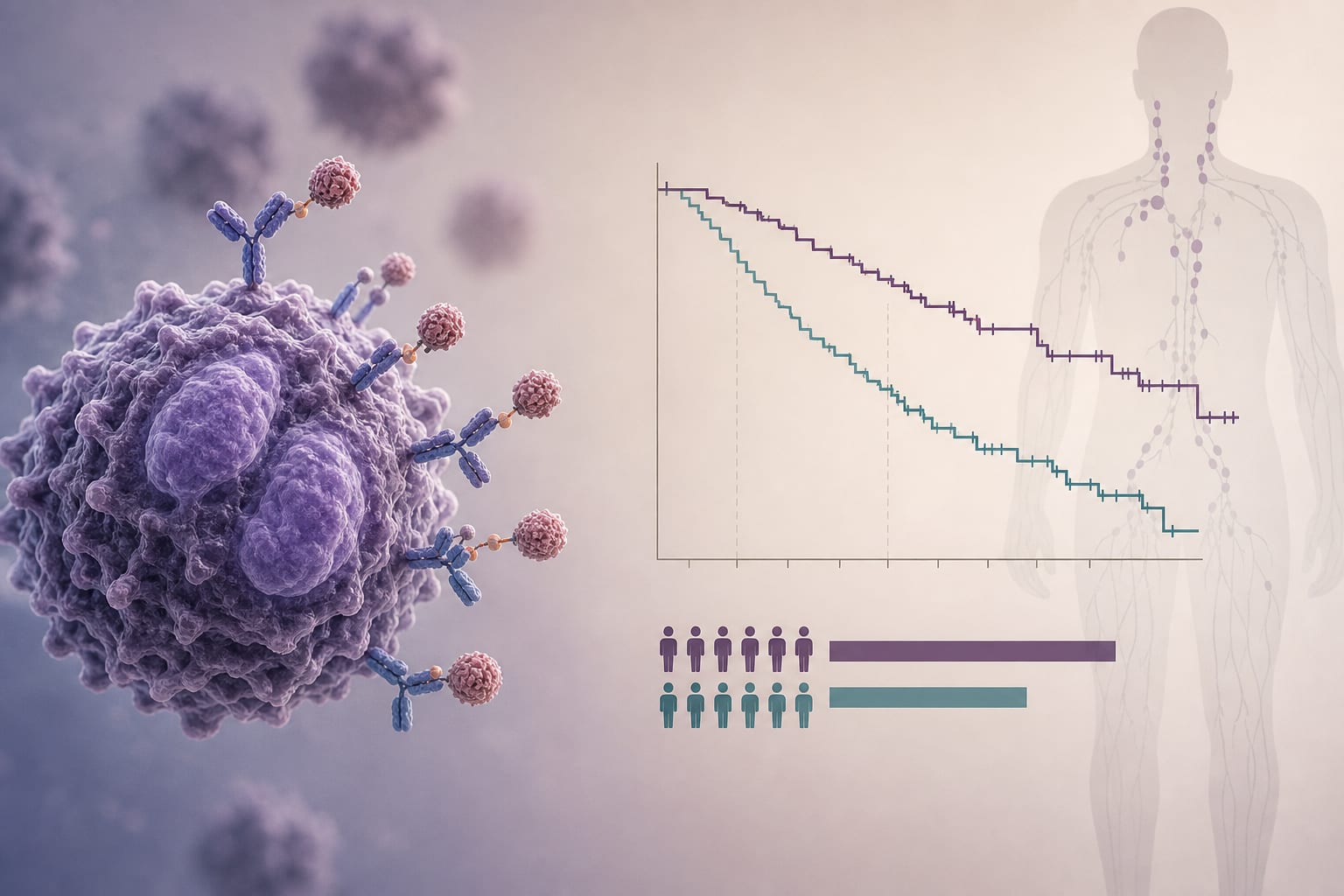
Sufficient-dose Brentuximab vedotin improves prognosis in patients with classic Hodgkin lymphoma: a single-center real-world study in China
By
Zhangyuting He
Huiying Zhu
Chong Wei
Danqing Zhao
Jing Ruan
Wei Zhang
Daobin Zhou
Yan Zhang
July 6, 2026
Clinical Scorecard: Optimized Dosing of Brentuximab Vedotin Enhances Outcomes for Patients with Classic Hodgkin Lymphoma: Insights from a Single-Center Study in China
At a Glance
Category Detail
Condition Classic Hodgkin Lymphoma Key Mechanisms Brentuximab vedotin targets CD30-positive cells, inducing apoptosis and disrupting microtubule formation. Target Population Chinese patients with untreated Classic Hodgkin Lymphoma Care Setting Single-center retrospective study
Key Highlights
A-AVD regimen showed a 2-year PFS rate of 76.7% compared to 71.1% for ABVD. Higher doses of BV (≥1.15 mg/kg) significantly improved PFS in advanced-stage patients. A-AVD was associated with a higher rate of peripheral neuropathy (47.1% vs. 5.2% in ABVD). Overall survival rates were comparable between A-AVD and ABVD regimens. The study emphasizes the importance of maintaining sufficient BV dose intensity. Guideline-Based Recommendations
Diagnosis
Pathologically confirmed Classic Hodgkin Lymphoma by hematopathology review. Management
Incorporate brentuximab vedotin into chemotherapy regimens for improved disease control. Monitoring & Follow-up
Monitor for peripheral neuropathy and pulmonary toxicity during treatment. Risks
Consider the risk of dose-dependent pulmonary toxicity associated with bleomycin. Patient & Prescribing Data
Adult patients (≥18 years) with untreated Classic Hodgkin Lymphoma.
Brentuximab vedotin has been incorporated into clinical guidelines and is associated with improved outcomes when administered at sufficient doses.
Clinical Best Practices
Maintain sufficient dose intensity of brentuximab vedotin when clinically feasible. Proactively manage toxicity, particularly peripheral neuropathy. Related Resources & Content