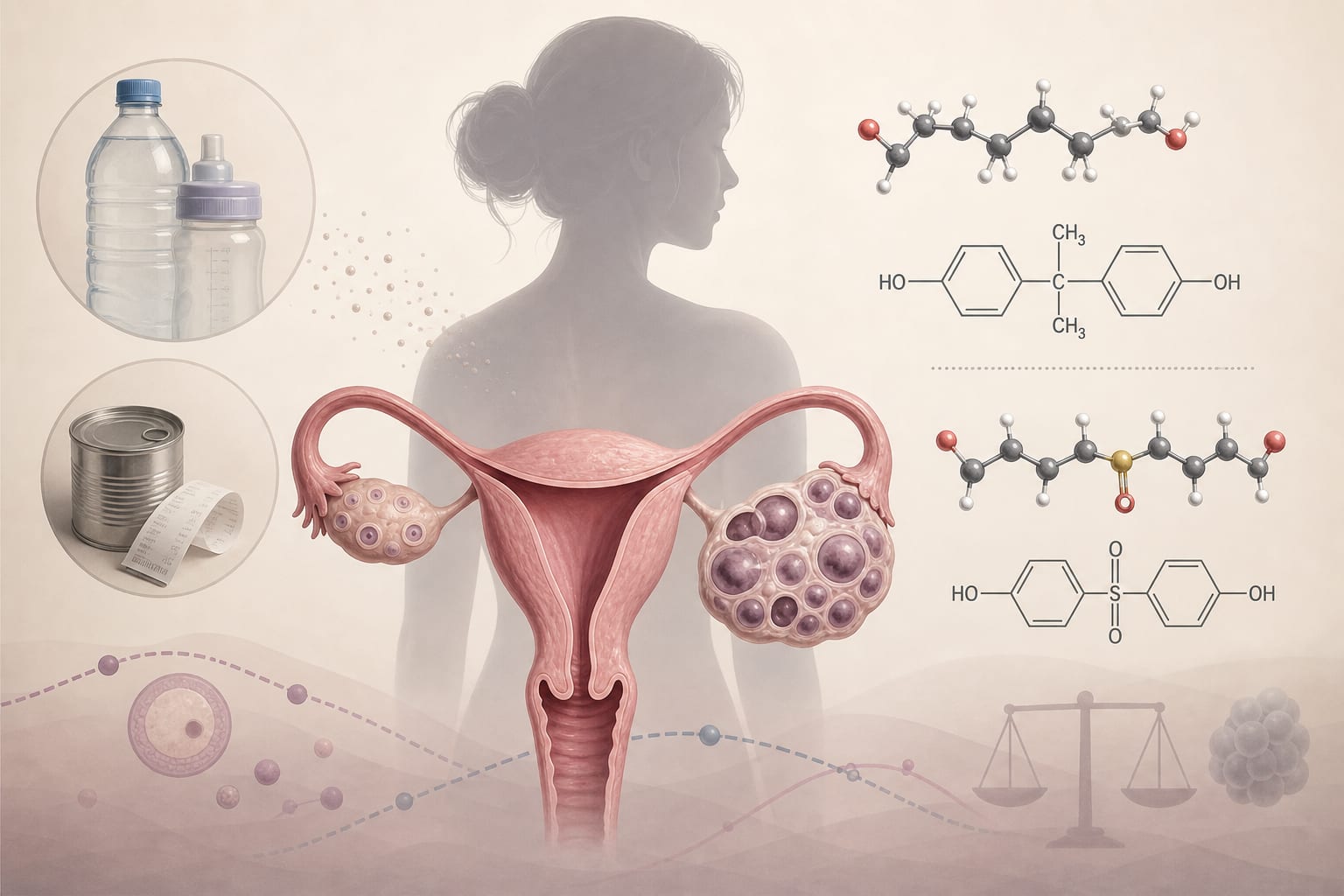
Link Between Bisphenol Exposure and Risk of Polycystic Ovary Syndrome: A Comprehensive Systematic Review and Meta-Analysis
-
By
-
Zongying Gui
-
Huizhen Lin
-
Chuhan Wang
-
Yingsha Yao
-
June 11, 2026
Clinical Scorecard: Link Between Bisphenol Exposure and Risk of Polycystic Ovary Syndrome: A Comprehensive Systematic Review and Meta-Analysis
At a Glance
| Category | Detail |
|---|
| Condition | Polycystic Ovary Syndrome (PCOS) |
| Key Mechanisms | Endocrine disruption, metabolic dysregulation, epigenetic mechanisms |
| Target Population | Women of reproductive age |
| Care Setting | Clinical and research settings |
Key Highlights
- Significant positive associations between PCOS risk and serum BPA, urinary BPA, and serum BPS.
- High heterogeneity observed for BPA but not for BPS.
- Sensitivity analyses confirmed the robustness of findings.
- Subgroup analyses slightly attenuated associations for BPA.
- No significant publication bias detected.
Guideline-Based Recommendations
Diagnosis
- Utilize Rotterdam criteria for PCOS diagnosis.
Management
- Integrate biomonitoring of BPs in PCOS management.
Monitoring & Follow-up
- Regular monitoring of BP levels in women diagnosed with PCOS.
Risks
- Increased risk of PCOS associated with exposure to bisphenols.
Patient & Prescribing Data
Women diagnosed with PCOS
Addressing exposure to bisphenols may offer preventive and therapeutic strategies.
Clinical Best Practices
- Implement regulatory policies to reduce population-level exposure to bisphenols.
- Encourage further research on gene-environment interactions related to PCOS.
Related Resources & Content