Case Report: Intranasal esketamine and accelerated intermittent theta-burst stimulation for severe treatment-resistant depression with suicidal ideation - Scorecard - MDSpire
Advertisement
Case Report: Intranasal esketamine and accelerated intermittent theta-burst stimulation for severe treatment-resistant depression with suicidal ideation
Clinical Scorecard: Combined Use of Intranasal Esketamine and Accelerated Intermittent Theta-Burst Stimulation for Severe Treatment-Resistant Depression with Suicidal Thoughts: A Case Study
At a Glance
Category
Detail
Condition
Severe Treatment-Resistant Depression with Suicidal Ideation
Key Mechanisms
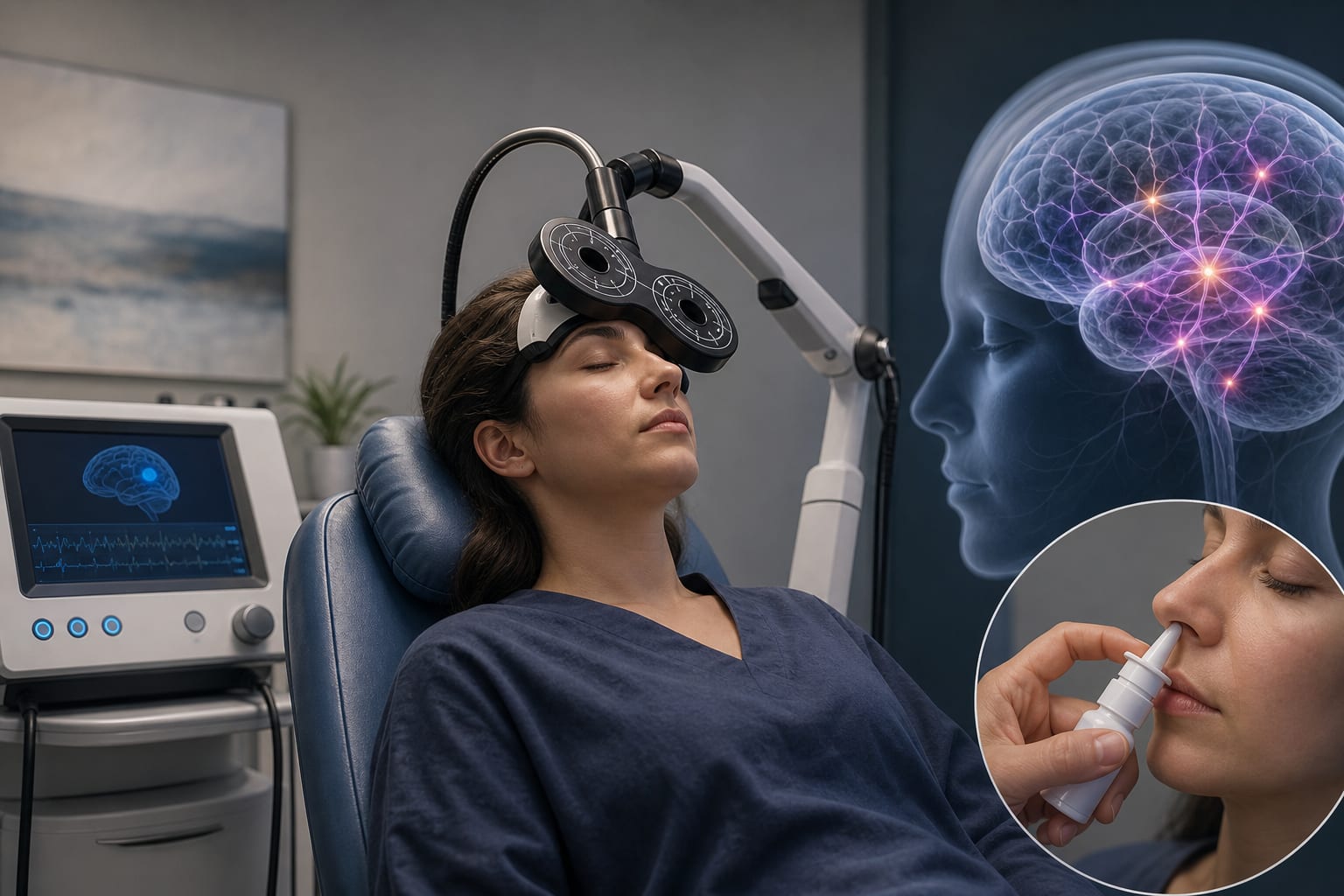
Intranasal esketamine and intermittent theta-burst stimulation (iTBS) targeting the left dorsolateral prefrontal cortex.
Target Population
Patients with treatment-resistant major depressive disorder and high-risk suicidal ideation.
Care Setting
Inpatient psychiatric care.
Key Highlights
Patient showed improvement in depressive symptoms and suicidal ideation after treatment.
Combined treatment involved 84 mg of intranasal esketamine and 10 iTBS sessions over 4 days.
Clinical status remained stable at 2-week follow-up with significant score reductions.
Guideline-Based Recommendations
Diagnosis
Assessment of treatment-resistant major depressive disorder based on inadequate response to at least two antidepressant trials.
Management
Consider combined use of intranasal esketamine and accelerated iTBS for severe cases.
Monitoring & Follow-up
Monitor for clinical improvement and side effects during treatment.
Risks
Potential for inadequate response to treatment and need for rapid intervention in high-risk patients.
Patient & Prescribing Data
A 29-year-old woman with recurrent major depressive disorder and high-risk suicidal ideation.
Intranasal esketamine and iTBS may provide rapid symptom relief in inpatient settings.
Clinical Best Practices
Utilize a combination of pharmacotherapy and neuromodulation techniques for treatment-resistant depression.
Implement safety management protocols during combined treatment approaches.