RFX5 in cancer: context-dependent molecular functions and emerging translational relevance
-
By
-
Li Zhang
-
Shanmei Du
-
Kui Liu
-
July 1, 2026
-
Clinical Scorecard: The Role of RFX5 in Cancer: Contextual Molecular Functions and Potential Clinical Implications
At a Glance
| Category | Detail |
|---|
| Condition | Cancer |
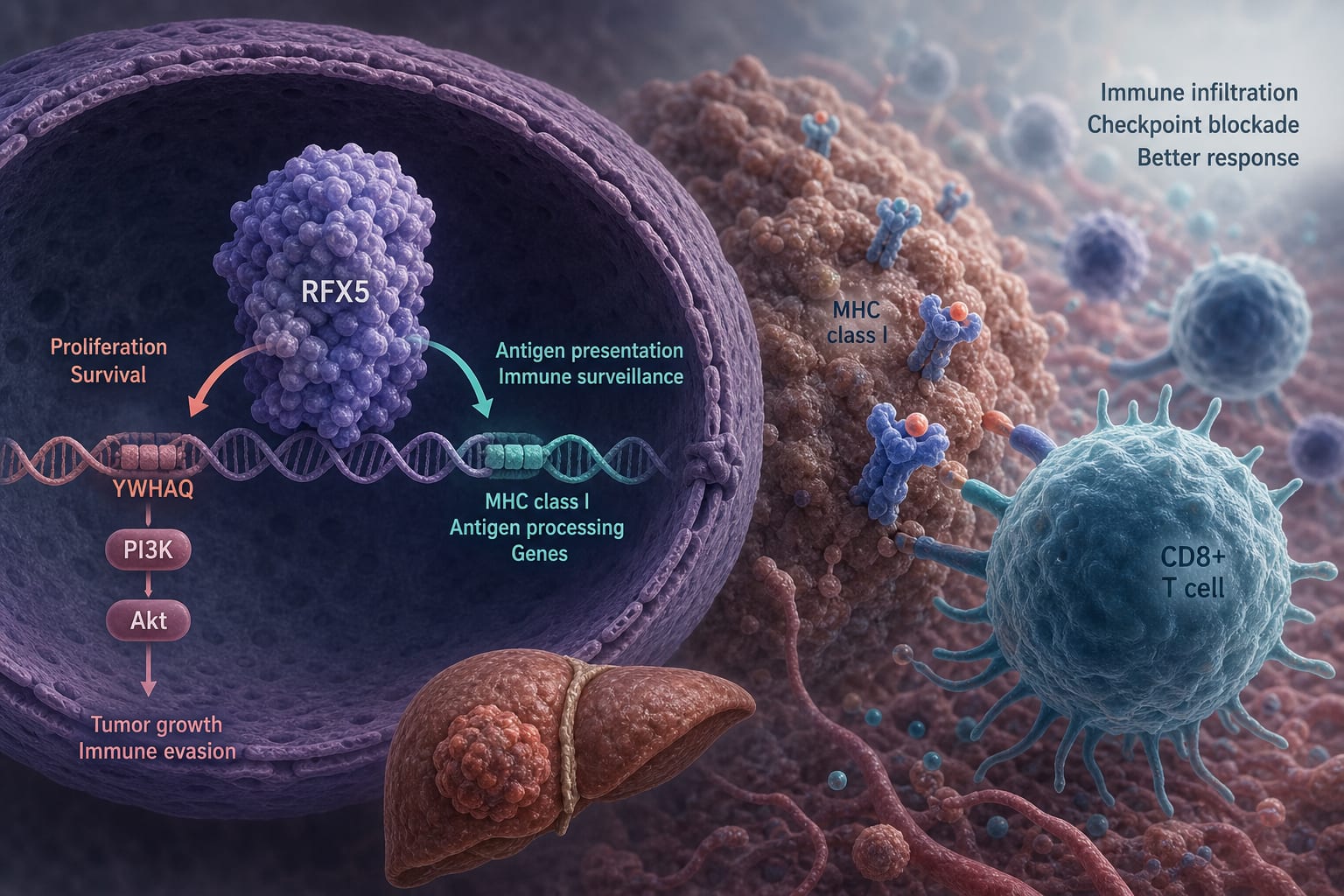
| Key Mechanisms | RFX5 acts as a transcriptional integrator influencing tumor growth and immune response via the YWHAQ–PI3K/Akt axis and MHC class I expression. |
| Target Population | Patients with various solid malignancies, particularly hepatocellular carcinoma (HCC) and immune-inflamed tumors. |
| Care Setting | Clinical oncology and cancer immunotherapy. |
Key Highlights
- RFX5 drives tumor growth in HCC through the YWHAQ–PI3K/Akt axis.
- In immune-inflamed tumors, RFX5 enhances antigen presentation and CD8+ T-cell infiltration.
- RFX5 may contribute to prognostic and immunotherapy-response signatures in selected tumors.
Guideline-Based Recommendations
Diagnosis
- Altered RFX5 expression correlates with clinical prognosis in specific tumor types.
Management
- RFX5 may have reference value when integrated into composite antigen-presentation or MHC signatures.
Monitoring & Follow-up
- No incremental predictive value of RFX5 beyond established immune biomarkers has been verified.
Risks
- Current evidence does not support RFX5 as an independent predictive biomarker.
Patient & Prescribing Data
Patients with hepatocellular carcinoma and other solid tumors.
RFX5's role in immune response may inform therapeutic strategies in immunotherapy.
Clinical Best Practices
- Consider the context-dependent role of RFX5 in tumor lineage and microenvironment when interpreting its expression.
Related Resources & Content