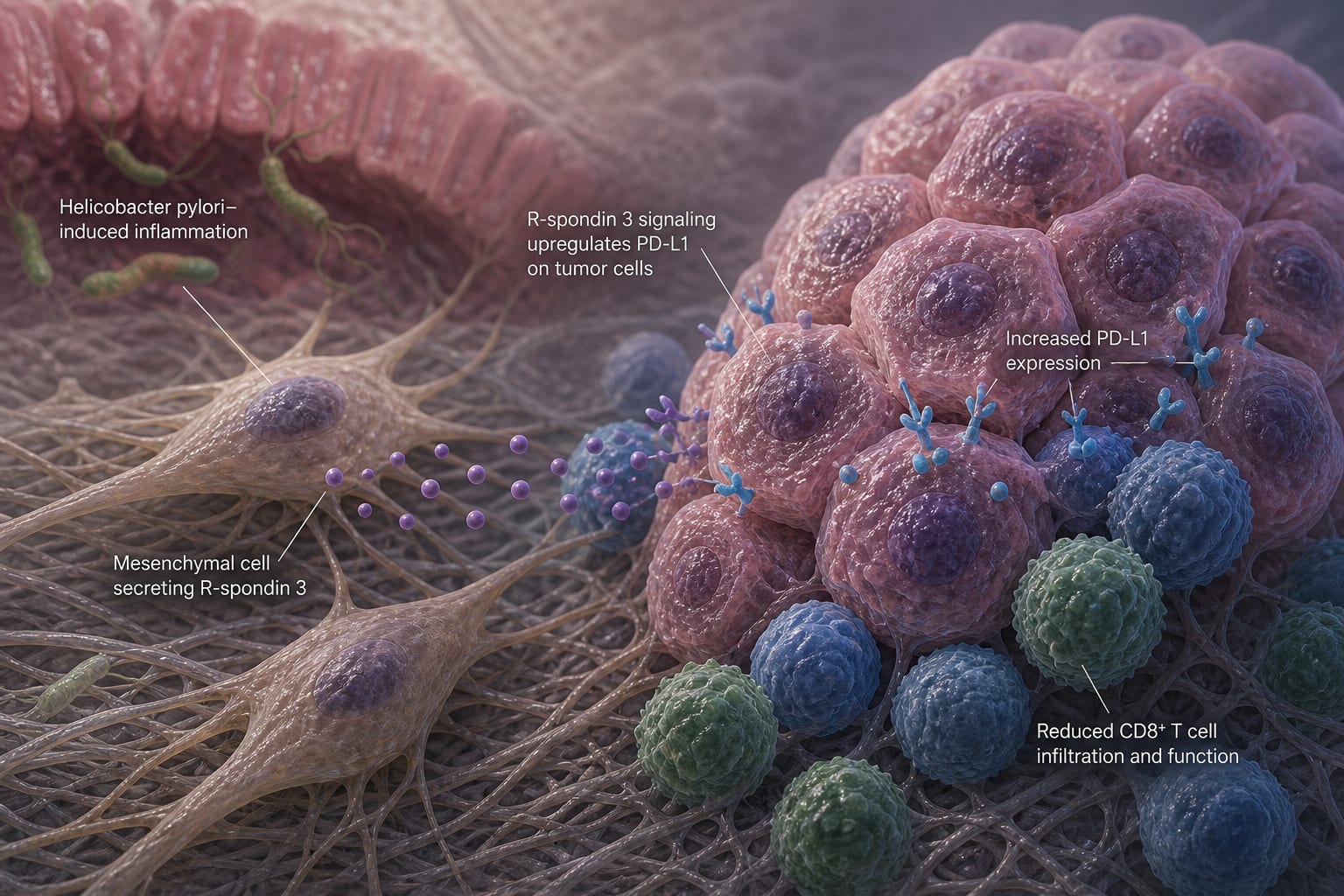
R-spondin 3 from Mesenchymal Cells Enhances Immunogenicity and Adaptive Immune Resistance in Human Gastric Adenocarcinoma
By
Anne-Sophie Fischer
Alexander Arnold
Hilmar Berger
Stefanie Müllerke
Jonas Wizenty
Hans-Joachim Mollenkopf
David Horst
Frank Tacke
Christoph Treese
Michael Sigal
August 24, 2026
Clinical Scorecard: R-spondin 3 from Mesenchymal Cells Enhances Immunogenicity and Adaptive Immune Resistance in Human Gastric Adenocarcinoma
At a Glance
Category Detail
Condition Gastric Cancer Key Mechanisms R-spondin 3 enhances Wnt signaling and is involved in immune checkpoint pathways. Target Population Patients with gastric adenocarcinoma and adenocarcinoma of the esophagogastric junction. Care Setting Oncology and surgical treatment settings.
Key Highlights
Gastric cancer is a leading cause of cancer mortality globally. H. pylori infection is a principal risk factor for gastric cancer. R-spondin 3 (RSPO3) plays a role in gastric carcinogenesis and immune response. Current biomarkers for immunotherapy response in gastric cancer are insufficient. The study utilized a cohort of 277 patients with detailed tumor staging. Guideline-Based Recommendations
Diagnosis
Assess combined positive score (CPS) for immunotherapy eligibility. Management
Consider immunotherapy for patients with CPS ≥5. Monitoring & Follow-up
Monitor RSPO3 levels and leukocyte infiltration in gastric tumors. Risks
Advanced gastric cancer often diagnosed at late stages, complicating treatment. Patient & Prescribing Data
Chemotherapy-naïve patients with gastric tumors.
Immunotherapy response rates vary based on CPS and tumor-infiltrating lymphocytes.
Clinical Best Practices
Utilize tissue microarrays for comprehensive tumor analysis. Incorporate immune checkpoint pathway assessments in treatment planning. Evaluate RSPO3 signaling as a potential biomarker for gastric cancer. Related Resources & Content