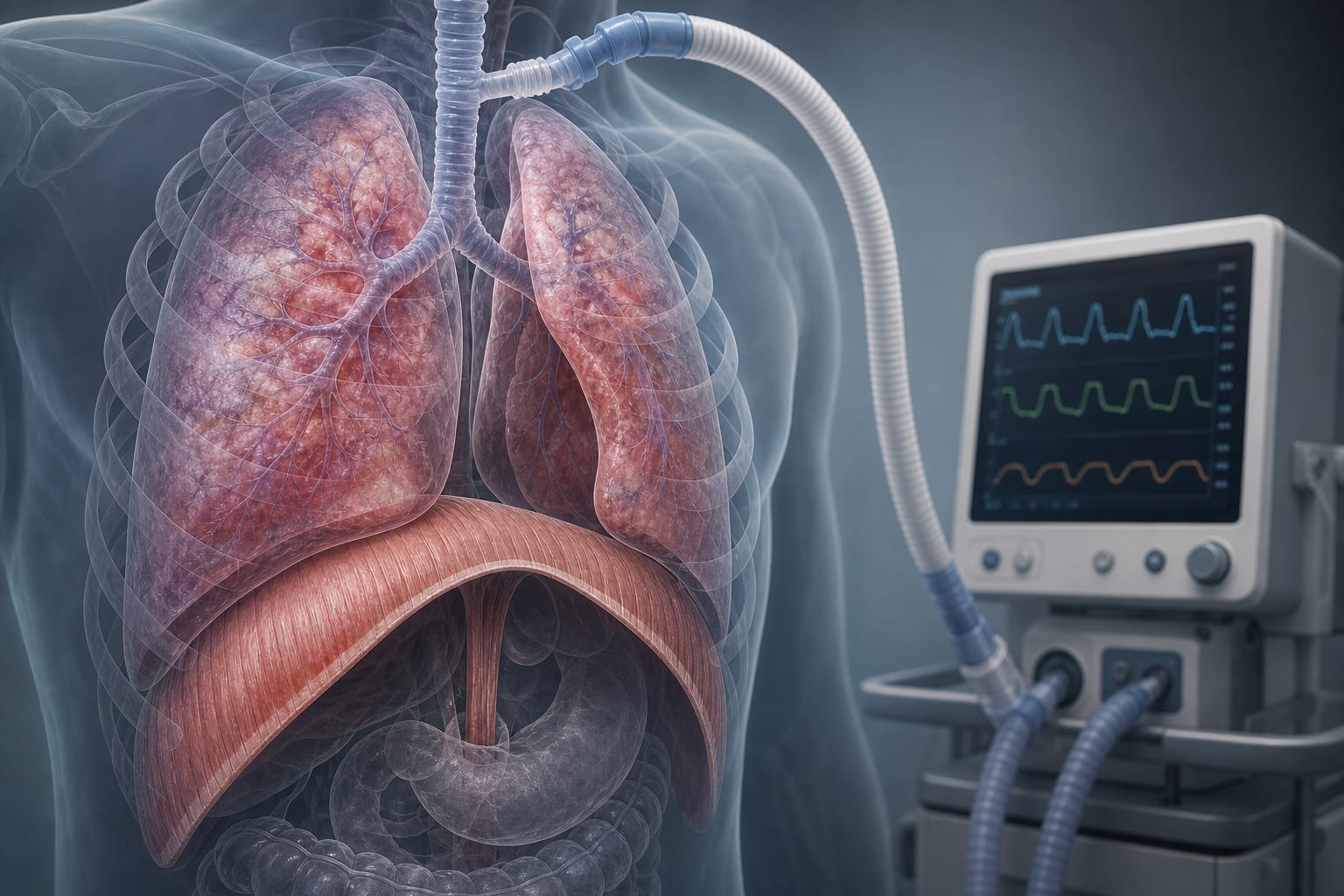
Lung- and diaphragm-protective mechanical ventilation in acute respiratory distress syndrome
Clinical Scorecard: Protective Mechanical Ventilation Strategies for the Lungs and Diaphragm in Acute Respiratory Distress Syndrome
At a Glance
Category Detail
Condition Acute Respiratory Distress Syndrome (ARDS) Key Mechanisms Ventilator-induced lung injury (VILI) and diaphragm injury due to mechanical ventilation. Target Population Mechanically ventilated patients with ARDS. Care Setting Critical care and intensive care units.
Key Highlights
Lung-protective ventilation strategies can reduce mortality in ARDS patients. Diaphragm function preservation is crucial in mechanical ventilation. Excessive inspiratory effort can exacerbate lung injury. Patient-ventilator dyssynchrony contributes to diaphragm dysfunction. Myotrauma can occur due to both overassistance and underassistance during ventilation. Guideline-Based Recommendations
Diagnosis
Identify ARDS based on clinical criteria and imaging findings. Management
Implement lung-protective ventilation strategies to minimize VILI. Consider sedation and neuromuscular blockade to optimize diaphragm function. Monitoring & Follow-up
Monitor respiratory mechanics and patient effort to prevent injury. Risks
Be aware of risks associated with permissive hypercapnia and sedation. Patient & Prescribing Data
Patients with moderate-to-severe ARDS requiring mechanical ventilation.
Balance between adequate ventilation and minimizing diaphragm and lung injury.
Clinical Best Practices
Integrate knowledge of injury mechanisms with individual patient characteristics. Promote timely and safe spontaneous breathing when possible. Adjust ventilator settings to minimize excessive tidal volumes and pressures. Related Resources & Content