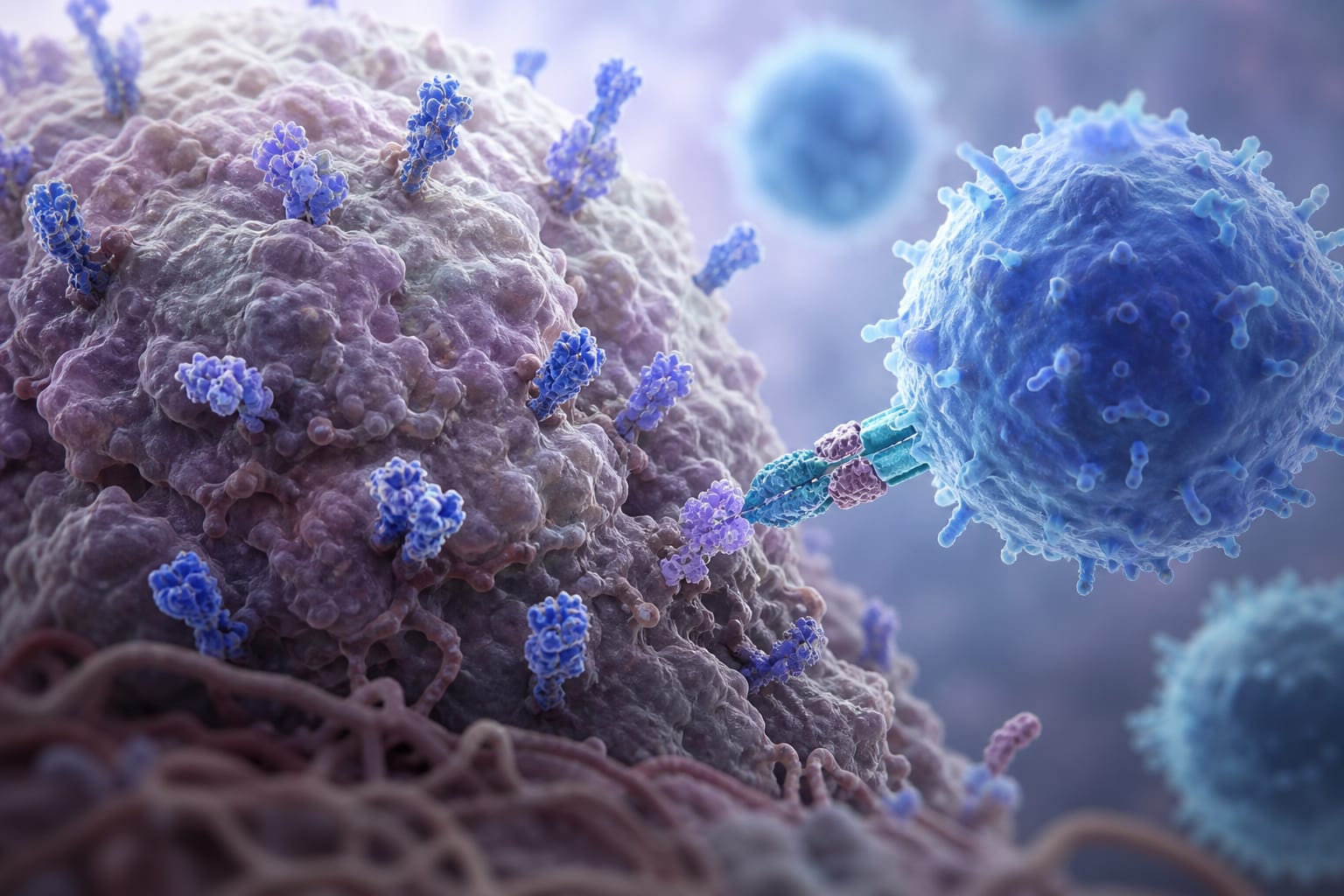
Unraveling mutations in ribosomal proteins linked to cancer: Advancements in the understanding of cancer and ribosome function
-
By
-
Mirsada Čaušević
-
Robbie Loewith
-
Siniša Volarević
-
September 25, 2026
Clinical Scorecard: Unraveling mutations in ribosomal proteins linked to cancer: Advancements in the understanding of cancer and ribosome function
At a Glance
| Category | Detail |
|---|
| Condition | Ribosomal protein mutations and associated cancers |
| Key Mechanisms | Alterations in ribosomal composition and function affecting translation and cellular stress responses |
| Target Population | Patients with ribosomopathies and hematopoietic malignancies |
| Care Setting | Oncology and hematology |
Key Highlights
- Ribosomal proteins (RPs) are critical for ribosome function and cellular growth.
- Heterozygous loss-of-function RP mutations are linked to ribosomopathies and increased cancer susceptibility.
- Mutations in RPS15 and RPL10 are associated with chronic lymphocytic leukemia and other malignancies.
- Cancer-associated RP mutations may produce specialized ribosomes with altered translational properties.
- RiboCancer provides a systematic repository for studying RP mutations in cancer.
Guideline-Based Recommendations
Diagnosis
- Consider genetic testing for RP mutations in patients with hematologic malignancies.
Management
- Monitor for signs of ribosomopathy in patients with known RP mutations.
Monitoring & Follow-up
- Assess translational efficiency and ribosomal function in patients with RP mutations.
Risks
- Increased susceptibility to malignancies, particularly myeloid neoplasms.
Patient & Prescribing Data
Individuals with ribosomopathies and those at risk for malignancies due to RP mutations.
Targeted therapies may be necessary for managing malignancies associated with RP mutations.
Clinical Best Practices
- Utilize CRISPR-engineered models to study the functional effects of RP mutations.
- Incorporate ribosome profiling and cryo-EM in research to understand translational changes.
Related Resources & Content