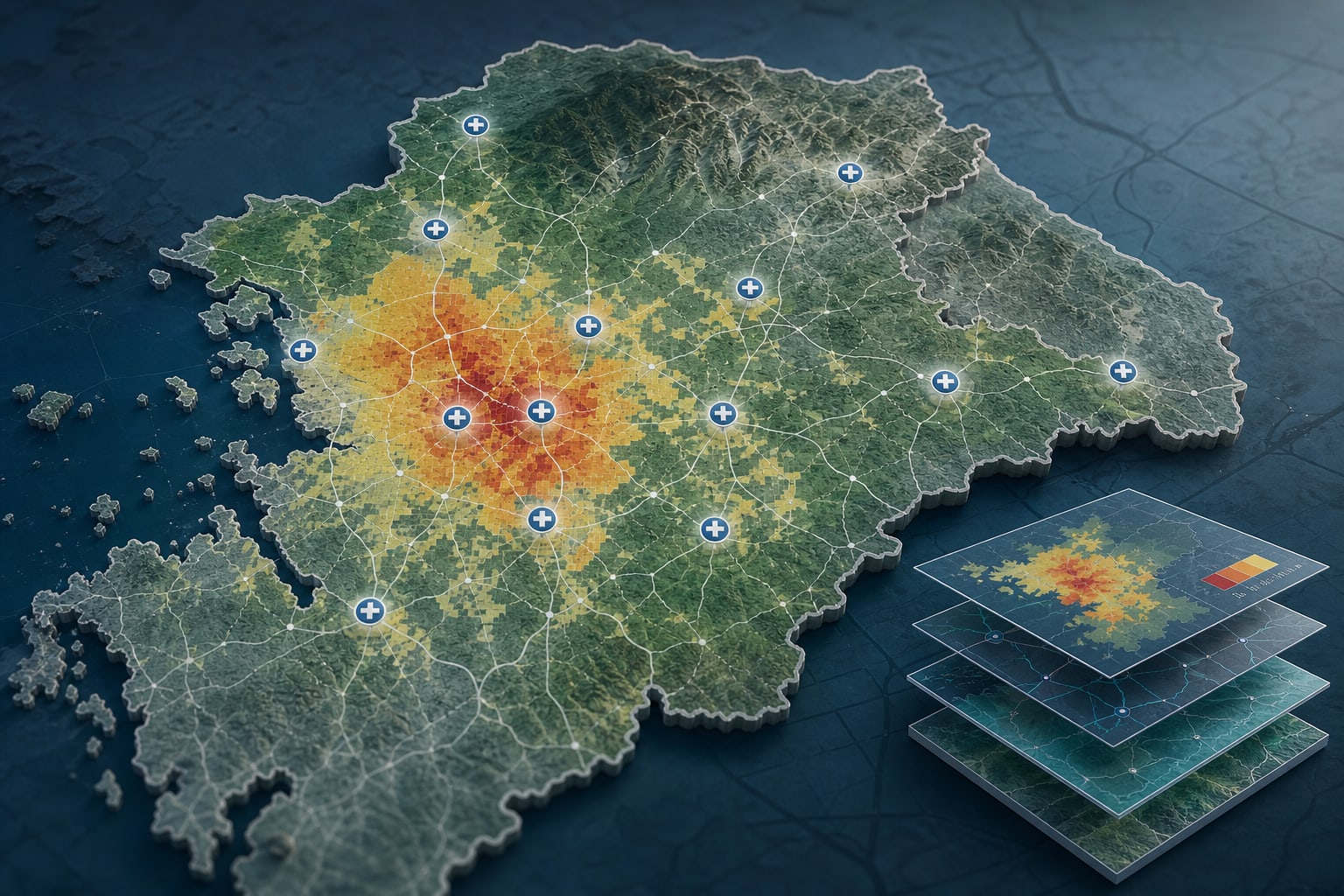
Optimizing the Geographic Distribution of Trauma Care Resources for Prompt Access to Severely Injured Individuals
-
By
-
Ryan B. Choi
-
Deeksha Bidare
-
Byung Hee Kang
-
Junsik Kwon
-
Kyungwon Jung
-
Jeff Choi
-
September 29, 2026
Clinical Scorecard: Optimizing the Geographic Distribution of Trauma Care Resources for Prompt Access to Severely Injured Individuals
At a Glance
| Category | Detail |
|---|
| Condition | Traumatic Injury |
| Key Mechanisms | Geospatial optimization of trauma care resources to enhance access and reduce mortality. |
| Target Population | Individuals with severe traumatic injuries in Gyeonggi province, South Korea. |
| Care Setting | Regional trauma systems and hospitals providing varying levels of trauma care. |
Key Highlights
- Traumatic injury is a leading cause of death and disability globally.
- Delays in reaching definitive trauma care are linked to higher mortality and disability.
- A decision support model can optimize trauma care resource allocation.
- The study utilized population-level data and geospatial modeling.
- Gyeonggi province serves as a case study for trauma system optimization.
Guideline-Based Recommendations
Diagnosis
- Utilize operational criteria consistent with CDC guidelines for field triage of injured patients.
Management
- Develop and maintain trauma care capability based on geospatial optimization models.
Monitoring & Follow-up
- Assess population-level access to trauma care resources regularly.
Risks
- Inequities in geographic access to trauma care can lead to misallocation of resources.
Patient & Prescribing Data
Severely injured individuals requiring timely access to trauma care.
Timely access to specialized trauma care is critical for reducing mortality and morbidity.
Clinical Best Practices
- Implement geospatial modeling to inform trauma system planning.
- Evaluate the impact of resource allocation decisions on population access.
- Ensure readiness of trauma care facilities to handle severe injuries.
Related Resources & Content