Treatment of concomitant alopecia areata and systemic lupus erythematosus with ivarmacitinib: a case report and literature review - Scorecard - MDSpire
Clinical Scorecard: Management of Concurrent Alopecia Areata and Systemic Lupus Erythematosus Using Ivarmacitinib: A Case Study and Review of Existing Literature
At a Glance
Category
Detail
Condition
Alopecia Areata and Systemic Lupus Erythematosus
Key Mechanisms
Dysregulated interferon signaling and T-cell-mediated autoimmune response
Target Population
Patients with concurrent alopecia areata and systemic lupus erythematosus
Care Setting
Outpatient clinic
Key Highlights
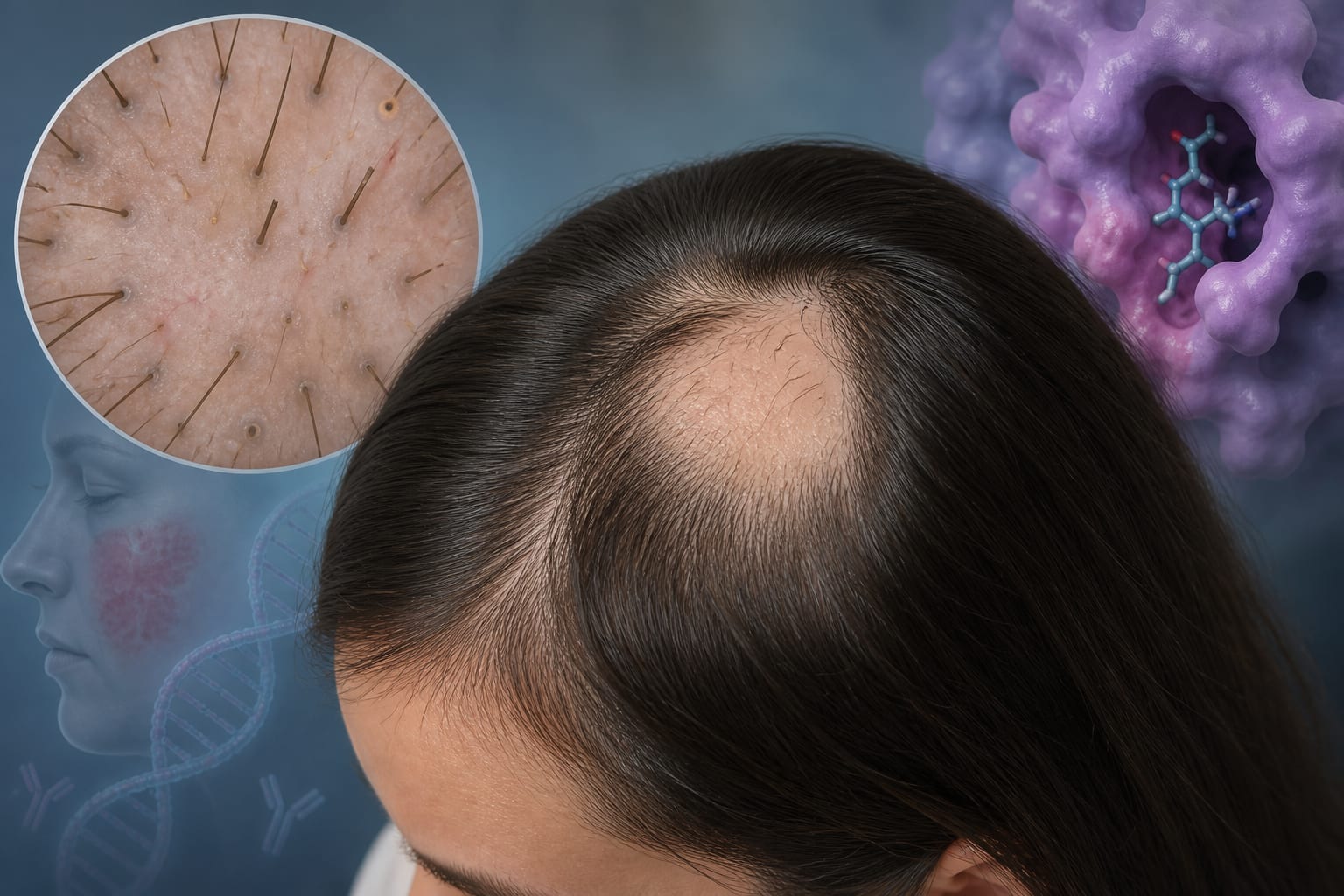
A 35-year-old woman with severe patchy hair loss diagnosed with SLE after initial AA diagnosis.
Ivarmacitinib, a JAK1 inhibitor, led to marked clinical improvement after baricitinib failure.
Trichoscopy findings supported coexistence of AA and lupus-associated alopecia.
Significant reduction in SALT score observed after 8 months of treatment.
No adverse events reported during the treatment period.
Guideline-Based Recommendations
Diagnosis
Diagnosis of SLE confirmed by positive ANA, anti-Sm, and anti-U1RNP antibodies.
Management
Ivarmacitinib 4 mg once daily initiated after failure of baricitinib.
Monitoring & Follow-up
Regular assessment of SALT score and laboratory values, including complement levels.
Risks
Potential for overlapping symptoms complicating diagnosis and treatment.
Patient & Prescribing Data
Combination therapy with ivarmacitinib and oral prednisone showed efficacy.
Clinical Best Practices
Consider JAK inhibitors for patients with refractory alopecia areata.
Monitor for signs of lupus-associated alopecia in patients with AA.