Clear Liquid Diets and Enhanced Safety in Procedures: Insights from the OCULUS Trial—A Response
By
Akram I. Ahmad
Tilak Shah
September 1, 2026
Clinical Scorecard: Clear Liquid Diets and Enhanced Safety in Procedures: Insights from the OCULUS Trial—A Response
At a Glance
Category Detail
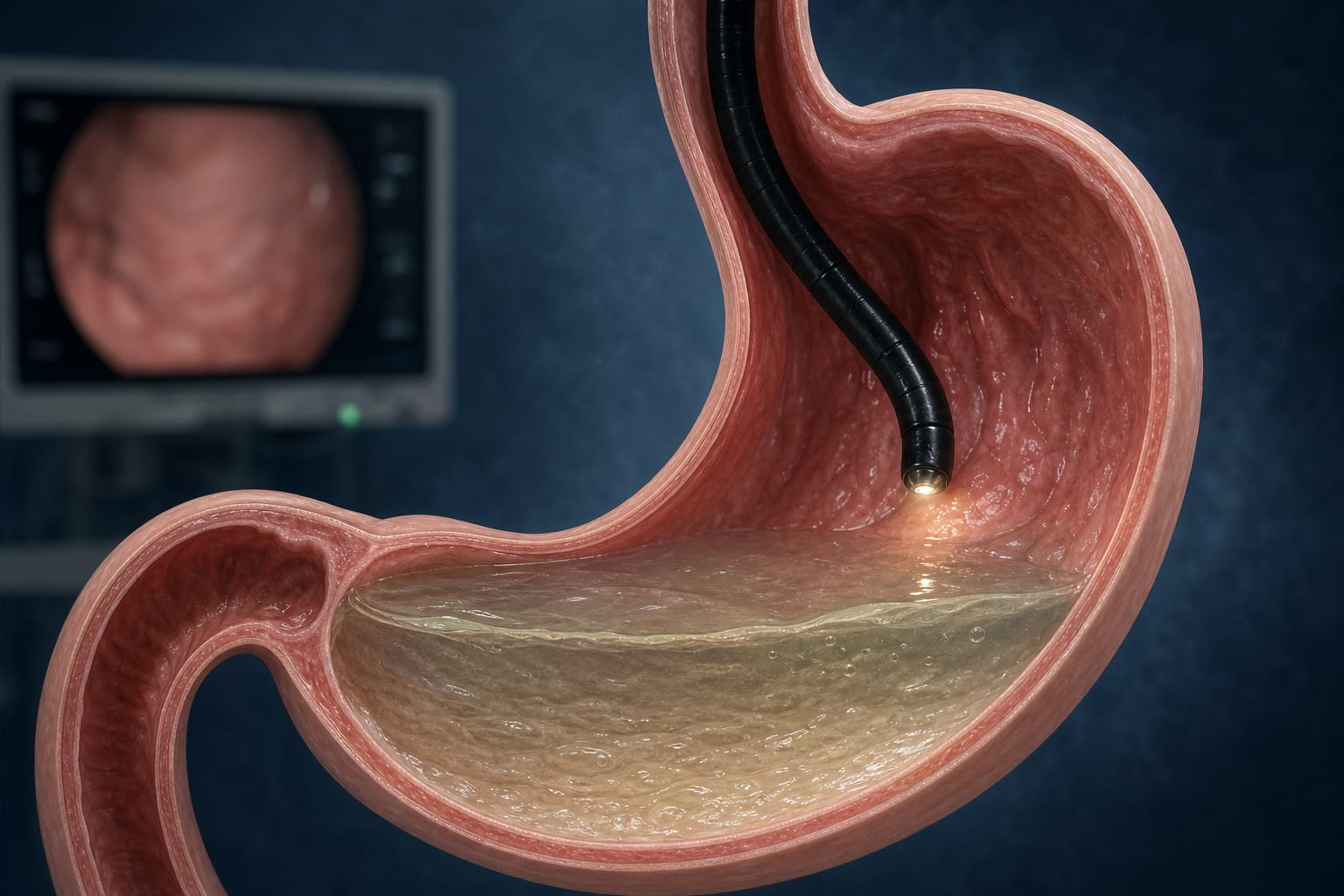
Condition Clear Liquid Diets and Safety in Endoscopic Procedures Key Mechanisms Reduction of clinically significant residual gastric volume (CS-RGV) through dietary modification. Target Population Patients undergoing upper endoscopy, particularly those receiving GLP-1/GIP receptor agonists. Care Setting Endoscopy procedures
Key Highlights
No CS-RGV detected in patients following a 24-hour clear liquid diet before endoscopy. Point-of-care ultrasonography may help exclude CS-RGV before sedation. Subgroup findings suggest clear liquids may reduce CS-RGV risk. Guidelines recommend stratifying CS-RGV risk for patients on GLP-1/GIP RAs. Further investigation needed on the combination of dietary modification and medication withholding. Guideline-Based Recommendations
Diagnosis
Assess CS-RGV using point-of-care ultrasonography when applicable. Management
Consider a clear liquid diet prior to endoscopic procedures. Monitoring & Follow-up
Monitor for CS-RGV in patients undergoing sedation. Risks
Potential aspiration-related complications if CS-RGV is present. Patient & Prescribing Data
Patients receiving GLP-1/GIP receptor agonists undergoing endoscopy.
Dietary modification may be beneficial in reducing CS-RGV risk.
Clinical Best Practices
Implement clear liquid diets before endoscopic procedures. Exclude patients with conditions impairing gastric emptying from trials. Related Resources & Content