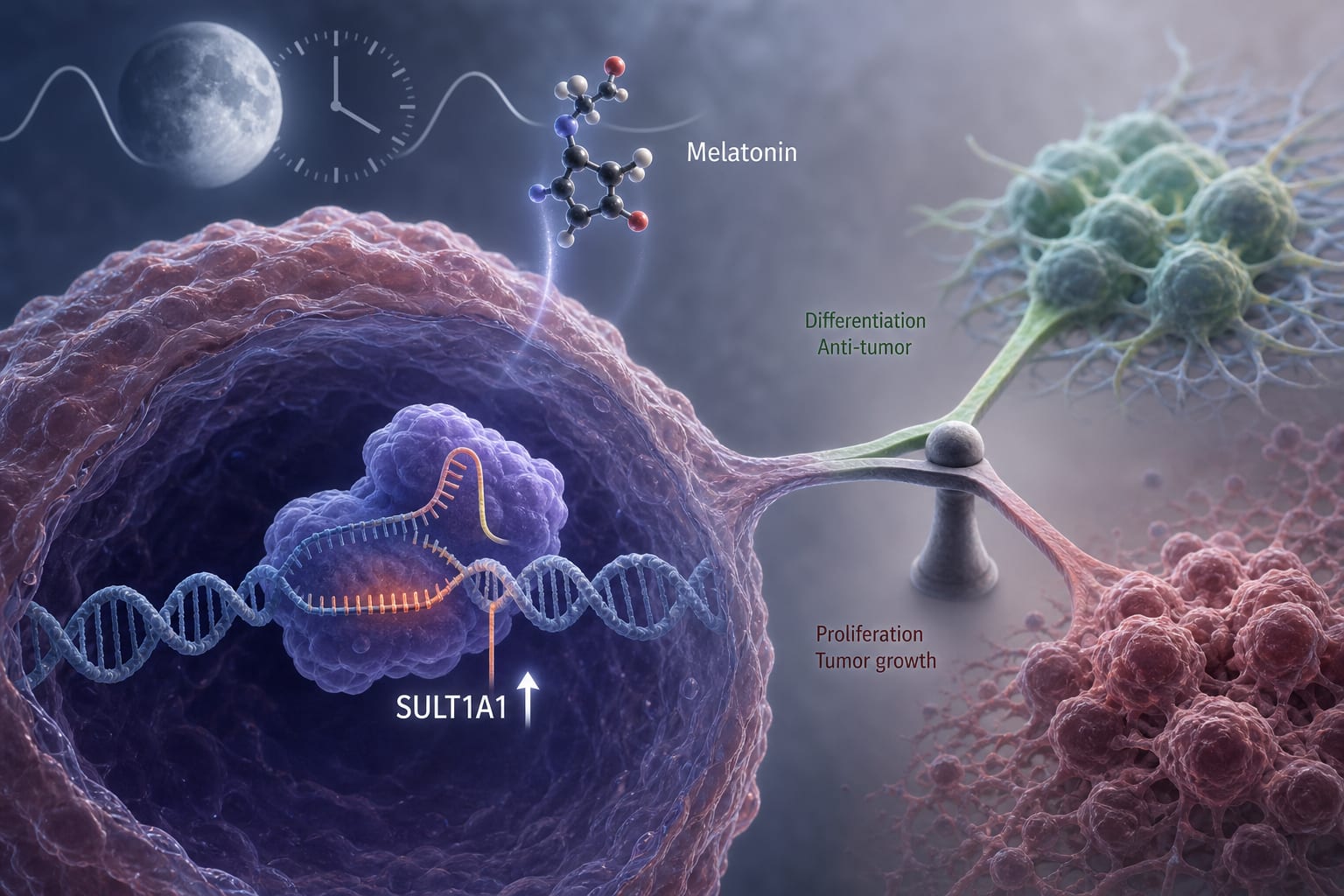
SULT1A1 at a differentiation branch point regulates osteosarcoma cell proliferation and melatonin-mediated anti-tumor activity
-
By
-
Jun Xie
-
Chao Qian
-
Jinku Guo
-
Wei Wang
-
Chen Chen
-
Renjie Peng
-
Ankai Xu
-
July 7, 2026
-
Clinical Scorecard: Regulation of Osteosarcoma Cell Growth and Melatonin's Anti-Tumor Effects by SULT1A1 at a Differentiation Decision Point
At a Glance
| Category | Detail |
|---|
| Condition | Osteosarcoma |
| Key Mechanisms | Circadian rhythm disruption and SULT1A1 modulation of cell proliferation and melatonin sensitivity |
| Target Population | Adolescents with osteosarcoma |
| Care Setting | Oncology research and treatment |
Key Highlights
- Identification of SULT1A1 as a key circadian-associated gene in osteosarcoma
- Establishment of a five-gene circadian rhythm-annotated prognostic signature
- SULT1A1 knockdown enhances the anti-tumor efficacy of melatonin
- Integration of gene expression data from GEO and TARGET databases
- Potential implications for chronotherapeutic strategies in osteosarcoma
Guideline-Based Recommendations
Diagnosis
- Utilize circadian rhythm-annotated genes as potential prognostic biomarkers
Management
- Consider melatonin as a therapeutic agent in conjunction with SULT1A1 modulation
Monitoring & Follow-up
- Monitor SULT1A1 expression levels in osteosarcoma patients
Risks
- Therapeutic resistance remains a significant challenge in metastatic osteosarcoma
Patient & Prescribing Data
Patients diagnosed with osteosarcoma, particularly adolescents
Melatonin may enhance treatment efficacy when combined with SULT1A1-targeted strategies
Clinical Best Practices
- Incorporate circadian rhythm considerations into osteosarcoma treatment plans
- Utilize gene expression profiling for personalized treatment approaches
Related Resources & Content