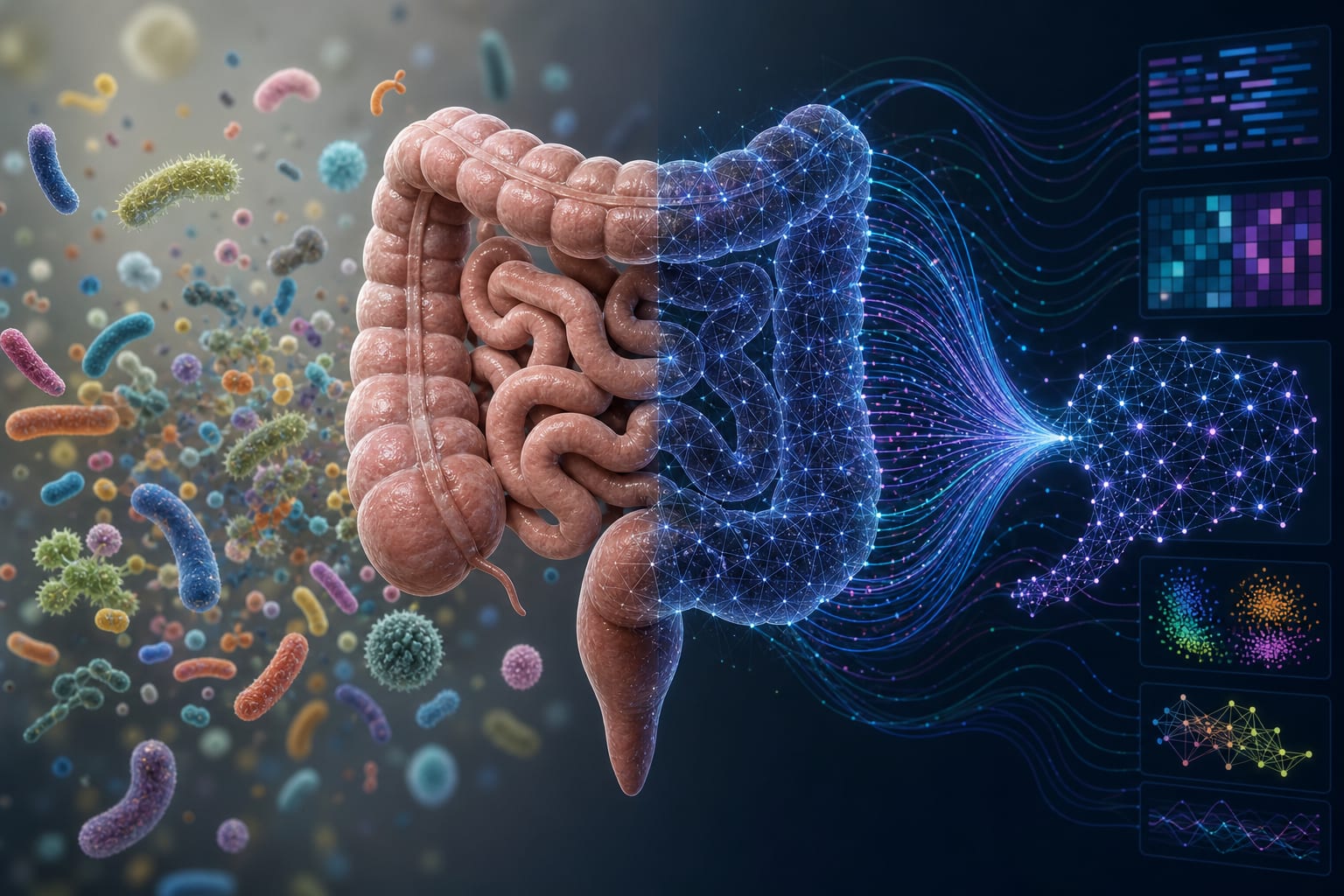
Harnessing Artificial Intelligence for Advanced Human Microbiome Studies
By
Tian Zhou
Fangqing Zhao
July 1, 2026
Clinical Scorecard: Harnessing Artificial Intelligence for Advanced Human Microbiome Studies
At a Glance
Category Detail
Condition Microbiome dysbiosis linked to various health conditions Key Mechanisms AI enhances microbiome analysis through multi-omic data integration and predictive modeling Target Population Individuals with microbiome-related health conditions Care Setting Research and clinical settings focused on microbiome diagnostics and therapeutics
Key Highlights
AI enables higher-resolution insights into host-microbiome interactions AI methods address data heterogeneity and complexity in microbiome analysis AI-driven models facilitate biomarker discovery and disease prediction Challenges include interpretability, generalisability, and data governance AI represents a shift from traditional statistical methods to advanced computational techniques Guideline-Based Recommendations
Diagnosis
Utilize AI for stratification and prediction of microbiome-related diseases Management
Implement AI-driven models for personalized interventions in microbiome health Monitoring & Follow-up
Employ AI to track microbiome dynamics and patient outcomes Risks
Address challenges in data governance and model interpretability Patient & Prescribing Data
Patients with conditions linked to dysbiosis
AI can guide personalized treatment strategies based on microbiome profiles
Clinical Best Practices
Integrate AI methods throughout the microbiome analysis pipeline Collaborate across disciplines for responsible AI advancement Utilize multi-omics approaches for comprehensive microbiome characterization Related Resources & Content