Transcranial magnetic stimulation combined with functional near-infrared spectroscopy to elucidate the neurophysiological mechanisms of post-stroke hemiplegia: a systematic review - Scorecard - MDSpire
Advertisement
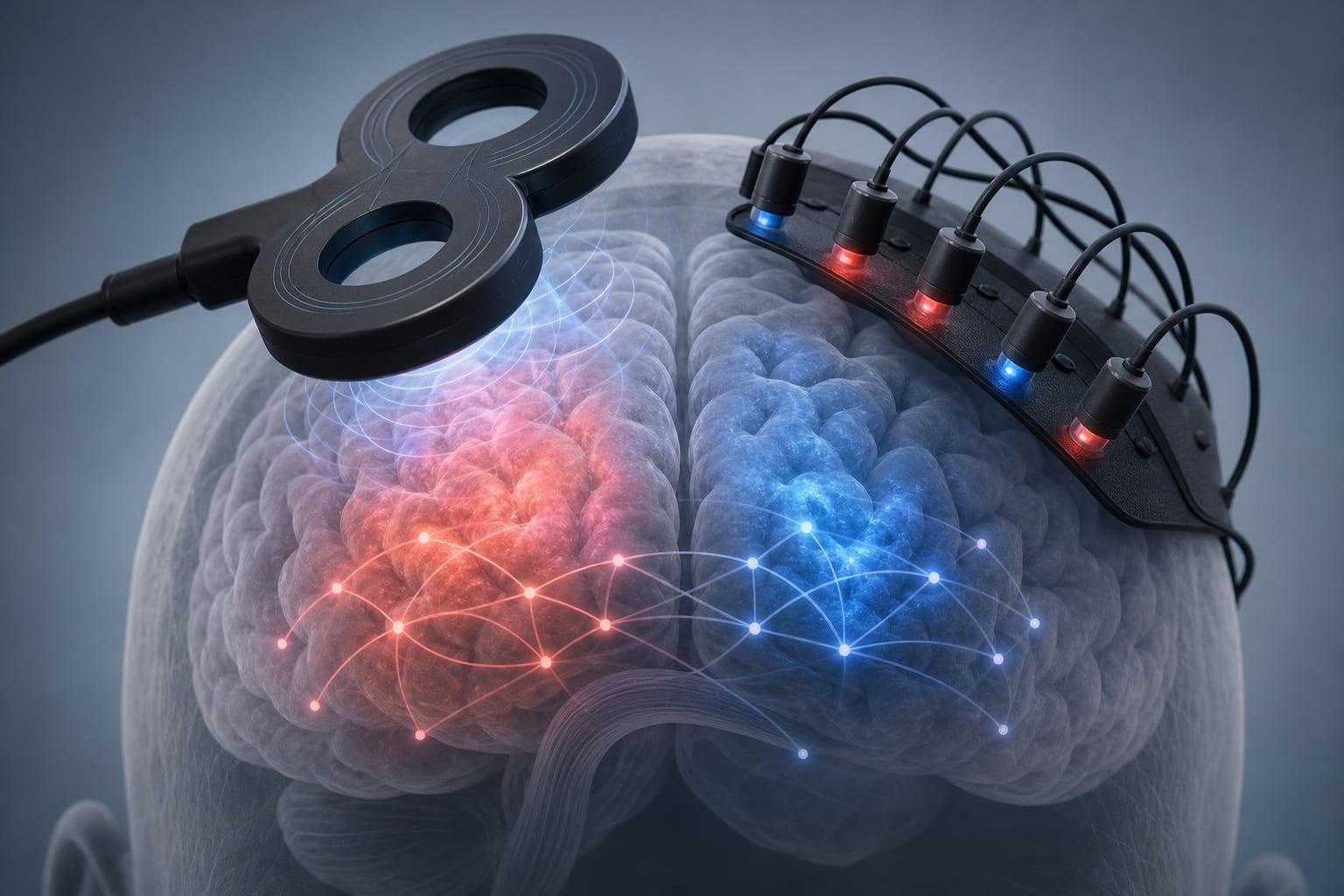
Transcranial magnetic stimulation combined with functional near-infrared spectroscopy to elucidate the neurophysiological mechanisms of post-stroke hemiplegia: a systematic review
Clinical Scorecard: Investigating Neurophysiological Mechanisms of Post-Stroke Hemiplegia through the Integration of Transcranial Magnetic Stimulation and Functional Near-Infrared Spectroscopy: A Systematic Review
At a Glance
Category
Detail
Condition
Post-Stroke Hemiplegia
Key Mechanisms
Imbalanced interhemispheric competition and abnormal neural network reorganization.
Target Population
Patients with hemiplegia after stroke.
Care Setting
Clinical rehabilitation settings.
Key Highlights
TMS-fNIRS combined protocol is safe and feasible.
Six out of nine studies reported statistically significant improvements in motor function.
Effective TMS interventions enhance activation of the ipsilesional primary motor cortex.
Changes in neurophysiological indicators correlated with clinical function improvements.
Current evidence is in early stages with moderate to low level of evidence strength.
Guideline-Based Recommendations
Diagnosis
Assessment of motor dysfunction through clinical evaluations.
Management
Utilization of TMS and fNIRS for intervention in post-stroke rehabilitation.
Monitoring & Follow-up
Continuous monitoring of neural activity and hemodynamic responses using fNIRS.
Risks
High risk of bias in non-randomized studies and limitations in sample sizes.
Patient & Prescribing Data
Stroke survivors with hemiplegia.
Combination of TMS and fNIRS may facilitate individualized rehabilitation strategies.
Clinical Best Practices
Conduct large-scale, standardized clinical trials for precision therapy.
Integrate assessment and intervention strategies in stroke rehabilitation.