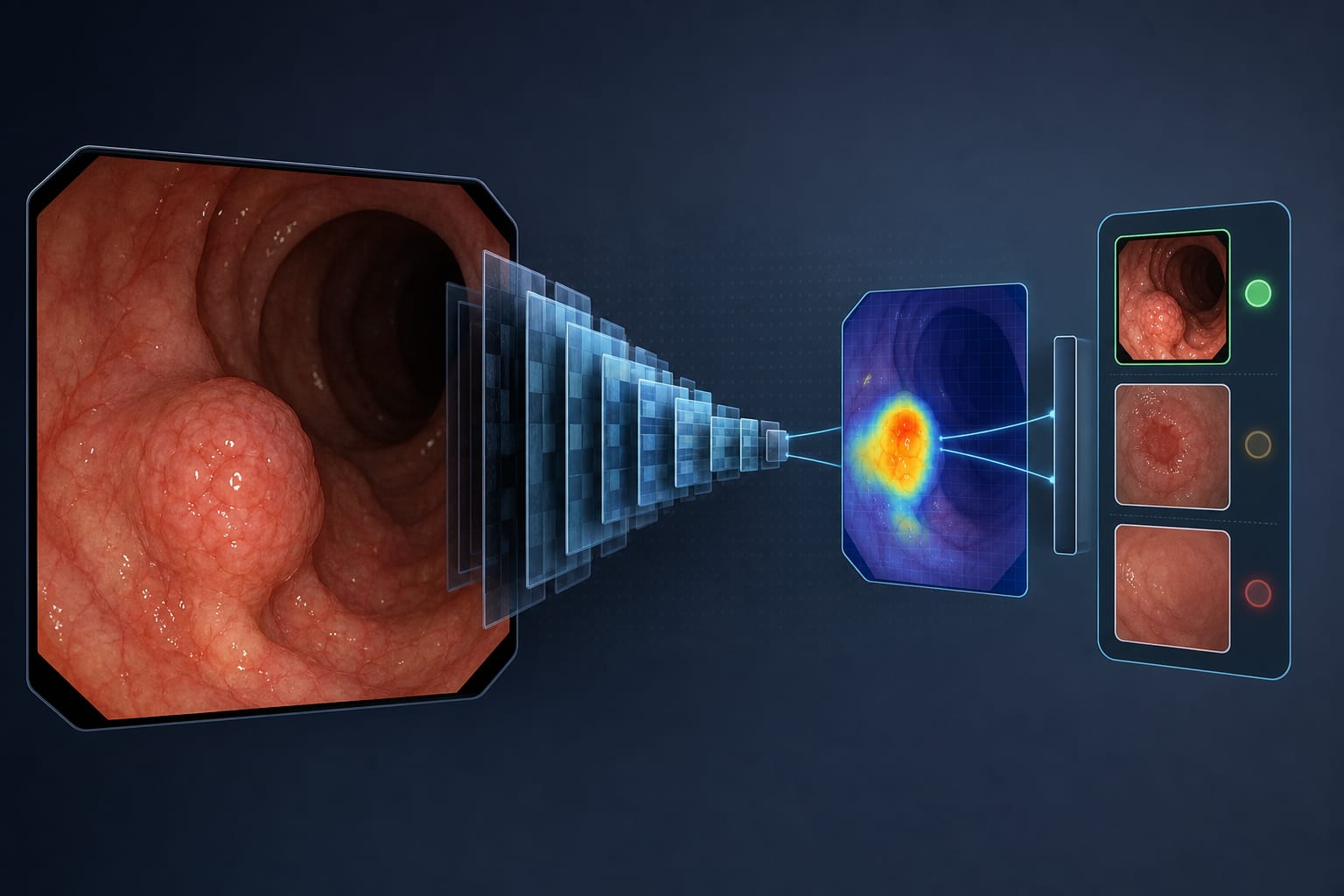
Clinical Scorecard: Evaluating the Combined Effectiveness of Endoscopic Ultrasonography and Endoscopic Therapy for Protruding Upper Gastrointestinal Lesions
At a Glance
Category
Detail
Condition
Upper Gastrointestinal Protruding Lesions
Key Mechanisms
Endoscopic Ultrasonography (EUS) for diagnosis and endoscopic intervention for treatment.
Target Population
Patients with protruding upper gastrointestinal lesions.
Care Setting
Retrospective analysis in a clinical facility.
Key Highlights
EUS demonstrated a diagnostic concordance rate of 81.13%.
Endoscopic management was successful in 101 out of 106 cases.
Common lesion types included polyps, inflammatory changes, and leiomyomas.
EUS showed high sensitivity and specificity for diagnosing polyps and leiomyomas.
Low rate of postoperative complications associated with endoscopic treatments.
Guideline-Based Recommendations
Diagnosis
Utilize EUS for accurate diagnosis of upper GI protruding lesions.
Management
Endoscopic intervention is recommended for the treatment of identified lesions.
Monitoring & Follow-up
Regular follow-up is advised to monitor for potential complications.
Risks
Increased risk of misdiagnosis for less common conditions like schwannomas.
Patient & Prescribing Data
106 patients with upper GI protruding lesions.
Endoscopic therapy based on EUS evaluations is clinically safe.
Clinical Best Practices
Ensure thorough training in EUS to minimize misdiagnosis.
Consider surgical intervention for cases where endoscopic management is not feasible.