Central precocious puberty as the initial manifestation of multisystem involvement caused by de novo heterozygous KMT2B mutation and STS hemizygous deletion: a case report - Scorecard - MDSpire
Advertisement
Central precocious puberty as the initial manifestation of multisystem involvement caused by de novo heterozygous KMT2B mutation and STS hemizygous deletion: a case report
Clinical Scorecard: Central Precocious Puberty as the First Sign of Multisystem Involvement Due to a Novel Heterozygous KMT2B Mutation and Hemizygous Deletion of STS: A Case Study
At a Glance
Category
Detail
Condition
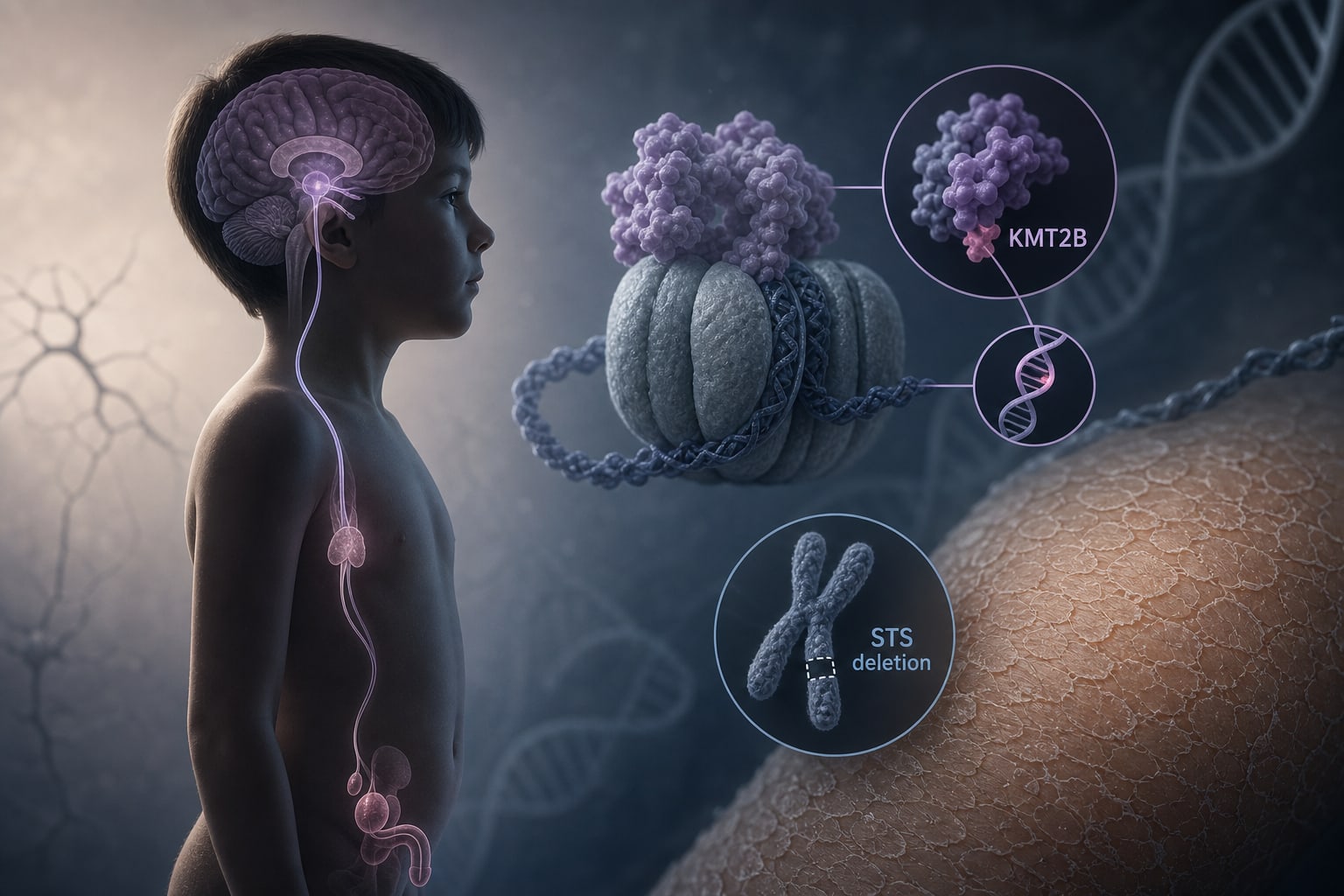
Central Precocious Puberty (CPP) associated with KMT2B-related disorders and X-linked ichthyosis (XLI)
Key Mechanisms
Pathogenic variants in KMT2B and STS genes affecting endocrine regulation and skin barrier function
Target Population
Pediatric patients with KMT2B-related disorders and concurrent XLI
Care Setting
Endocrinology and Genetic Metabolism
Key Highlights
First report of CPP as primary manifestation in KMT2B-related disorder without dystonia
Patient exhibited distinctive craniofacial dysmorphism and ichthyotic scaling
Confirmed diagnosis through whole-exome sequencing and CNV analysis
Treated with leuprorelin acetate for CPP and topical emollients for XLI
Close monitoring showed stable physical signs of puberty and improved skin lesions
Guideline-Based Recommendations
Diagnosis
Comprehensive endocrine assessment for children with KMT2B-related disorders
Management
GnRH analogue therapy for CPP in KMT2B-related disorders
Monitoring & Follow-up
Regular follow-up to assess physical signs of puberty and treatment efficacy
Risks
Potential for premature activation of the hypothalamic-pituitary-gonadal axis
Patient & Prescribing Data
Pediatric male with KMT2B-related disorder and XLI
Leuprorelin acetate dosage adjusted based on treatment response
Clinical Best Practices
Early diagnosis and timely intervention for endocrine abnormalities
Utilization of genetic testing for accurate diagnosis of KMT2B and STS alterations