Naringin and denosumab ameliorate osteoporosis and suppress the aldosterone-MR/SGK1 signaling axis by modulating the bone-kidney interorgan communication in Orchiectomized rats - Scorecard - MDSpire
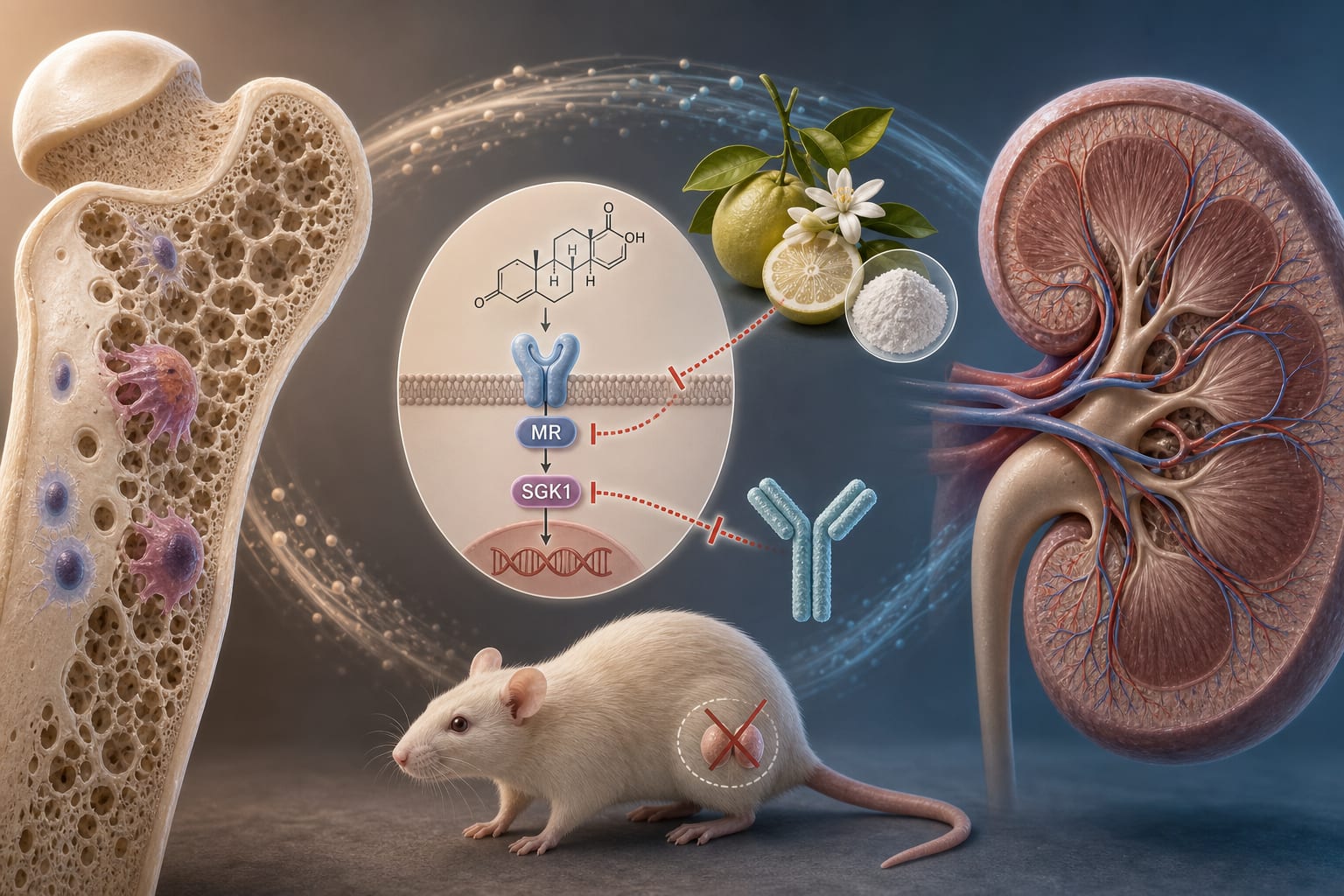
Clinical Scorecard: Naringin and Denosumab Improve Osteoporosis and Inhibit the Aldosterone-MR/SGK1 Pathway by Influencing Bone-Kidney Interactions in Orchiectomized Rats
At a Glance
Category
Detail
Condition
Osteoporosis
Key Mechanisms
Inhibition of the aldosterone-MR/SGK1 pathway and improvement of bone mass.
Target Population
Aged orchiectomized male rats.
Care Setting
Experimental animal model.
Key Highlights
Naringin and denosumab significantly increased bone mineral density (BMD).
Both treatments suppressed ORX-induced elevation in serum aldosterone.
Inhibition of MR/SGK1 signaling pathway was observed in kidney and bone tissue.
Naringin and denosumab corrected RANKL/Runx2 expression imbalance.
Study provides evidence for a bidirectional 'bone-kidney' axis.
Guideline-Based Recommendations
Diagnosis
Evaluate bone mineral density (BMD) in patients at risk for osteoporosis.
Management
Consider anti-osteoporosis treatments such as naringin and denosumab.
Monitoring & Follow-up
Monitor serum aldosterone levels and bone health in osteoporosis patients.
Risks
Increased risk of fractures due to reduced bone mass and deterioration.
Patient & Prescribing Data
Orchiectomized male rats used as a model for osteoporosis.
Naringin (200 mg/kg/d) and denosumab (6.3 mg/kg, s.c.) were effective in improving bone health.
Clinical Best Practices
Integrate traditional and modern approaches in osteoporosis treatment.
Investigate the role of the renin-angiotensin-aldosterone system in bone metabolism.
As osteoporosis treatment continues to evolve, clinicians are moving beyond bone mineral density scores alone and placing greater emphasis on fracture risk when making therapeutic decisions
Teriparatide followed by zoledronic acid increased bone mineral density but did not reduce fracture risk compared with standard care in adults with osteogenesis imperfecta.