Percutaneous endoscopic gastrostomy insertion in patients with neuromuscular disease-a single centre experience of a novel technique - Scorecard - MDSpire
Advertisement
Percutaneous endoscopic gastrostomy insertion in patients with neuromuscular disease-a single centre experience of a novel technique
Clinical Scorecard: Experience with a Novel Technique for Percutaneous Endoscopic Gastrostomy Placement in Neuromuscular Disease Patients: Insights from a Single Center Study
At a Glance
Category
Detail
Condition
Neuromuscular Diseases (NMD)
Key Mechanisms
Bulbar dysfunction leading to nutritional intake challenges and ventilatory failure requiring non-invasive ventilation (NIV).
Target Population
Patients with neuromuscular diseases requiring gastrostomy due to bulbar dysfunction.
Care Setting
Tertiary referral hospital
Key Highlights
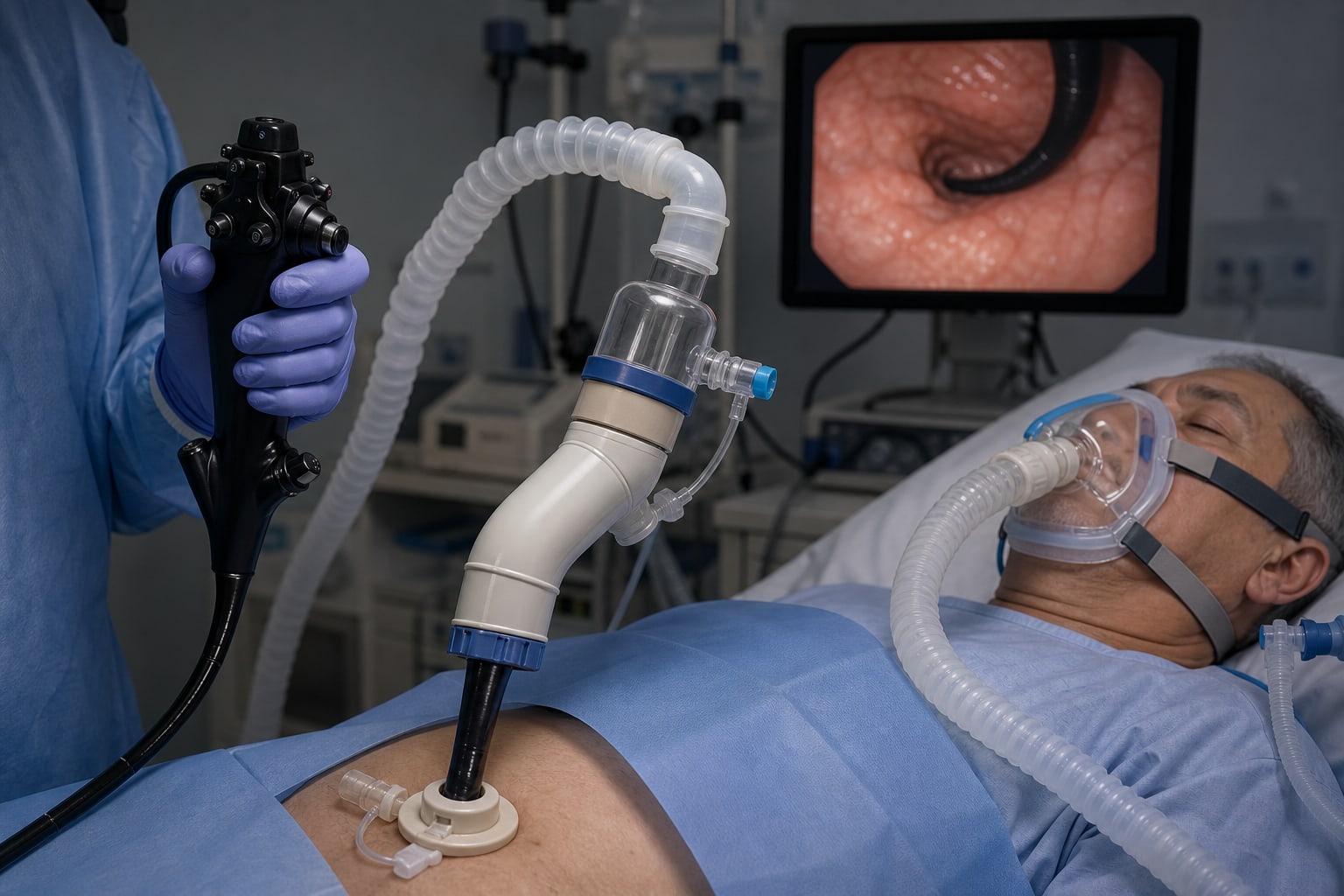
Introduction of the Endoscopy Elbow (EE) device allows PEG placement with concurrent NIV.
Significant reduction in respiratory complications and critical care admissions observed.
Improved six-month survival noted in patients with motor neurone disease.
No change in time from referral to procedure or length of hospital stay.
Guideline-Based Recommendations
Diagnosis
Assessment of bulbar dysfunction in patients with NMD.
Management
Consideration of PEG placement under sedation with NIV in NMD patients.
Monitoring & Follow-up
Oxygen saturation and end tidal carbon dioxide monitoring during PEG procedures.
Risks
Potential respiratory complications associated with sedation and general anaesthesia.
Patient & Prescribing Data
NIV-dependent patients with neuromuscular diseases.
Use of propofol and glycopyrronium for sedation during PEG.
Clinical Best Practices
Utilization of the Endoscopy Elbow for PEG procedures in NIV-dependent patients.
Monitoring according to established guidelines during PEG placement.