Clinical Scorecard: Examining the Role of AI in Undergraduate Medical Training: A Focus on Learner-Centered Strategies Utilizing Artificial Intelligence
At a Glance
Category
Detail
Condition
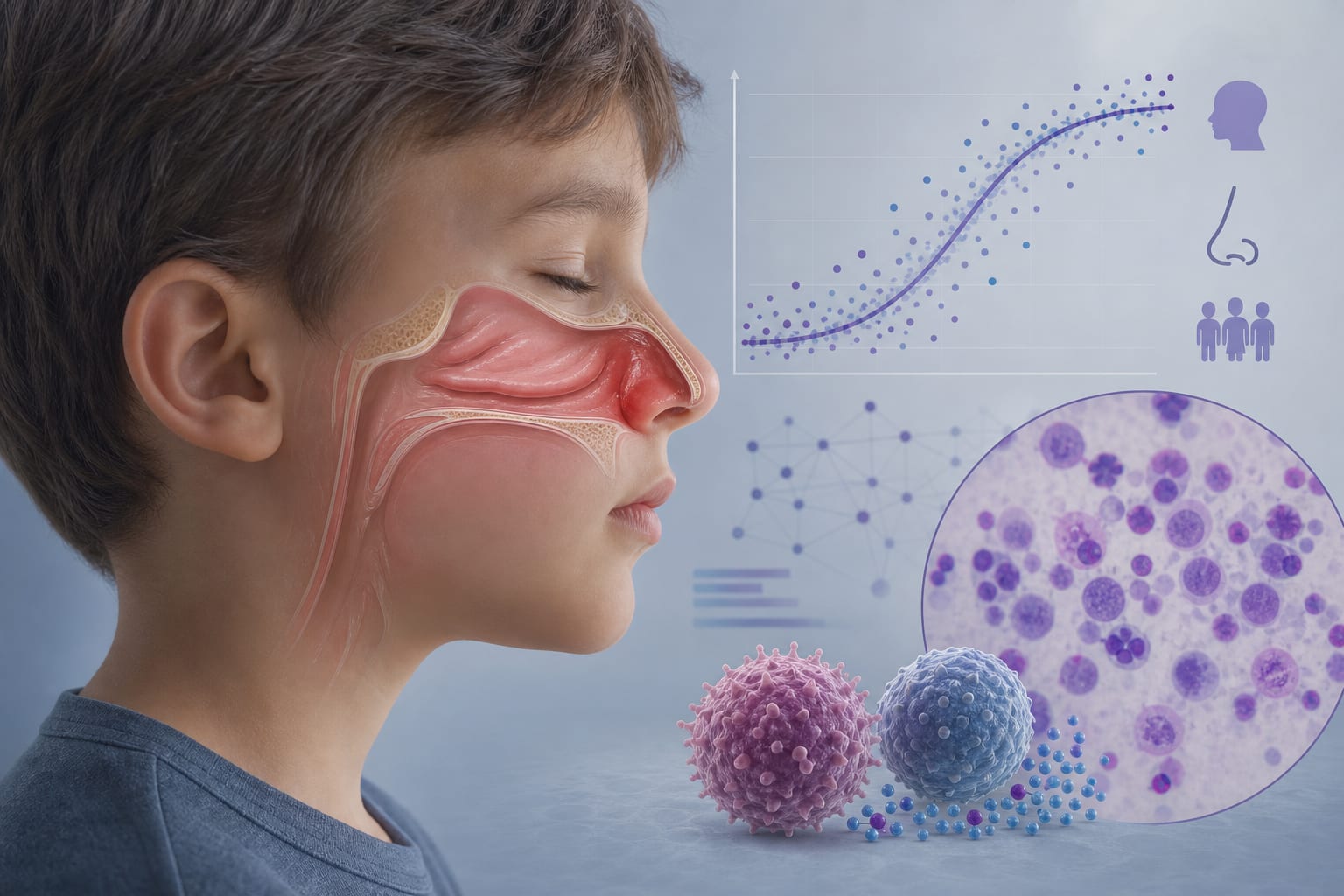
Allergic Rhinitis (AR) in children with Nasal Septum Deviation (NSD)
Key Mechanisms
IgE-mediated hypersensitivity reaction, altered nasal airflow due to NSD
Target Population
Children aged 6–14 years
Care Setting
Tertiary care centers
Key Highlights
Higher prevalence of AR in children with NSD (66.7% vs. 36.2%)
NSD independently associated with AR (aOR 3.51)
NSD+ children experience more severe AR symptoms
Increased eosinophil counts and cytokine levels in NSD+ children
Need for longitudinal studies to confirm causality
Guideline-Based Recommendations
Diagnosis
Evaluate AR diagnosis in children with or without NSD using clinical criteria.
Management
Consider early identification and management of NSD to improve AR outcomes.
Monitoring & Follow-up
Monitor nasal airflow and inflammation in children diagnosed with AR and NSD.
Risks
Increased severity of AR symptoms and potential for chronic nasal inflammation in NSD+ children.
Patient & Prescribing Data
Pediatric population aged 6–14 years with or without NSD
Management strategies should address both AR and NSD to optimize patient outcomes.
Clinical Best Practices
Conduct thorough assessments of nasal airflow and allergy history in pediatric patients.
Utilize nasal endoscopy and cytology for comprehensive evaluation of nasal conditions.
Implement multidisciplinary approaches for managing AR and NSD.
by Laura Carucci, Rita Nocerino, Elena Cantone, Francesco Berni Canani, Margherita Licito, Luciano La Marca, Margherita Farnetano, Antonio Masino, Franca Oglio, Dario Marziali, Serena Coppola, Roberto Berni Canani
The nurse practitioner profession claims the No. 1 spot across three categories in the U.S. News & World Report 2026 Best Jobs rankings for the third consecutive year.