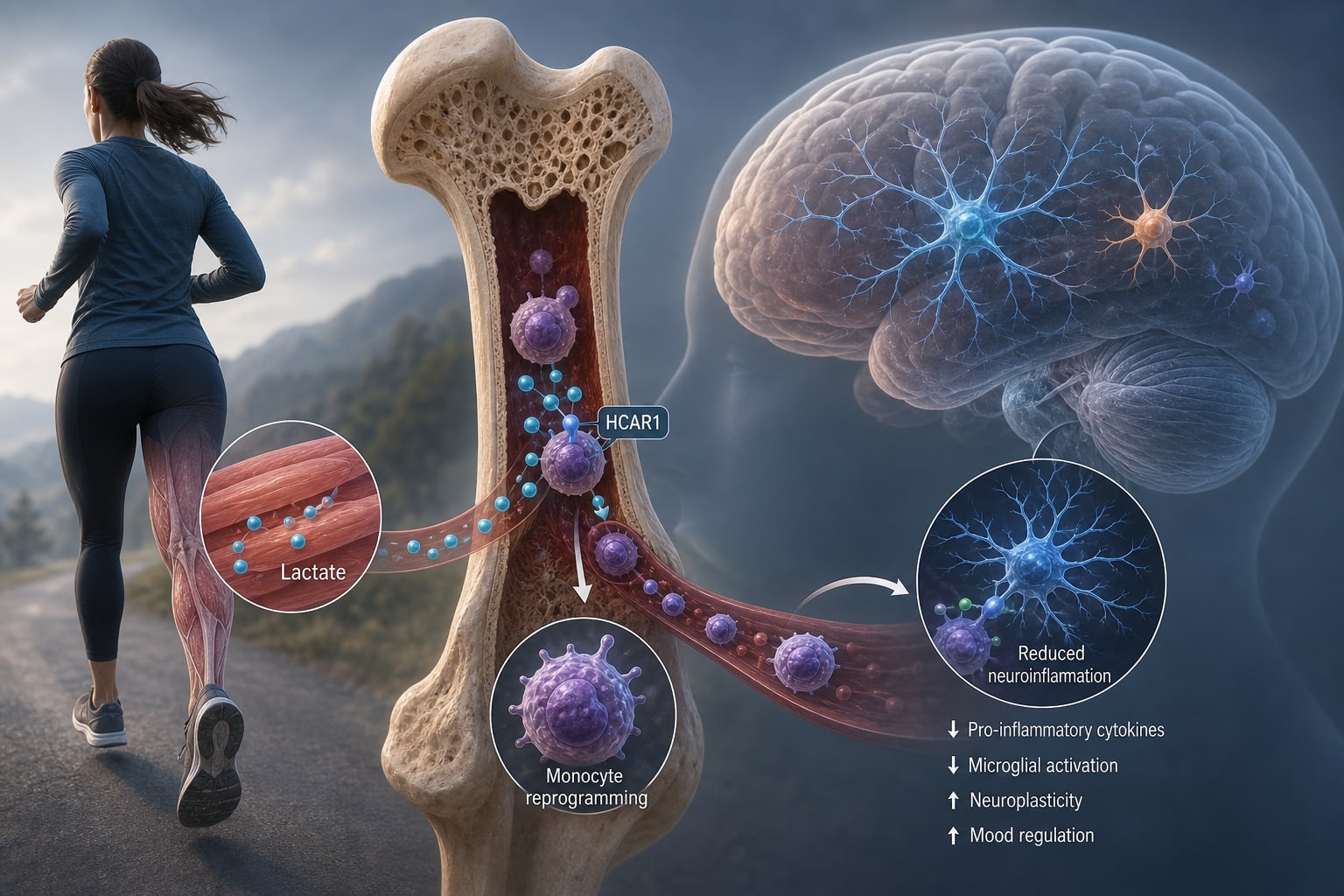
The lactate–HCAR1 axis in exercise psychiatry: a candidate mechanism linking bone marrow–brain immunity to inflammation-related depression - Scorecard - MDSpire
Advertisement
The Role of the Lactate-HCAR1 Pathway in Exercise Psychiatry: A Potential Mechanism Connecting Bone Marrow-Brain Immunity to Inflammation-Induced Depression
Clinical Scorecard: The Role of the Lactate-HCAR1 Pathway in Exercise Psychiatry: A Potential Mechanism Connecting Bone Marrow-Brain Immunity to Inflammation-Induced Depression
At a Glance
Category
Detail
Condition
Inflammation-related depression
Key Mechanisms
Lactate-HCAR1 signaling linking exercise metabolism to immune and inflammatory responses
Target Population
Patients with major depression characterized by elevated inflammatory markers and specific symptom dimensions
Care Setting
Mechanistic psychiatry and exercise intervention research
Key Highlights
Exercise is an effective intervention for depression, with varying biological mechanisms.
Lactate is proposed as a dynamic immunometabolic signal during exercise.
The lactate-HCAR1 pathway may connect exercise to immune regulation and inflammation-related depressive symptoms.
Inflammation-related depression includes diverse profiles with different inflammatory and metabolic markers.
Future studies should validate the lactate-informed exercise prescription framework.
Guideline-Based Recommendations
Diagnosis
Consider inflammation-related depression as a heuristic concept for patient stratification.
Management
Exercise prescription should consider lactate kinetics and inflammatory biomarkers.
Monitoring & Follow-up
Monitor symptom dimensions and biological responses to exercise interventions.
Risks
Ongoing lactate irregularities may indicate metabolic stress or inflammation.
Patient & Prescribing Data
Patients with major depression and elevated inflammatory markers.
Lactate-informed exercise prescription is a testable hypothesis requiring further validation.
Clinical Best Practices
Integrate exercise as a central focus in the treatment of depression.
Utilize a cross-organ model to understand the effects of exercise on mood and inflammation.