Association of intratumoral CD68+CD163+ M2-like macrophages with survival in metastatic colorectal cancer treated with chemotherapy plus bevacizumab - Scorecard - MDSpire
Advertisement
Correlation of Intratumoral M2-like Macrophages (CD68+CD163+) with Survival Outcomes in Metastatic Colorectal Cancer Patients Undergoing Chemotherapy and Bevacizumab Treatment
Clinical Scorecard: Correlation of Intratumoral M2-like Macrophages (CD68+CD163+) with Survival Outcomes in Metastatic Colorectal Cancer Patients Undergoing Chemotherapy and Bevacizumab Treatment
At a Glance
Category
Detail
Condition
Metastatic Colorectal Cancer (mCRC)
Key Mechanisms
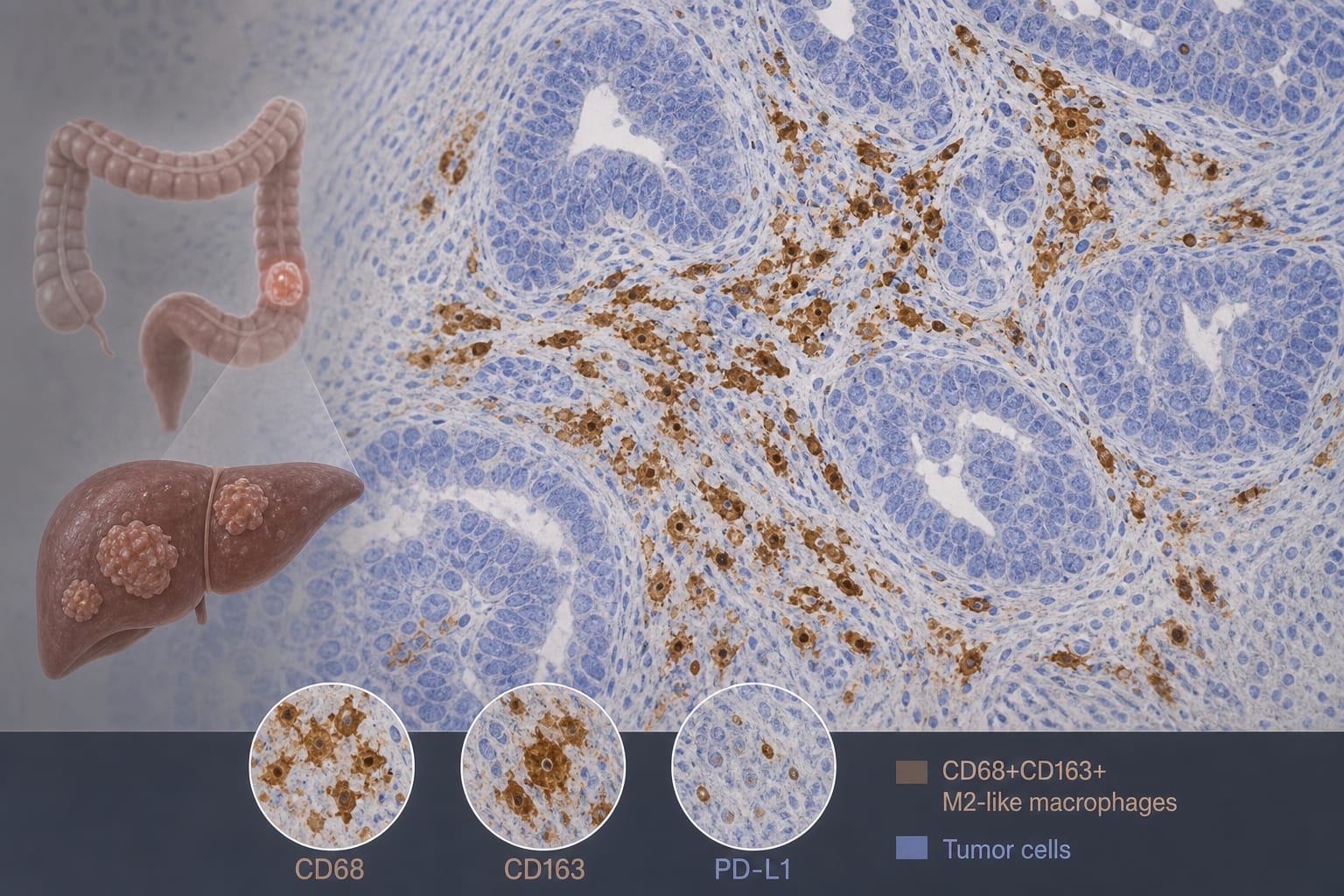
Infiltration of M2-like tumor-associated macrophages (TAMs) and their PD-L1 expression are associated with treatment resistance and poor survival outcomes.
Target Population
Patients with metastatic colorectal cancer undergoing chemotherapy and bevacizumab treatment.
Care Setting
Oncology clinical practice
Key Highlights
Increased density of CD68+CD163+ M2-like TAMs correlates with post-treatment resistance.
High levels of intratumoral M2-like TAMs are associated with shorter overall survival (OS).
Multivariate analysis indicates M2-like TAM density is an independent prognostic marker for OS and progression-free survival (PFS).
Guideline-Based Recommendations
Diagnosis
Evaluate the density of CD68+CD163+ M2-like TAMs in tumor tissues.
Management
Consider macrophage-targeted interventions to enhance efficacy of anti-tumor therapies.
Monitoring & Follow-up
Monitor intratumoral M2-like TAM levels as potential biomarkers for treatment resistance.
Risks
Increased M2-like TAM infiltration may indicate a higher risk of treatment resistance and poor prognosis.
Patient & Prescribing Data
Patients with metastatic colorectal cancer receiving first-line chemotherapy and bevacizumab.
Resistance to chemotherapy and bevacizumab is associated with high levels of intratumoral M2-like TAMs.
Clinical Best Practices
Incorporate assessment of TAM infiltration in treatment planning for mCRC.
Utilize TAM density as a prognostic marker in clinical evaluations.