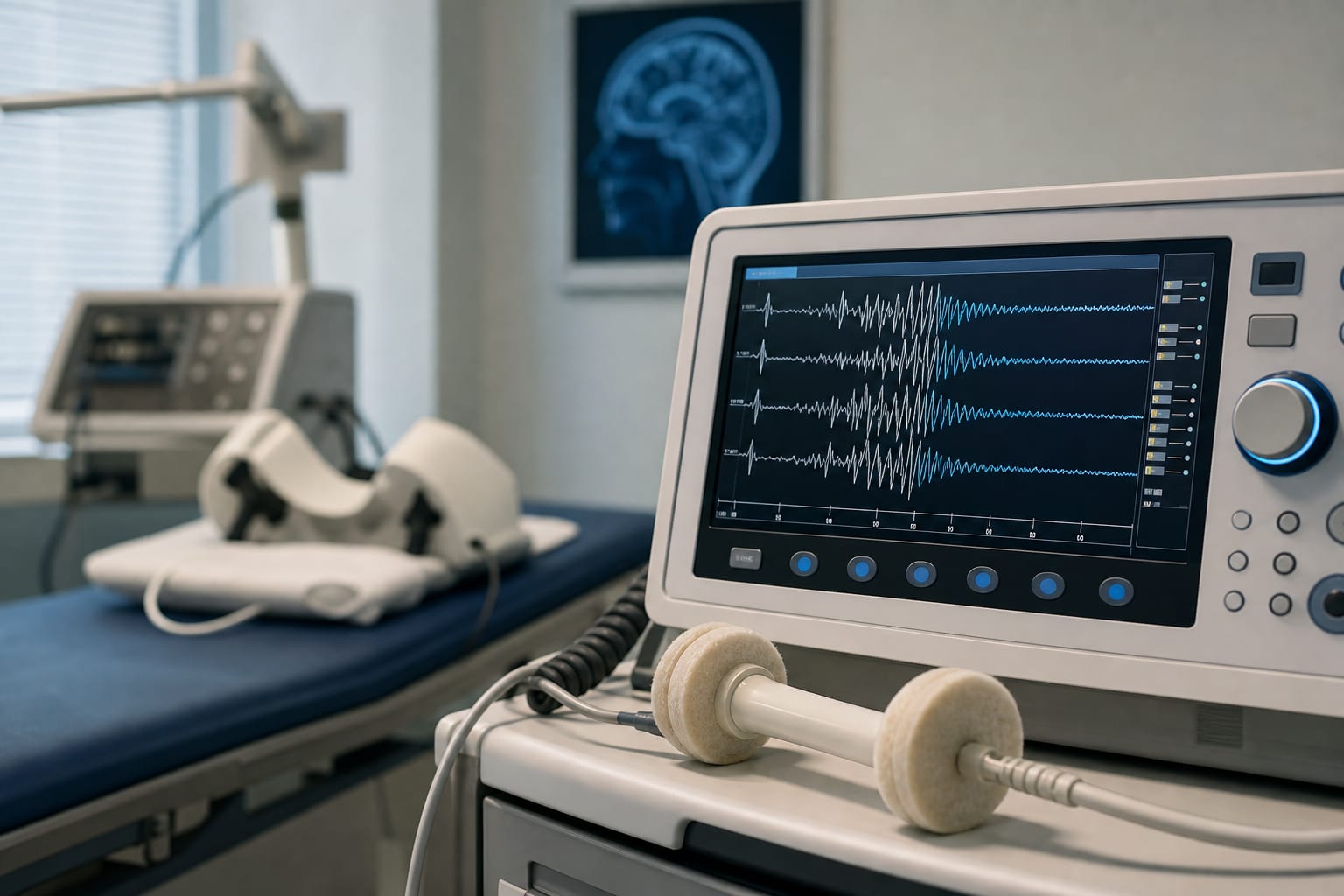
Exploring the influencing factors of initial seizure time during modified electroconvulsive therapy in patients under 30 years old with mental disorders - Scorecard - MDSpire
Clinical Scorecard: Identifying Factors Affecting Initial Seizure Duration in Patients Under 30 with Mental Disorders During Modified Electroconvulsive Therapy
At a Glance
Category
Detail
Condition
Modified Electroconvulsive Therapy (MECT)
Key Mechanisms
Age, energy percentage, and etomidate dose influence seizure duration.
Target Population
Patients under 30 years old with mental disorders (depression, bipolar disorder, schizophrenia).
Care Setting
Mental health treatment facilities performing MECT.
Key Highlights
Study included 287 patients under 30 years old.
Ideal seizure duration is defined as 15-75 seconds.
Age, energy percentage, and etomidate dose are critical predictors of seizure duration.
Traditional energy settings often lead to prolonged seizure durations in younger patients.
Optimized initial energy percentage is recommended to be 1/3–2/5 of the patient's age.
Guideline-Based Recommendations
Diagnosis
Patients diagnosed with depression, bipolar disorder, or schizophrenia per ICD-11.
Management
Use etomidate anesthesia with adjusted doses and energy settings based on age.
Monitoring & Follow-up
Real-time EEG seizure duration, SpO2, heart rate, and blood pressure should be monitored.
Risks
Prolonged seizure durations increase risks of cognitive impairment and delirium.
Patient & Prescribing Data
Young adults and adolescents under 30 years with mental disorders.
Initial energy percentage should be set to 1/3–2/5 of the patient's age to optimize seizure duration.
Clinical Best Practices
Implement a standardized protocol for initial energy settings in MECT for patients under 30.
Utilize a classification model to predict seizure duration based on key factors.