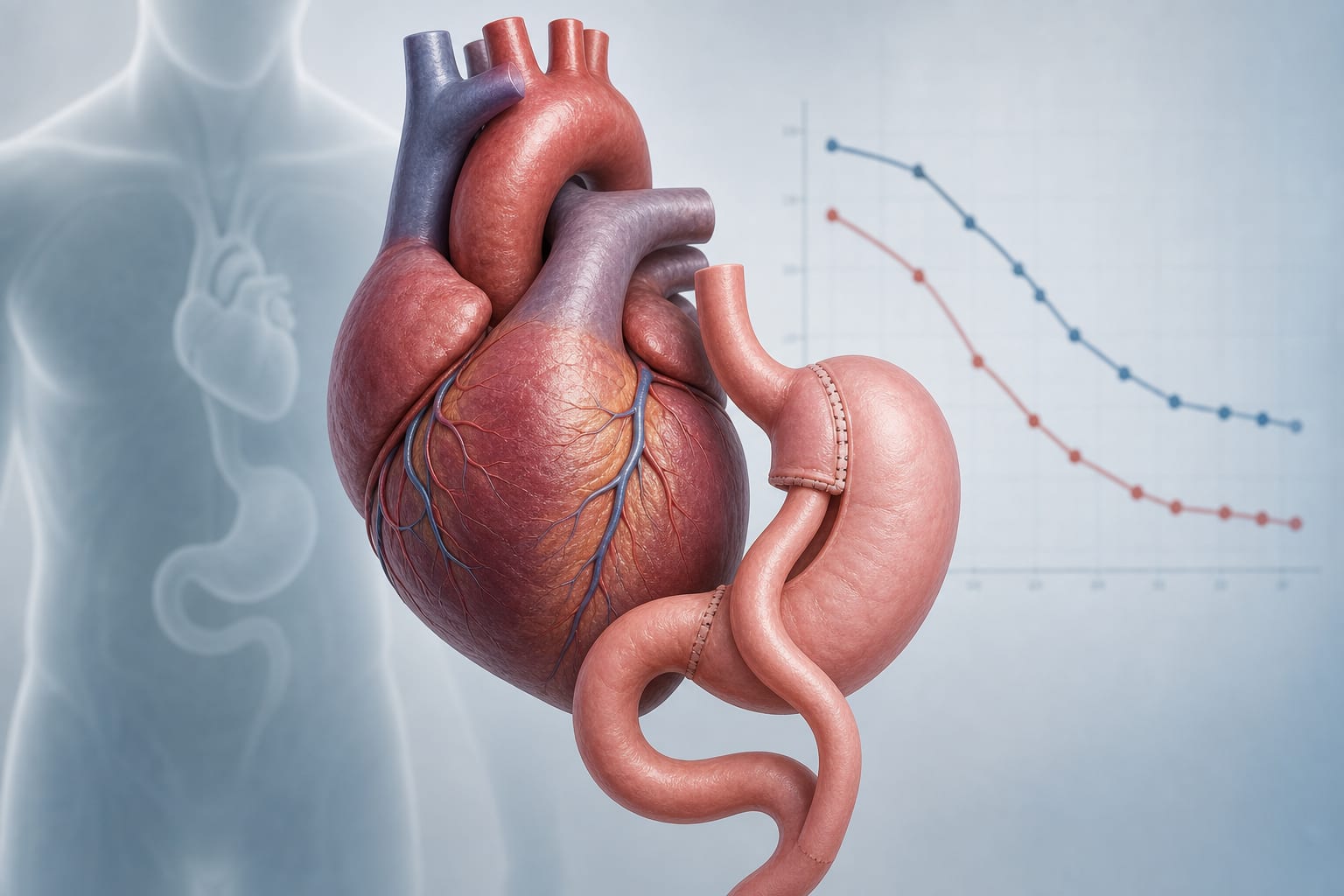
Clinical Scorecard: Outcomes of Revisional Restrictive Bariatric Surgery in Older Adults: A Five-Year Follow-Up Analysis
At a Glance
Category
Detail
Condition
Severe obesity with insufficient weight loss or weight regain after previous restrictive bariatric procedures
Key Mechanisms
Revisional bariatric surgery (RBS) following laparoscopic adjustable gastric band (LAGB) or sleeve gastrectomy (SG) to address weight regain or insufficient weight loss
Target Population
Patients aged 65 years and older undergoing revisional bariatric surgery
Care Setting
Tertiary bariatric referral center with multidisciplinary team evaluation
Key Highlights
Revisional bariatric surgery constitutes 9–18% of all metabolic and bariatric surgeries, mainly indicated for weight regain or insufficient weight loss.
No age limit for metabolic and bariatric surgery; elderly patients require additional assessment including frailty evaluation.
In this study, 40 patients aged ≥65 years underwent revisional surgery after previous restrictive procedures, primarily LAGB and SG, with standardized laparoscopic approaches.
Guideline-Based Recommendations
Diagnosis
Evaluate patients with weight regain or insufficient weight loss after previous restrictive bariatric procedures.
Assess associated medical conditions including type 2 diabetes, hypertension, hyperlipidemia, GERD, osteoarthritis, and MAFLD.
Perform multidisciplinary team evaluation and consider frailty in elderly patients.
Management
Indications for revisional bariatric surgery should follow current recommended guidelines and be reviewed by a metabolic and bariatric surgery exceptions committee.
Surgical approaches include one anastomosis gastric bypass (OAGB), sleeve gastrectomy (SG), and Roux-en-Y gastric bypass (RYGB) performed laparoscopically with standardized techniques.
Removal of previous devices (e.g., gastric band) should precede conversion procedures.
Monitoring & Follow-up
Capture perioperative outcomes including surgical complications (graded by Clavien–Dindo system), length of stay, reoperations, readmissions, and mortality within 30 days.
Monitor mid-term follow-up for BMI, total weight loss, and resolution of associated medical problems such as T2D, hypertension, and hyperlipidemia.
Define remission of T2D as HbA1c <6.5% for at least 3 months without medications; hypertension remission as BP <140/90 mmHg without antihypertensives; hyperlipidemia remission after medication discontinuation.
Risks
Potential surgical complications include leaks, bleeding, obstruction, infected fluid collections, and need for reoperation.
Elderly patients may require additional assessment for frailty and perioperative risk.
Patient & Prescribing Data
Older adults (≥65 years) with prior restrictive bariatric procedures experiencing weight regain or insufficient weight loss
Revisional bariatric surgery using laparoscopic OAGB, SG, or RYGB is feasible and performed with standardized protocols, with multidisciplinary evaluation and adherence to guidelines.
Clinical Best Practices
Conduct thorough multidisciplinary evaluation including frailty assessment in elderly patients prior to revisional bariatric surgery.
Patients with preoperative vitamin D deficiency had higher postoperative pain scores and opioid use after mastectomy, including more than triple the odds of moderate to severe pain within 24 hours of surgery.