Research progress on the neural mechanism of light therapy improving cognitive function in depression: from retinal projections to neuroplasticity - Scorecard - MDSpire
Advertisement
Research progress on the neural mechanism of light therapy improving cognitive function in depression: from retinal projections to neuroplasticity
Clinical Scorecard: Advancements in Understanding the Neural Mechanisms Behind Light Therapy's Enhancement of Cognitive Function in Depression: From Retinal Inputs to Neuroplastic Changes
At a Glance
Category
Detail
Condition
Cognitive impairment in depression
Key Mechanisms
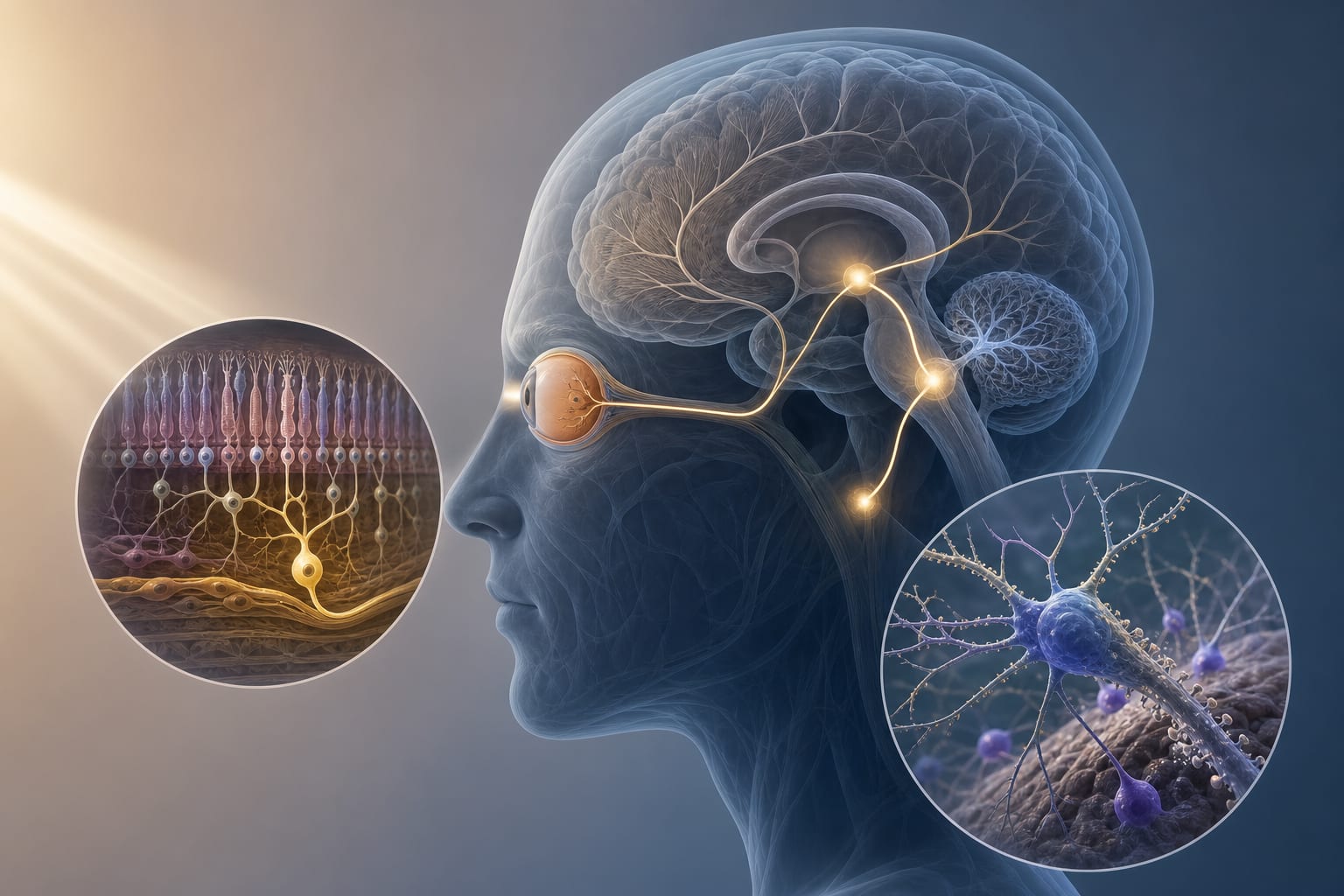
Light Therapy enhances cognitive function through retinofugal projections and neuroplastic changes.
Target Population
Patients with depression experiencing cognitive impairment.
Care Setting
Clinical and preclinical settings for depression treatment.
Key Highlights
Light Therapy (LT) is a non-invasive method with potential to improve cognitive function in depression.
LT operates through retinal projections to brain regions like the SCN, amygdala, and thalamus.
Neuroplastic changes induced by LT include hippocampal neurogenesis and synaptic remodeling.
LT has advantages over antidepressants, including lower cost and fewer side effects.
Transcranial photobiomodulation (tPBM) shows promise in enhancing cognitive function.
Guideline-Based Recommendations
Diagnosis
Assess cognitive impairment as a core symptom in patients with depression.
Management
Consider Light Therapy as a treatment option for cognitive dysfunction in depression.
Monitoring & Follow-up
Evaluate cognitive function improvements during and after Light Therapy.
Risks
Monitor for potential side effects associated with Light Therapy.
Patient & Prescribing Data
Individuals diagnosed with depression exhibiting cognitive deficits.
Light Therapy can be a safer alternative to pharmacological treatments.
Clinical Best Practices
Utilize a comprehensive approach integrating Light Therapy with other therapeutic modalities.
Tailor Light Therapy parameters (intensity, duration) based on individual patient needs.