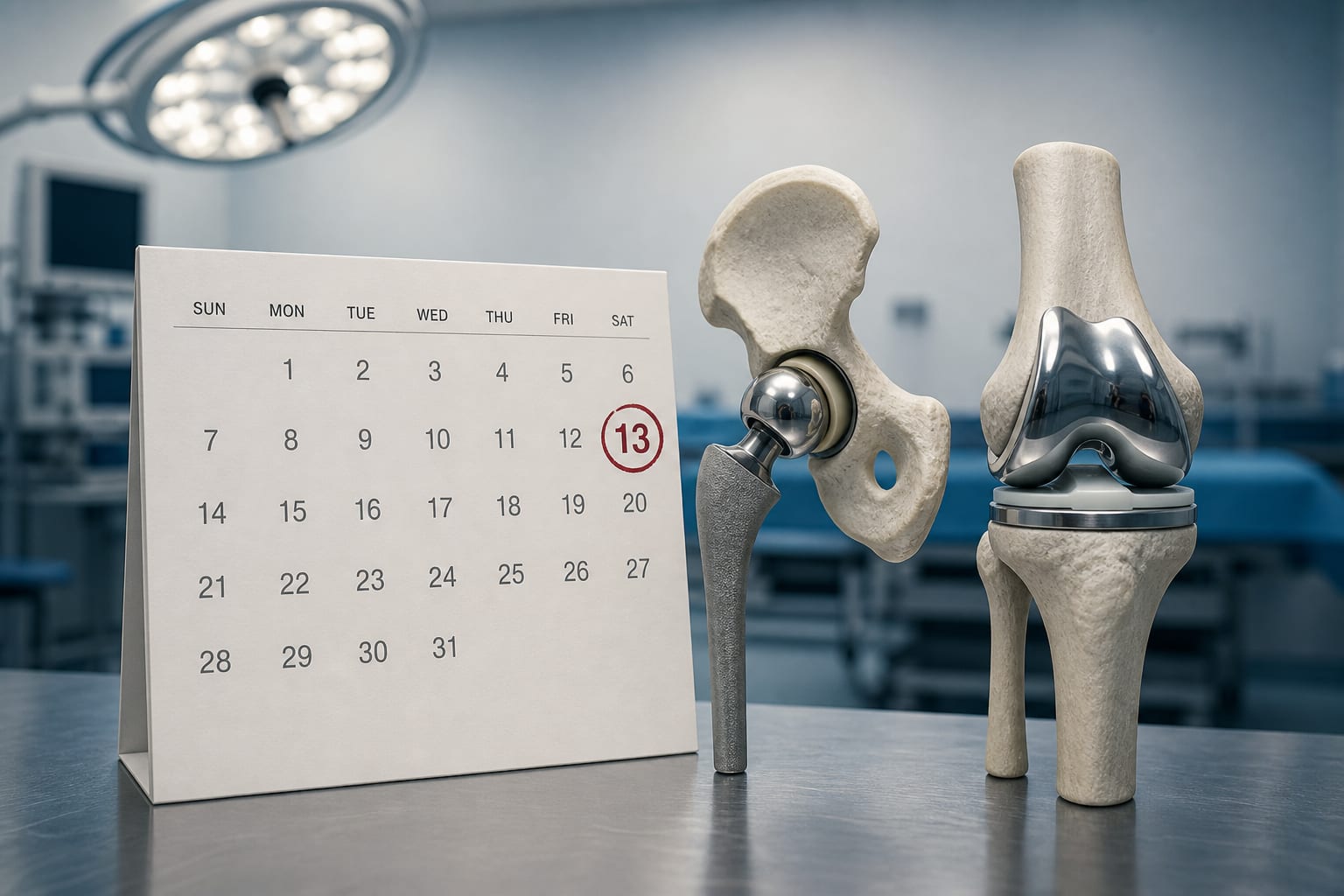
Impact of Scheduling Elective Arthroplasty on "High-Risk" Dates: Analysis of 43,000 Procedures Reveals No Adverse Outcomes
By
Nike Walter
David W. Lowenberg
Christian Heiss
Edmund C. Lau
Markus Rupp
August 22, 2026
Clinical Scorecard: Impact of Scheduling Elective Arthroplasty on 'High-Risk' Dates: Analysis of 43,000 Procedures Reveals No Adverse Outcomes
At a Glance
Category Detail
Condition Total Knee and Hip Arthroplasty Key Mechanisms Assessment of surgical outcomes related to superstition on specific dates Target Population Elderly Medicare patients aged 65 years or older Care Setting Elective surgical procedures
Key Highlights
No significant difference in complication rates on Friday the 13th compared to other Fridays Five-year cumulative incidence rates for aseptic and septic revisions were similar Mortality rates did not differ based on the day of surgery Study analyzed 945 arthroplasties performed on Friday the 13th Data sourced from Medicare physician service records from 2009 to 2019 Guideline-Based Recommendations
Diagnosis
Utilize ICD-9-CM and ICD-10-CM for diagnostic coding of arthroplasties Management
Monitor surgical outcomes without bias from superstition-related beliefs Monitoring & Follow-up
Follow patients for revisions and mortality post-arthroplasty Risks
Assess for septic and aseptic revision risks in arthroplasty patients Patient & Prescribing Data
Elderly Medicare beneficiaries undergoing hip or knee arthroplasty
No adverse outcomes linked to surgeries performed on Friday the 13th
Clinical Best Practices
Encourage evidence-based decision-making in surgical scheduling Address patient beliefs and concerns regarding surgery timing Related Resources & Content