Medium-to-long-term success rate of left atrial appendage closure using endocardial sutures and postoperative anticoagulant strategies
By
Wenzhong Heng
Hongying Song
Rong Zhang
Shibo Zhou
Maoxun Huang
Yong Wang
Huiying Wu
Tiance Wang
July 1, 2026
Clinical Scorecard: Efficacy and Longevity of Left Atrial Appendage Closure with Endocardial Sutures and Anticoagulation Post-Surgery
At a Glance
Category Detail
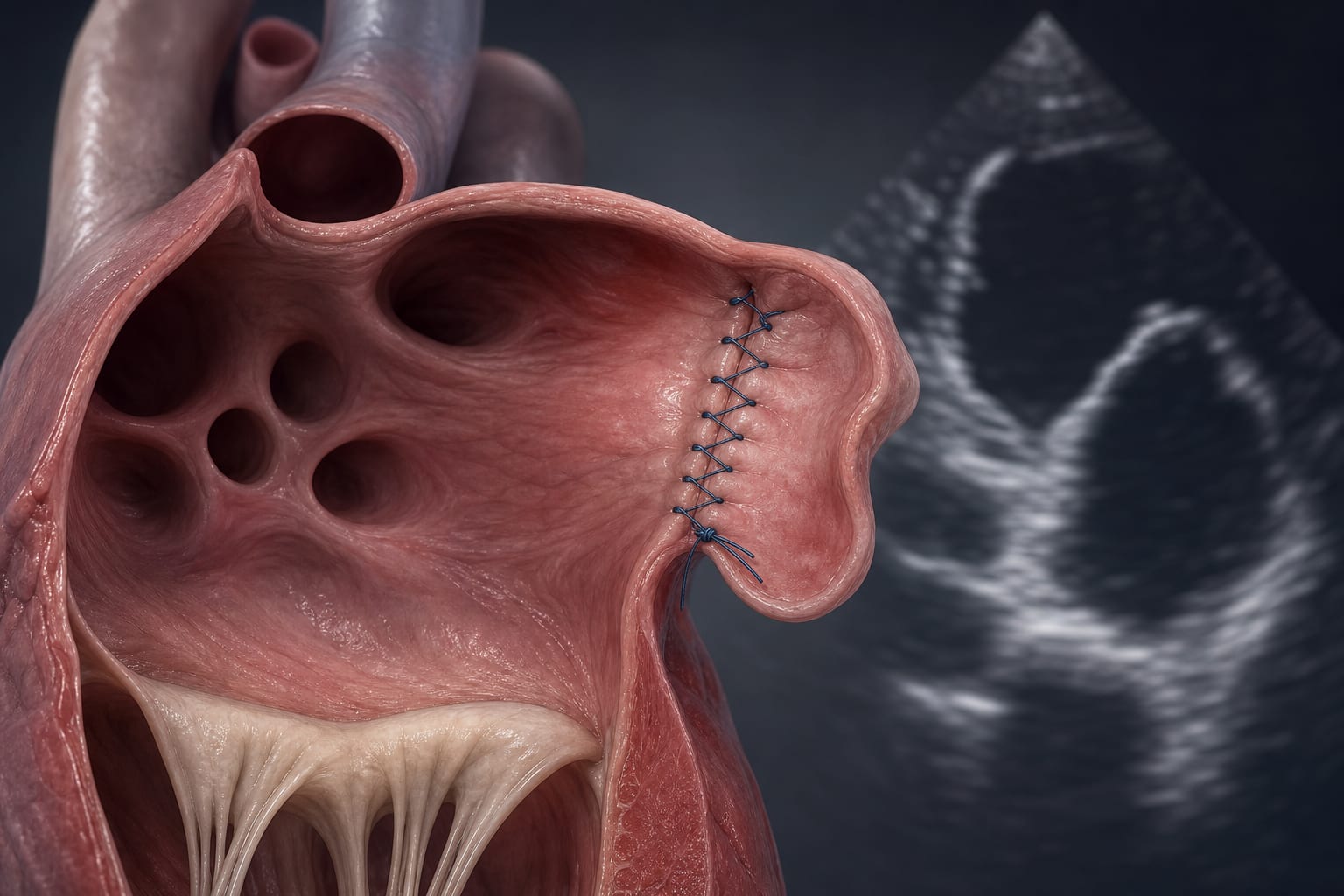
Condition Atrial Fibrillation (AF) Key Mechanisms Endocardial suture closure of the left atrial appendage (LAA) to reduce thromboembolic risk. Target Population Patients with valvular heart disease and atrial fibrillation undergoing valve surgery. Care Setting Cardiac surgery with concomitant LAA closure.
Key Highlights
90.0% medium-to-long-term closure success rate observed. Residual to-and-fro flow detected in 10.0% of patients at follow-up. Thrombus formation occurred in 80.0% of patients with residual flow. Guideline-Based Recommendations
Diagnosis
Atrial fibrillation diagnosis confirmed preoperatively by ECG. Management
Surgical left atrial appendage occlusion recommended during combined valve surgery. Monitoring & Follow-up
Intraoperative and follow-up echocardiography to assess LAA closure. Risks
Residual to-and-fro flow may be clinically relevant due to thrombus formation. Patient & Prescribing Data
Patients with valvular heart disease and atrial fibrillation.
Postoperative anticoagulation decisions should be individualized and guideline-informed.
Clinical Best Practices
Utilize intraoperative transesophageal echocardiography for immediate closure assessment. Perform follow-up transthoracic echocardiography to monitor for closure success. Related Resources & Content