Endocrine-driven inflammatory–epigenetic adaptation as a proposed axis of radioresistance in endocrine-exposed prostate cancer: a translational hypothesis - Scorecard - MDSpire
Advertisement
Endocrine-driven inflammatory–epigenetic adaptation as a proposed axis of radioresistance in endocrine-exposed prostate cancer: a translational hypothesis
Clinical Scorecard: Inflammatory and Epigenetic Adaptations Driven by Endocrine Factors as a Proposed Mechanism of Radioresistance in Prostate Cancer Exposed to Endocrine Therapies: A Translational Perspective
At a Glance
Category
Detail
Condition
Prostate Cancer
Key Mechanisms
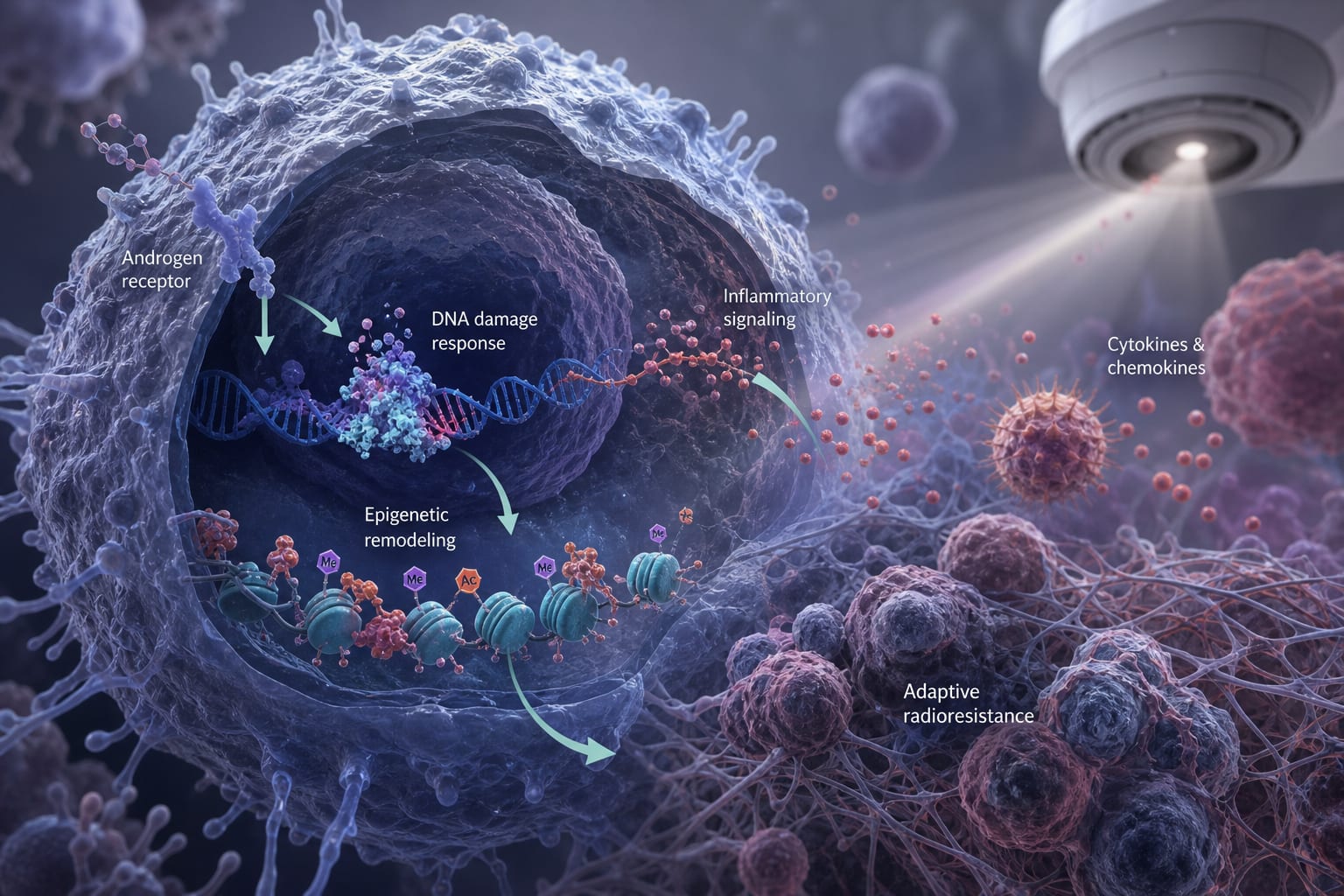
Androgen receptor signaling, DNA damage response, inflammatory adaptation, epigenetic remodeling
Target Population
Patients with high-risk localized, locally advanced, and selected salvage prostate cancer
Care Setting
Oncology and radiotherapy
Key Highlights
Endocrine therapy may initially impair AR-dependent DNA damage response signaling.
Sustained endocrine pressure can promote adaptive inflammatory signaling and epigenetic remodeling.
Adaptive inflammatory activation may lead to radioresistance in prostate cancer.
Serial biomarker profiling may better identify emerging resistance than baseline-only assessments.
Guideline-Based Recommendations
Diagnosis
Consider the role of AR signaling and inflammatory markers in assessing prostate cancer.
Management
Utilize endocrine therapies in conjunction with radiotherapy for high-risk prostate cancer.
Monitoring & Follow-up
Monitor for adaptive inflammatory responses and epigenetic changes during treatment.
Risks
Be aware of potential radioresistance due to inflammatory and epigenetic adaptations.
Patient & Prescribing Data
Patients undergoing endocrine therapy and radiotherapy for prostate cancer
Endocrine therapy may have a dynamic effect on radiosensitivity over time.
Clinical Best Practices
Integrate assessment of inflammatory and epigenetic markers in treatment planning.
Consider the timing of endocrine therapy relative to radiotherapy for optimal outcomes.