Clinical Scorecard: Improving Obesity Care for Children and Adolescents
At a Glance
Category | Detail |
|---|---|
Condition | Obesity treatment in children younger than 10 years and adolescents aged 10–19 years |
Key Mechanisms | Factors described as contributing to rising obesity prevalence include increasingly sedentary lifestyles, greater consumption of high-fat and high-sugar foods, lower socioeconomic status, and parental obesity. |
Target Population | Children younger than 10 years and adolescents aged 10–19 years discussed in the WHO obesity-treatment guidelines. |
Care Setting | Family, school, and community environments are discussed as factors shaping young people’s access to nutritious food and opportunities for physical activity. |
Key Highlights
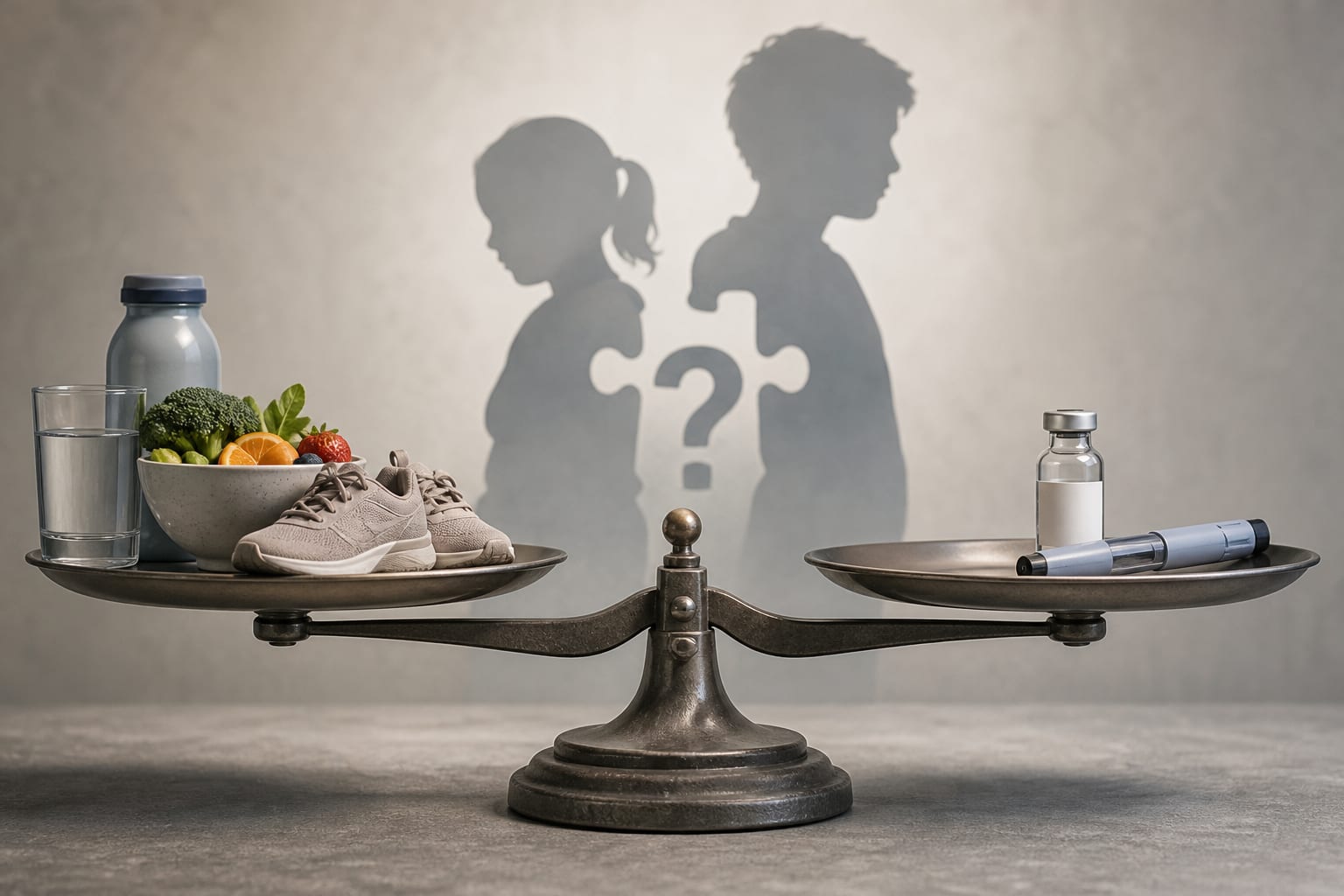
WHO guidelines issued on 7 October 2026 advise against pharmacological therapies, including GLP-1 receptor agonists, for children younger than 10 years.
For adolescents, pharmaceutical treatment is recommended only after alternative treatment options have been exhausted.
Evidence for pharmacotherapy is classified as low quality; evidence for conventional weight-loss approaches such as diet or exercise is rated very low.
The article identifies evidence gaps in real-world exercise and dietary interventions, medication safety and efficacy, and long-term follow-up.
The article reports that 20% of adolescents globally were overweight in 2024, compared with 8% in 1990.
Guideline-Based Recommendations
Diagnosis
The source provides no diagnostic recommendations.
Management
WHO guidelines advise against pharmacological therapies, including GLP-1 receptor agonists, for children younger than 10 years.
For adolescents aged 10–19 years, pharmaceutical treatment is recommended only once alternative treatment options have been exhausted.
The source states that dietary advice depends on whether young people or their parents or carers can access and afford healthy food, and calls for empowering those who determine a child’s diet.
Monitoring & Follow-up
The source says extended follow-up is necessary to assess whether pharmacotherapy disrupts developmental processes during puberty.
The source says efficacy data alone are inadequate and that safety signals in younger patients may differ from those observed in adults.
Risks
The source cites adult evidence of weight regain after GLP-1 receptor agonist discontinuation and says treatment may require lifelong medication; it discusses possible gastrointestinal side effects and loss of access as reasons a person might stop treatment.
The source raises possible unsupervised access to GLP-1 receptor agonists and risk of abuse among young people.
The source says researchers should assess how commonplace GLP-1 receptor agonist treatment for children might influence eating disorders and body dysmorphia.
The source associates obesity in young people with poor oral health, asthma, hypertension, chronic kidney diseases, type 2 diabetes, stigma, depression, and decreased educational attainment.
Patient & Prescribing Data
The article discusses WHO obesity-treatment guidance for children younger than 10 years and adolescents aged 10–19 years; it does not provide prescribing data for a defined patient population.
The article reports that WHO advises against pharmacotherapy for children younger than 10 years and recommends pharmaceutical treatment for adolescents only once alternative options have been exhausted. It describes evidence for pharmacotherapy as low quality, notes sparse evidence among adolescents, and calls for extended safety follow-up.
Clinical Best Practices
The source identifies access to physical activity and nutritious food as relevant social and environmental factors in addressing obesity among young people.
The source calls for efforts to empower those who determine a child’s diet, including parents, guardians, or schoolteachers, because children rarely control the food they consume.
The source calls for exercise research to reflect young people’s real-world environments, including densely populated areas with restricted exercise space and substantial air pollution.
The source calls for extended follow-up to assess developmental effects of pharmacotherapy during puberty.
Related Resources & Content
World Health Organization, WHO, 2026 -- WHO issues first global guidelines on child and adolescent obesity
World Health Organization, WHO, 2026 -- Obesity and overweight
Journal of Medical Internet Research, 2026 -- Parent-Engaged Digital Health Programs for Children and Adolescents With Overweight or Obesity: Effects on Adiposity and Health Behaviors—A Systematic Review and Meta-Analysis
Pediatric Obesity, 2026 -- Telehealth Vs. Face-to-Face Treatment for Children and Adolescents With Obesity: A Randomized Controlled Trial
Centers for Disease Control and Prevention, CDC, 2026 -- Evaluation and Treatment for Child Obesity
Effectiveness of Bariatric Surgery Versus Nutritional Interventions in Adolescents: A Retrospective Cohort Study
MDSpire News — Managing Obesity in Kids: USPSTF Issues Final Recommendation
WHO issues first global guidelines on child and adolescent obesity
Evaluation and Treatment for Child Obesity | Obesity | CDC
Based on findings from:
Young people with obesity deserve better care
Nature Medicine, 2026.
https://www.nature.com/articles/s41591-026-04784-x
This content is an AI-generated, fully rewritten summary based on a published scholarly article. It does not reproduce the original text and is not a substitute for the original publication. Readers are encouraged to consult the source for full context, data, and methodology.