Early neurological and developmental trajectories of infants at high risk of cerebral palsy in Bangladesh: a prospective longitudinal cohort study - Scorecard - MDSpire
Advertisement
Early neurological and developmental trajectories of infants at high risk of cerebral palsy in Bangladesh: a prospective longitudinal cohort study
Clinical Scorecard: Neurological and Developmental Pathways in High-Risk Infants for Cerebral Palsy in Bangladesh: Findings from a Prospective Longitudinal Cohort Study
At a Glance
Category
Detail
Condition
Cerebral Palsy (CP)
Key Mechanisms
Non-progressive disturbance in the developing brain leading to movement and posture disorders.
Target Population
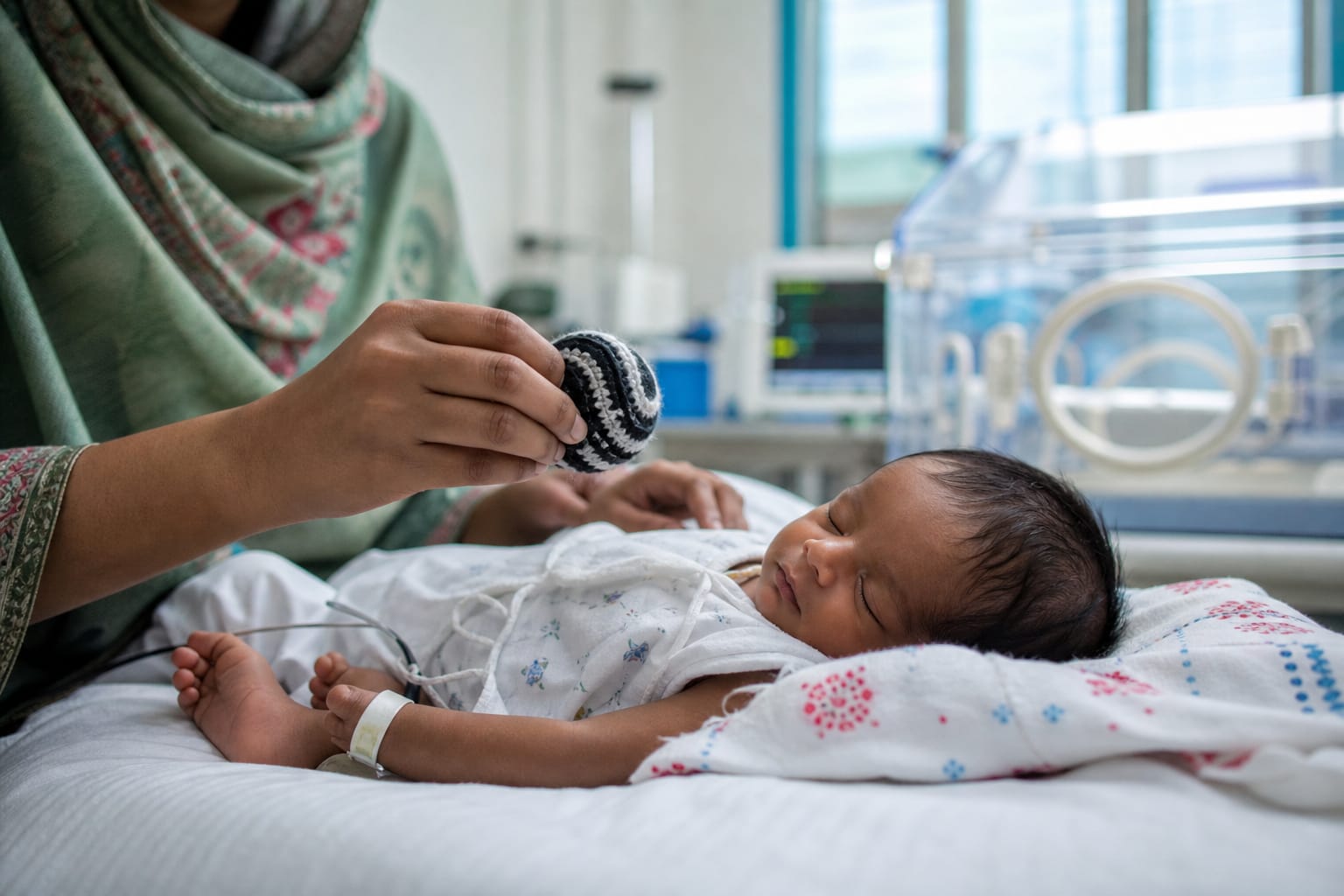
High-risk neonates in Bangladesh
Care Setting
Tertiary neonatal intensive care unit
Key Highlights
27% mortality rate among high-risk infants by 24 months.
29% of survivors diagnosed with cerebral palsy, predominantly non-ambulant.
Significant association of mortality risk with multiple birth and neonatal encephalopathy.
Distinct early neurological and developmental trajectories observed in infants with CP compared to those with developmental delay or no disability.
Median HINE scores indicate poor motor function in infants with CP.
Guideline-Based Recommendations
Diagnosis
Early identification of cerebral palsy is crucial for timely intervention.
Management
Context-specific early detection and intervention strategies are needed.
Monitoring & Follow-up
Regular assessments using standardized tools like HINE and PDMS-2.
Risks
Higher mortality risk associated with multiple births and severe neonatal conditions.
Patient & Prescribing Data
High-risk neonates admitted to NICU.
Focus on early detection and management of CP and associated comorbidities.
Clinical Best Practices
Implement early screening protocols for high-risk infants.
Utilize standardized assessment tools for monitoring development.
Develop culturally appropriate interventions to reduce mortality and improve outcomes.