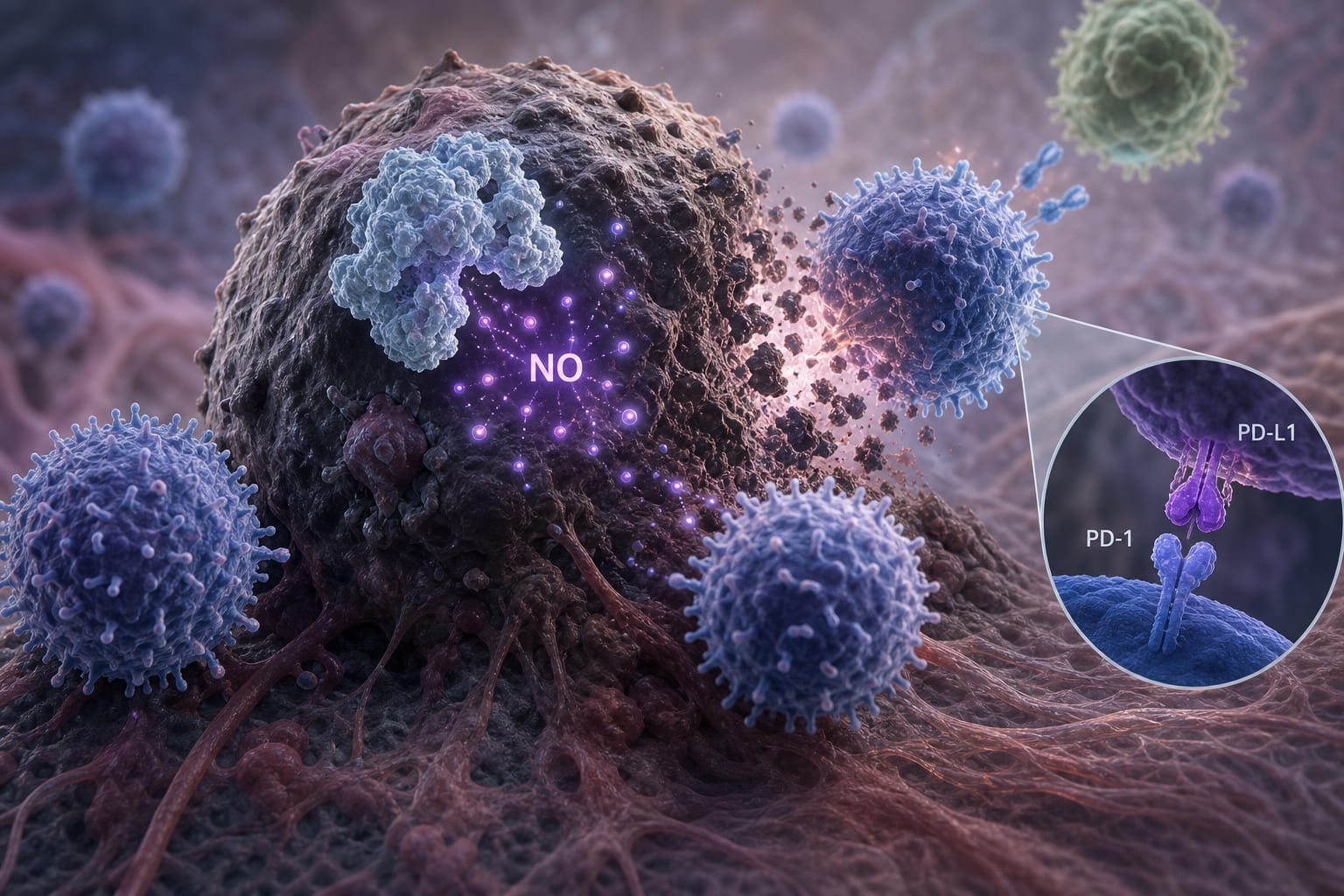
Inducible Nitric Oxide Synthase as a Crucial Factor in the Efficacy of Anti-PD-1 Treatment for Melanoma
By
Quang Tam Nguyen
Youngchul Kim
Thi Hong Nga Le
Saurabh Garg
Vishanna Balkaran
Trisha Bhathivi
Alejandra Chamizo
Christopher W. Dukes
Kimberly Ward
Andrew S. Brohl
Lilit Karapetyan
Nikhil I. Khushalani
Zeynep Eroglu
Ahmad A. Tarhini
James J. Mulé
Joseph Markowitz
June 22, 2026
Clinical Scorecard: Inducible Nitric Oxide Synthase as a Crucial Factor in the Efficacy of Anti-PD-1 Treatment for Melanoma
At a Glance
Category Detail
Condition Melanoma Key Mechanisms Inducible nitric oxide synthase (iNOS) and nitric oxide (NO) enhance anti-tumor immunity and are crucial for anti-PD-1 therapy efficacy. Target Population Melanoma patients receiving anti-PD-1 therapy. Care Setting Oncology
Key Highlights
iNOS-derived NO is necessary for effective anti-PD-1 immunotherapy in melanoma. Tumors in iNOS knockout mice grew significantly faster and did not respond to anti-PD-1 therapy. A NO-producing dendritic-cell subset was associated with improved progression-free survival in melanoma patients. NO donors inhibited melanoma cell proliferation and induced apoptosis in vitro. Anti-PD-1 therapy upregulated interferon pathway genes in wild-type but not iNOS knockout mice. Guideline-Based Recommendations
Diagnosis
Assess iNOS levels and NO production in melanoma patients. Management
Consider NO as a potential biomarker and therapeutic adjunct in anti-PD-1 treatment. Monitoring & Follow-up
Monitor immune subsets and NO production in patients undergoing anti-PD-1 therapy. Risks
Loss of iNOS may impair tumor control and immune responsiveness. Patient & Prescribing Data
Melanoma patients receiving anti-PD-1 therapy.
NO production is linked to better outcomes in anti-PD-1 therapy.
Clinical Best Practices
Evaluate the role of iNOS and NO in melanoma treatment responses. Incorporate immune profiling in treatment planning for melanoma patients. Related Resources & Content