Plasma HERV-K envelopE RNA: a minimally invasive biomarker for lung adenocarcinoma detection and prognostic assessment in the context of conventional serum tumor markers - Scorecard - MDSpire
Advertisement
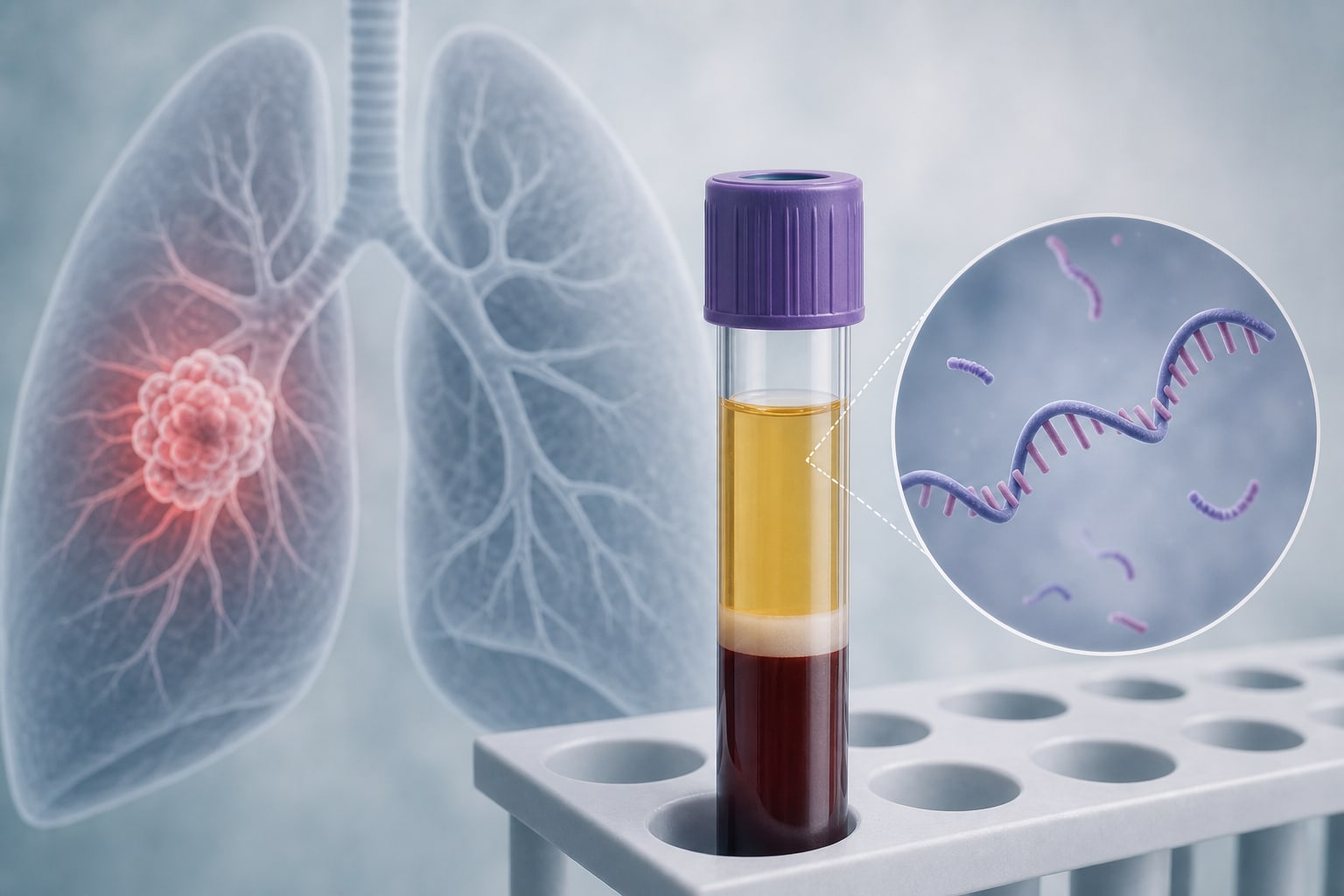
Plasma HERV-K envelopE RNA: a minimally invasive biomarker for lung adenocarcinoma detection and prognostic assessment in the context of conventional serum tumor markers
Clinical Scorecard: HERV-K EnvelopE RNA in Plasma: A Non-Invasive Biomarker for Diagnosing Lung Adenocarcinoma and Evaluating Prognosis Alongside Standard Serum Tumor Markers
At a Glance
Category
Detail
Condition
Lung Adenocarcinoma (LUAD)
Key Mechanisms
HERV-K env mRNA as a biomarker for diagnosis and prognosis
Target Population
Patients with lung adenocarcinoma and non-small cell lung cancer
Care Setting
Clinical oncology and diagnostic laboratories
Key Highlights
HERV-K env mRNA is significantly upregulated in LUAD compared to LUSC and benign nodules.
Plasma HERV-K env mRNA correlates with tissue expression and shows potential for early diagnosis.
High plasma levels of HERV-K env mRNA are associated with poorer overall survival in LUAD patients.
ROC analysis indicates excellent diagnostic performance for stage I/II LUAD.
Conventional serum tumor markers show limited correlation with plasma HERV-K env mRNA levels.
Guideline-Based Recommendations
Diagnosis
Consider plasma HERV-K env mRNA for subtype-specific diagnosis in lung cancer.
Management
Utilize HERV-K env mRNA levels for prognostic assessment in LUAD.
Monitoring & Follow-up
Monitor plasma HERV-K env mRNA levels for correlation with disease progression.
Risks
High levels of plasma HERV-K env mRNA may indicate poorer prognosis.
Patient & Prescribing Data
Patients diagnosed with lung adenocarcinoma and non-small cell lung cancer.
HERV-K env mRNA may serve as a complementary biomarker alongside conventional serum tumor markers.
Clinical Best Practices
Incorporate HERV-K env mRNA testing in diagnostic protocols for lung adenocarcinoma.
Use plasma biomarkers in conjunction with imaging and histological assessments.