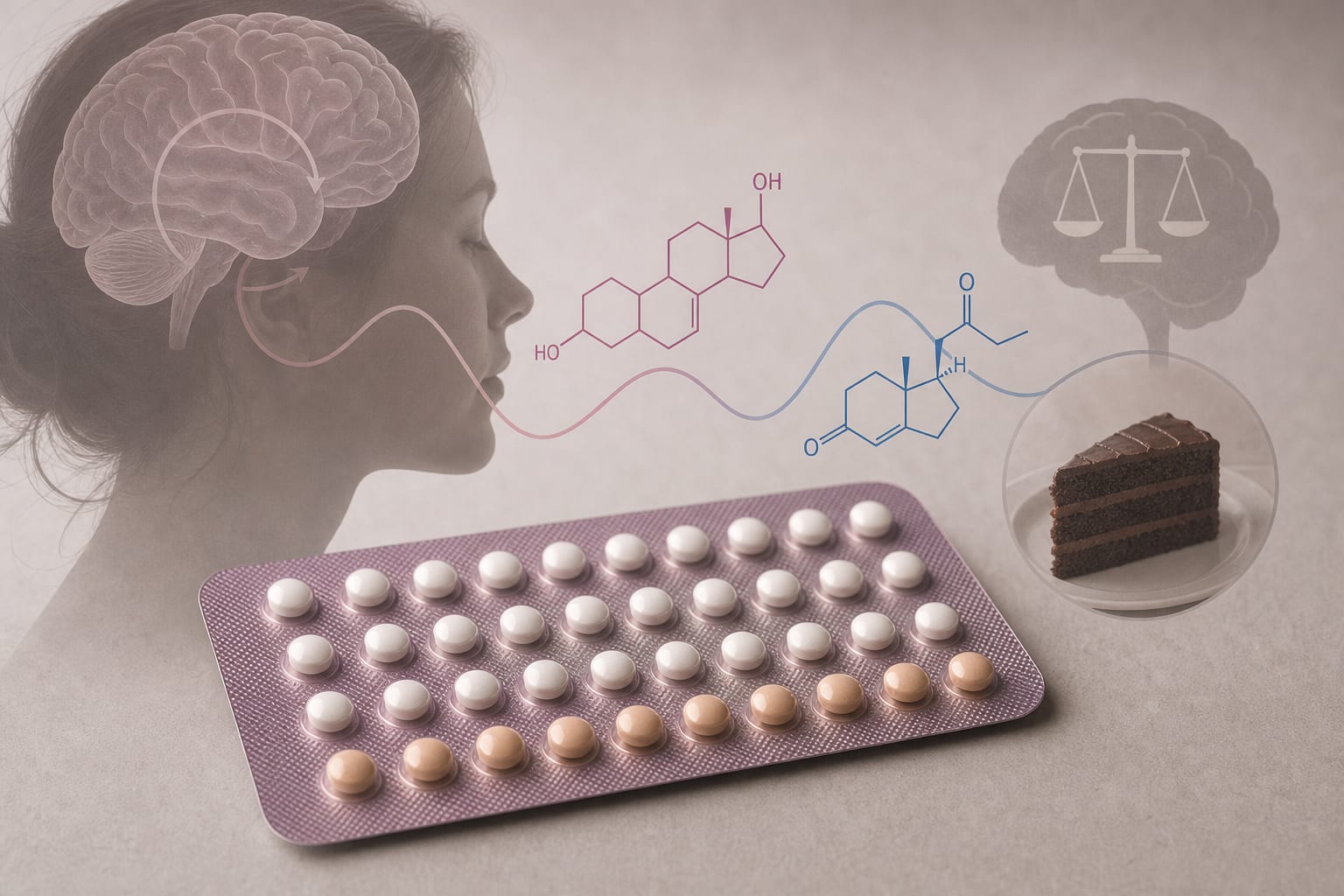
Combined Oral Contraceptive Use and Binge Eating
By
Kelly L. Klump
Alaina M. Di Dio
Carolina Anaya
Megan E. Mikhail
S. Alexandra Burt
Cheryl L. Sisk
Pamela K. Keel
Debra K. Katzman
Michael Neale
Lindsay S. Ackerman
Shaunna L. Clark
Kristen M. Culbert
June 17, 2026
Clinical Scorecard: The Relationship Between Binge Eating and the Use of Combined Oral Contraceptives
At a Glance
Category Detail
Condition Key Mechanisms Endogenous ovarian hormones, particularly estrogen and progesterone, influence binge eating behaviors. [Source needed] Target Population Care Setting
Key Highlights
Remove unsupported phrase: 'potentially increasing binge eating risk.' Guideline-Based Recommendations
Diagnosis
Use established self-report measures of binge eating risk. [Source needed] Management
Monitor binge eating behaviors in women using combined oral contraceptives. [Source needed] Monitoring & Follow-up
Control for daily changes in negative affect when assessing binge eating. [Source needed] Risks
Increased binge eating may occur during active hormone pill phases. [Source needed] Patient & Prescribing Data
Women aged 15 to 30 years with no genetic or medical conditions affecting hormones or appetite. [Source needed]
Clinical Best Practices
Conduct studies on the effects of exogenous hormones on binge eating. [Source needed] Examine binge eating across active vs inactive pill phases to assess hormonal impacts. [Source needed] Related Resources & Content