Why Roswell Park for Hepatobiliary Cancer
-
October 27, 2026
Clinical Scorecard: Why Roswell Park for Hepatobiliary Cancer
At a Glance
| Category | Detail |
|---|---|
| Condition | Liver and pancreatic cancers; unresectable bile duct cancers; colorectal cancer metastases that cannot be resected or have a high risk of recurrence |
| Key Mechanisms | Multidisciplinary specialist evaluation, robotic hepatic artery infusion pump treatment, and robotic Whipple surgery |
| Target Population | Patients with liver or pancreatic cancers, unresectable bile duct cancers, or colorectal cancer metastases that cannot be resected or have a high risk of recurrence |
| Care Setting | Roswell Park Comprehensive Cancer Center, which reports performing more than 100 surgeries annually for patients with liver and pancreatic cancers |
Key Highlights
- Roswell Park reports performing more than 100 surgeries for patients with liver and pancreatic cancers each year.
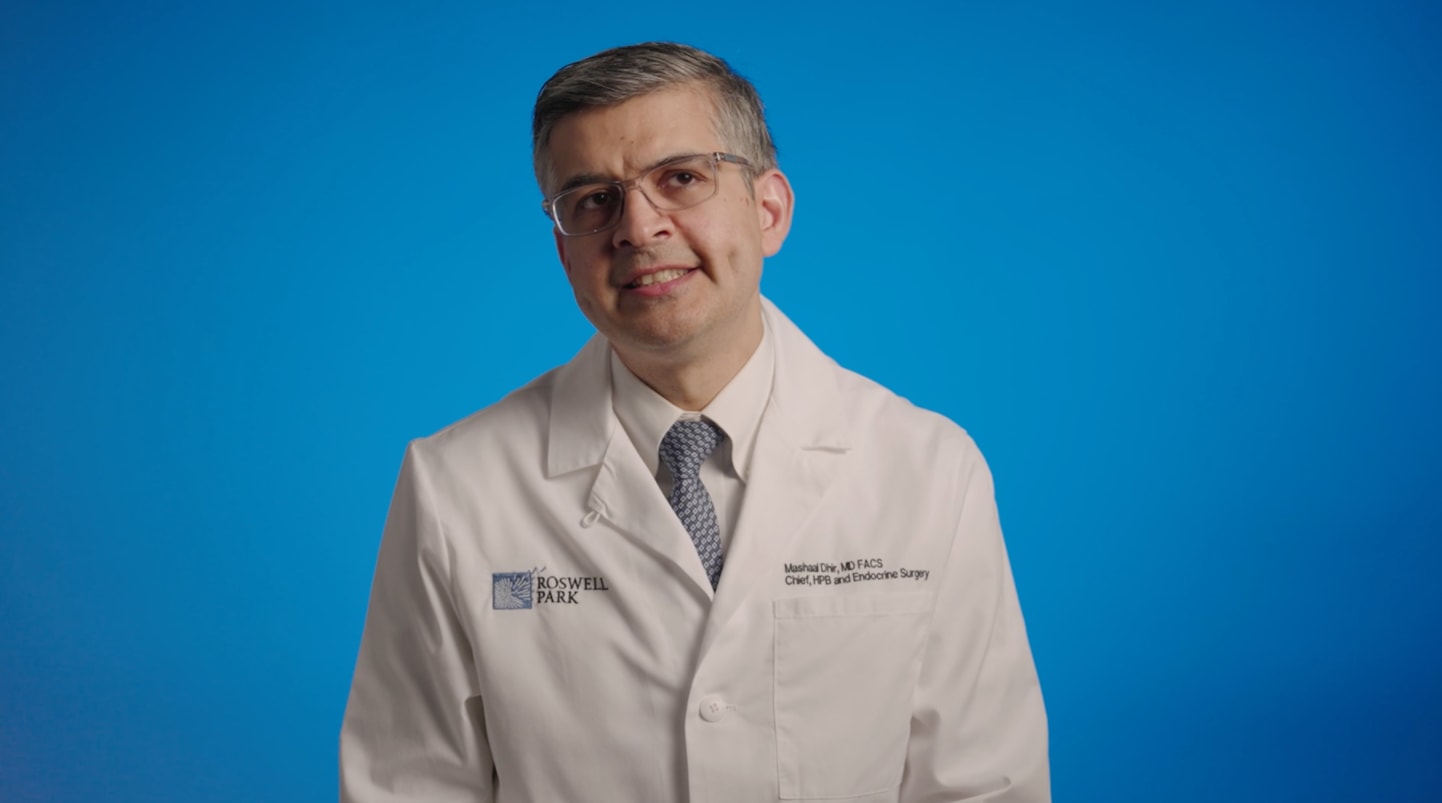
- Mashaal Dhir, MD, FACS, advises patients to meet with a multidisciplinary team—including medical, radiation and interventional oncologists, surgeons, and interventional gastroenterologists—as early as possible to consider treatment options.
- Roswell Park says it is the only hospital in its region offering robotic hepatic artery infusion pump treatment.
- Roswell Park offers robotic Whipple surgery for cancerous and benign conditions; the source says very few centers offer the procedure.
Guideline-Based Recommendations
Diagnosis
Management
Monitoring & Follow-up
Risks
Patient & Prescribing Data
Patients with bile duct cancers that cannot be removed or colorectal cancer metastases that cannot be resected or pose a high risk of recurrence; the article also describes care for patients with liver and pancreatic cancers.
The article says robotic hepatic artery infusion pump treatment has been shown to double survival rates and prolong the lives of patients in the specified bile duct and colorectal cancer groups. Dr. Dhir says robotic Whipple surgery can help patients return to regular life and chemotherapy faster.
Clinical Best Practices
- Dr. Mashaal Dhir, the center's Section Chief of Upper GI, HBT and Endocrine Surgery, advises early consultation with medical, radiation and interventional oncologists, surgeons, and interventional gastroenterologists to consider available treatment options.
Related Resources & Content
Based on findings from:
Why Roswell Park for Hepatobiliary Cancer
Roswell Park Comprehensive Cancer Center, 2026.
https://physicianresources.roswellpark.org/videos/why-roswell-park-for-hepatobiliary-cancer
This content is an AI-generated, fully rewritten summary based on a published scholarly article. It does not reproduce the original text and is not a substitute for the original publication. Readers are encouraged to consult the source for full context, data, and methodology.