Clinical Scorecard: Intravenous Iloprost Administration at Home Using a Portable Elastomeric Pump for Chronic Limb-Threatening Ischemia: A Preliminary Investigation
At a Glance
Category
Detail
Condition
Chronic Limb-Threatening Ischemia (CLTI)
Key Mechanisms
Iloprost is a PGI2 analogue that inhibits platelet activation and has a vasodilator effect.
Target Population
Patients with CLTI who are 'no-option' for revascularization.
Care Setting
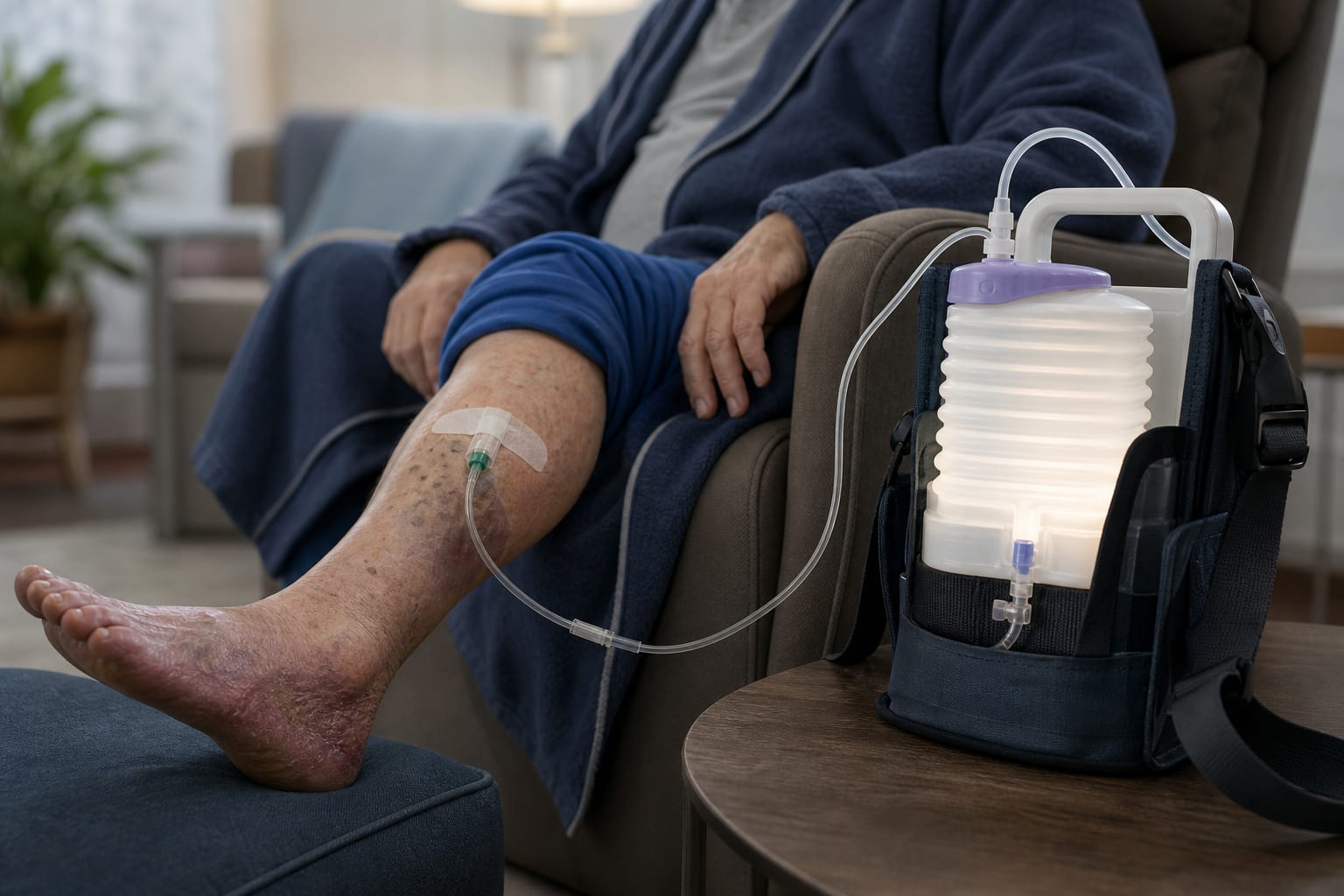
Home administration of intravenous iloprost using a portable elastomeric pump.
Key Highlights
CLTI is associated with high morbidity and mortality, with 1-year outcome rates exceeding 20% for mortality and major amputation.
First-line treatment for CLTI includes open or endovascular revascularization, but some patients are not suitable for these procedures.
Iloprost has been the only pharmacological option for 'no-option' patients for over three decades.
Different protocols for iloprost infusion may lead to varying outcomes in clinical studies.
The study aims to evaluate the safety and effectiveness of low-dose iloprost administration at home.
Guideline-Based Recommendations
Diagnosis
Diagnosis of CLTI requires an ankle pressure ≤ 50 mmHg, clinical symptoms of PAD, and significant stenosis/occlusion confirmed by duplex ultrasound.
Management
Patients receive a statin plus ezetimibe and a platelet aggregation inhibitor, with rivaroxaban prescribed for eligible patients.
Monitoring & Follow-up
Patients are followed up at 1, 3, and 6 months, then every 6 months, with DUS performed at each visit.
Risks
Iloprost-related adverse events and the risk of major amputations are primary concerns.
Patient & Prescribing Data
Patients diagnosed with CLTI who are not candidates for revascularization.
Low-dose intravenous iloprost is administered at home using a portable elastomeric pump.
Clinical Best Practices
Monitor blood pressure and manage hypertension in patients with CLTI.
Encourage smoking cessation to improve limb outcomes.
Assess and manage comorbidities such as diabetes and obesity.