Degeneration rather than hypoplasia may be the pathologic feature of the endolymphatic sac in patients with ipsilateral delayed endolymphatic hydrops - Scorecard - MDSpire
Advertisement
Pathological Characteristics of the Endolymphatic Sac in Patients with Ipsilateral Delayed Endolymphatic Hydrops: Emphasizing Degeneration Over Hypoplasia
Clinical Scorecard: Pathological Characteristics of the Endolymphatic Sac in Patients with Ipsilateral Delayed Endolymphatic Hydrops: Emphasizing Degeneration Over Hypoplasia
At a Glance
Category
Detail
Condition
Delayed Endolymphatic Hydrops (DEH)
Key Mechanisms
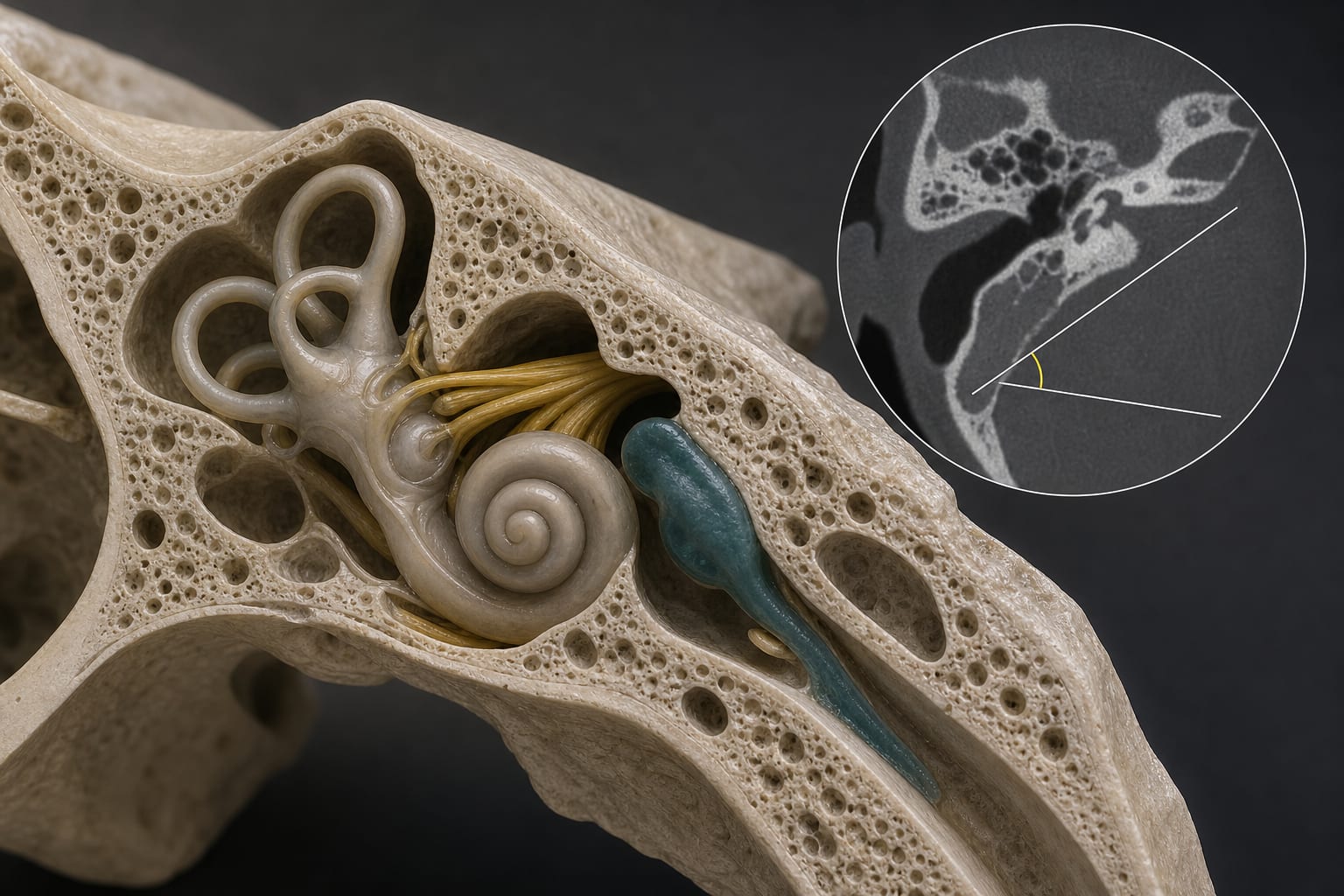
Endolymphatic sac pathology characterized by angular trajectory of the vestibular aqueduct (ATVA)
Target Population
Patients with ipsilateral DEH and unilateral Ménière’s disease
Care Setting
Otorhinolaryngology-Head and Neck Surgery
Key Highlights
Higher prevalence of ATVA ≤ 120° in DEH compared to unilateral MD
No significant difference in ATVA distribution between affected and non-affected ears in DEH patients
Degenerative endolymphatic sac pathology may dominate in ipsilateral DEH patients
Guideline-Based Recommendations
Diagnosis
Diagnosis of DEH requires a history of profound hearing loss preceding vertigo episodes.
Management
Management strategies for DEH may differ from those for Ménière’s disease.
Monitoring & Follow-up
Clinical features such as hearing loss and vertigo episodes should be monitored.
Risks
Risk factors include a history of sensorineural hearing loss.
Patient & Prescribing Data
Ipsilateral DEH patients and unilateral MD patients
Treatment approaches may need to consider the distinct clinical features of DEH.
Clinical Best Practices
Utilize ATVA as a radiographic indicator for endolymphatic sac pathology.
Consider the clinical implications of different endotypes in patient management.