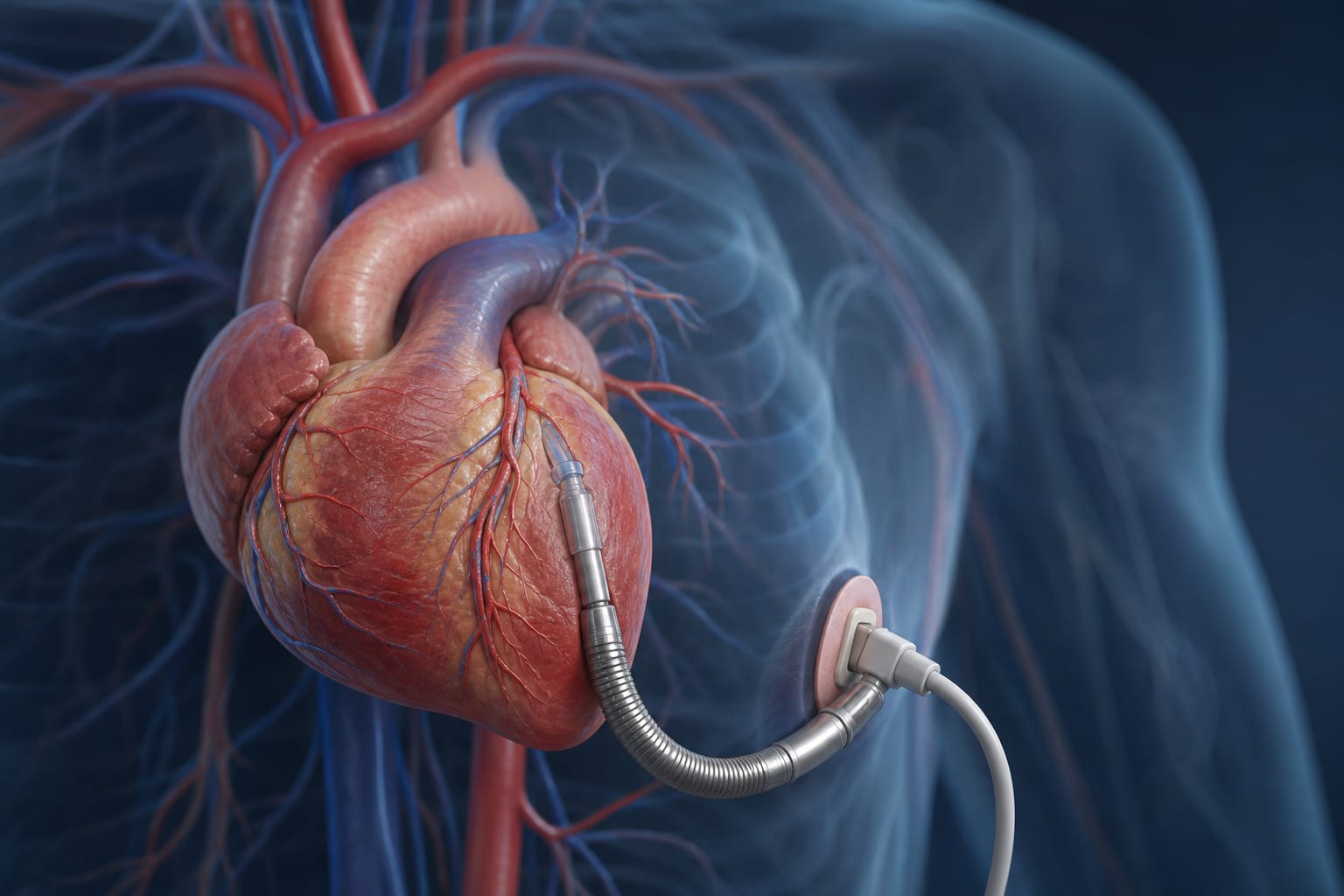
Clinical Scorecard: Gender-related variations in disease severity and outcomes in left ventricular heart failure: findings from a national cohort analysis
At a Glance
Category
Detail
Condition
Left ventricular heart failure (LVHF)
Key Mechanisms
Structural and/or functional cardiac abnormalities causing symptoms and signs of heart failure, classified by left ventricular ejection fraction and NYHA functional class
Target Population
Patients hospitalized with primary diagnosis of LVHF in Germany
Care Setting
Inpatient hospital care across German hospitals
Key Highlights
LVHF classification by NYHA and LVEF guides diagnosis and management but prognostic implications vary by sex.
Women with LVHF are underdiagnosed, undertreated, and less likely to receive heart transplantation compared to men.
Nationwide German hospital data (2014–2022) analyzed sex-specific differences in LVHF severity and in-hospital outcomes.
Guideline-Based Recommendations
Diagnosis
Diagnosis based on typical symptoms (breathlessness, fatigue, ankle swelling) and signs (elevated jugular venous pressure, pulmonary crackles, peripheral edema).
Objective evidence of cardiac dysfunction and/or elevated natriuretic peptides required.
Classification by LVEF into HFrEF (≤40%), HFmrEF (41–49%), and HFpEF (≥50%) and NYHA functional class.
Management
Guideline-recommended therapies should be applied irrespective of sex, addressing underuse in women.
Consideration of sex-specific differences in pathophysiology and therapy response.
Heart transplantation and advanced therapies should be equitably offered.
Monitoring & Follow-up
Monitor disease progression by NYHA class and sex-specific outcomes.
Track in-hospital mortality, length of stay, and complications such as cardiogenic shock and acute kidney injury.
Use administrative data coding (ICD-10-GM, OPS) for comprehensive patient assessment.
Risks
Sex disparities contribute to differences in diagnosis, treatment, and prognosis.
Women face higher risk of underdiagnosis and undertreatment.
Comorbidities and complications influence outcomes and should be carefully managed.
Patient & Prescribing Data
Hospitalized patients with primary diagnosis of LVHF in Germany from 2014 to 2022
Women with LVHF receive guideline-recommended therapies less frequently and have lower rates of heart transplantation compared to men, indicating a need for improved equity in care.
Clinical Best Practices
Apply standardized diagnostic criteria including symptom assessment and objective cardiac evaluation.
Use NYHA classification alongside LVEF to stratify disease severity and guide treatment.
Address sex-specific disparities by ensuring equitable access to therapies and advanced interventions.
Utilize comprehensive administrative data for monitoring and quality improvement.
Recognize and manage comorbidities and complications to optimize outcomes.
In a target-trial emulation of more than 600,000 veterans, GLP-1 RA initiators saw fewer new substance use disorders—and patients with existing SUDs had fewer overdoses, hospitalizations, and deaths.