Case Report: “Damage control” in obstetric neurosurgery: staged management of ruptured arteriovenous malformation with herniation - Scorecard - MDSpire

Case Report: “Damage control” in obstetric neurosurgery: staged management of ruptured arteriovenous malformation with herniation

  • By

  • Qunlong Jiang

  • Xiaoli Liu

  • Zhiwei Zhang

  • Xiaokui Kang

  • May 8, 2026

  • 0 min

Share

Clinical Scorecard: Staged Management Approach in Obstetric Neurosurgery: Addressing Ruptured Arteriovenous Malformation with Associated Herniation

At a Glance

CategoryDetail
ConditionRuptured Arteriovenous Malformation (AVM) in Pregnancy
Key MechanismsEmergency decompression to prevent herniation, followed by delayed vascular treatment.
Target PopulationPregnant women with ruptured AVM and neurological compromise.
Care SettingEmergency and obstetric neurosurgery.

Key Highlights

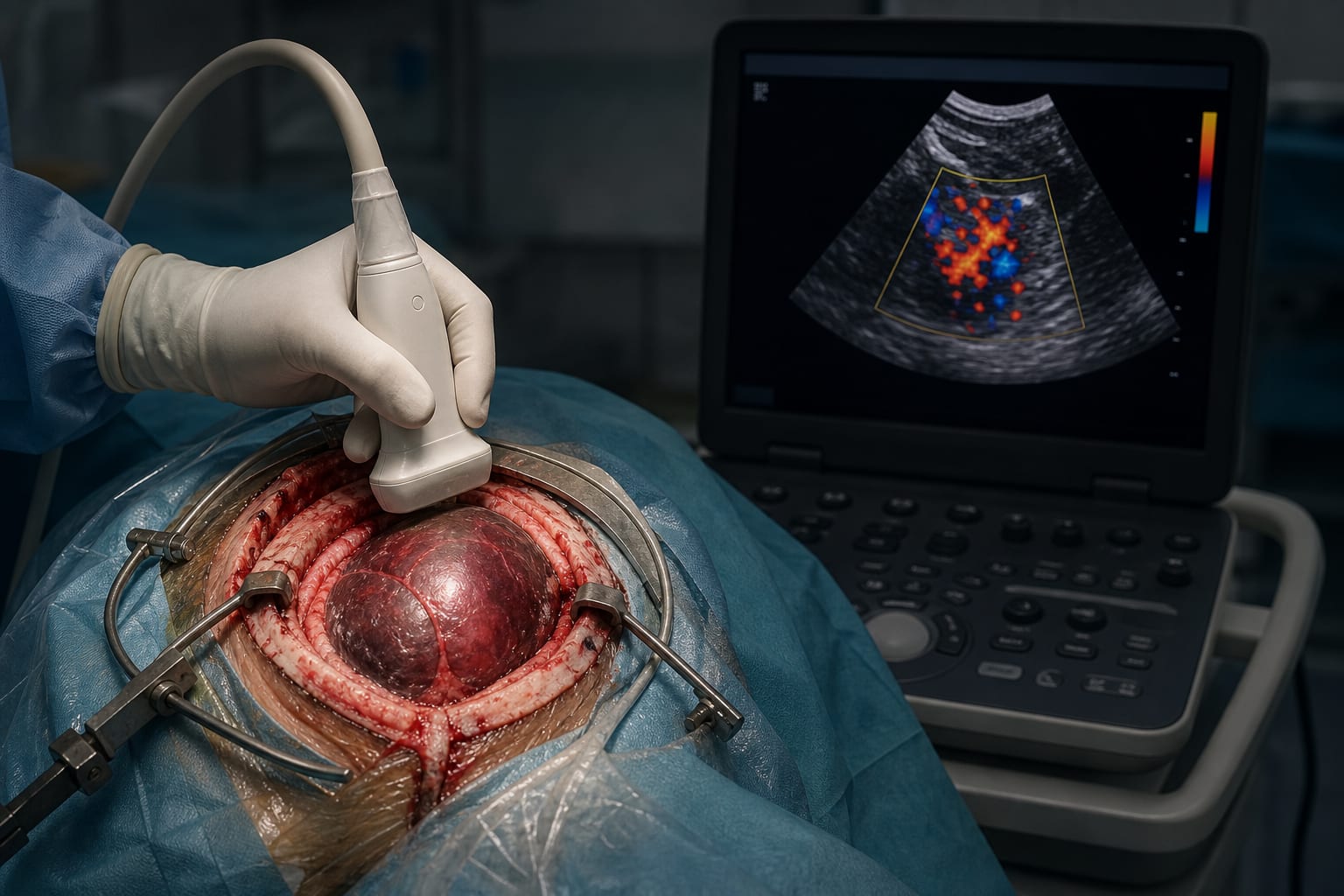
  • Emergency decompressive craniectomy performed to reverse herniation.
  • Successful term delivery achieved after initial stabilization.
  • Staged approach separates acute decompression from vascular treatment.
  • Patient achieved full neurological recovery post-intervention.
  • Case highlights the importance of balancing maternal and fetal health.

Guideline-Based Recommendations

Diagnosis

  • Immediate neuroimaging (CT) to assess for hemorrhage and herniation.

Management

  • Emergency decompression prior to definitive vascular treatment.

Monitoring & Follow-up

  • Daily fetal ultrasound to confirm viability and maternal hemodynamic stability.

Risks

  • High maternal mortality rates associated with AVM rupture (5%-12%).

Patient & Prescribing Data

Pregnant women presenting with acute neurological symptoms due to ruptured AVM.

Definitive embolization deferred until postpartum to ensure maternal stability.

Clinical Best Practices

  • Utilize a multidisciplinary approach for maternal and fetal care.
  • Maintain strict control of maternal mean arterial pressure and intracranial pressure.
  • Consider non-invasive imaging prior to invasive procedures when possible.

Related Resources & Content

Original Source(s)

Related Content