Integrative genetic and expression profiling prioritizes LIPA in mononuclear phagocytes as a candidate regulator of carotid plaque
By
Zhuyuan Yu
Shuhua Mao
Ying Song
Xiangyuan Meng
Jianing Yu
Ziyu Zong
Tianlin Gao
Hao Chen
June 19, 2026
Clinical Scorecard: Genetic and Expression Profiling Approaches Highlight LIPA in Mononuclear Phagocytes as a Key Regulator of Carotid Plaque
At a Glance
Category Detail
Condition Carotid Plaque (CP) Key Mechanisms LIPA expression in mononuclear phagocytes linked to lipid accumulation and immune regulation. Target Population Adults over 50 years with carotid plaque. Care Setting Clinical research and genetic profiling.
Key Highlights
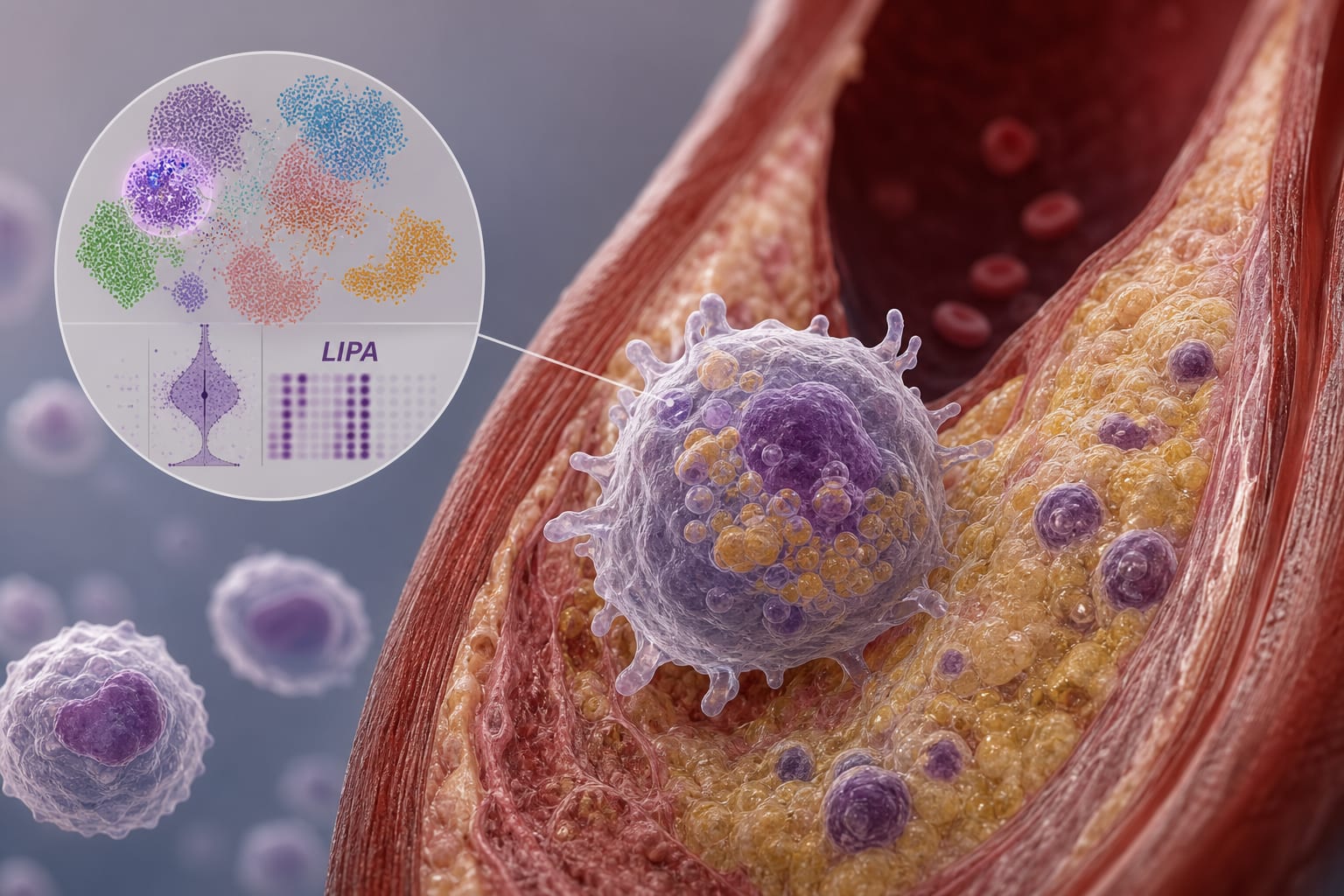
22 candidate genes for carotid plaque identified. LIPA shows consistent causal association with increased CP risk. LIPA is highly expressed in mononuclear phagocytes of CP tissues. In vitro studies confirm LIPA's role in lipid accumulation and immune modulation. Dorsomorphin reduces LIPA upregulation and lipid accumulation in macrophages. Guideline-Based Recommendations
Diagnosis
Utilize genetic and transcriptomic profiling to identify candidate genes for CP. Management
Current management includes lipid-lowering statins and surgical revascularization. Monitoring & Follow-up
Monitor LIPA expression levels in relation to carotid plaque progression. Risks
Increased risk of ischemic stroke and cognitive decline associated with carotid plaque. Patient & Prescribing Data
Adults over 50 years with carotid plaque.
Lipid-lowering therapies may need to be complemented with precision immunotherapies targeting plaque immune microenvironment.
Clinical Best Practices
Integrate genetic profiling in the assessment of carotid plaque. Consider immune cell-specific gene regulation in treatment strategies. Related Resources & Content