Clinical Scorecard: Clinical and Imaging Outcomes in Spinal Tuberculosis: A Retrospective Analysis
At a Glance
Category
Detail
Condition
Spinal tuberculosis (TB), including clinical and MRI findings, treatment duration, and outcomes.
Key Mechanisms
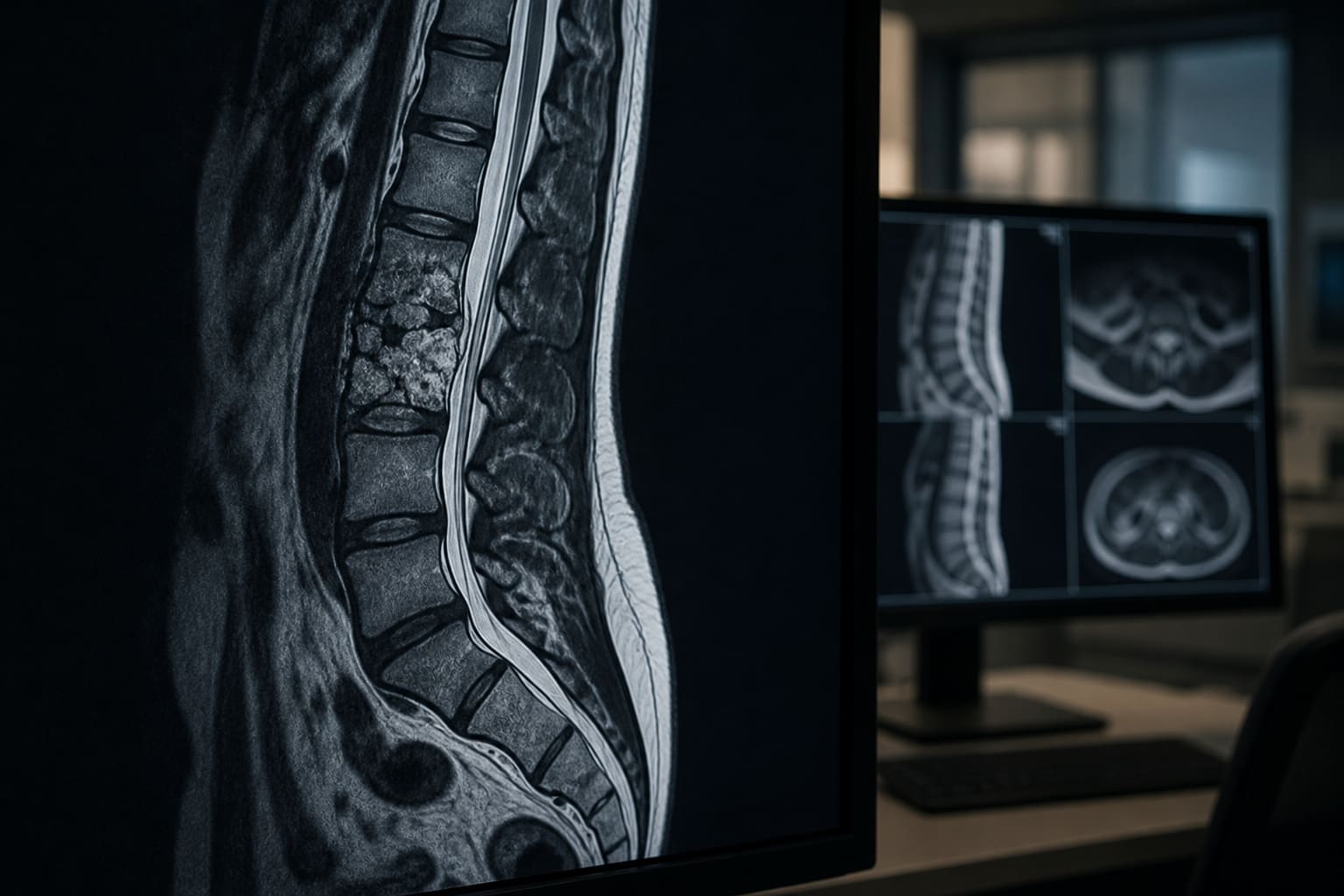
Vertebral infection may cause osteomyelitis, disc destruction, paravertebral or epidural collections, and neurological compromise. Advanced disease may produce vertebral collapse, anterior wedging, and gibbus deformity.
Target Population
Patients aged 16 years or older with confirmed or convincing MRI evidence of spinal TB; the study included 62 patients, predominantly young male migrants.
Care Setting
A specialist spinal TB clinic at a London NHS Trust; the study covered three hospitals and diagnoses from 2011 through 2022.
Key Highlights
Spinal TB may present with nonspecific symptoms; delayed diagnosis can contribute to chronic pain, neurological deficits, and deformity.
MRI is the preferred imaging modality. Whole-spine assessment is important for detecting noncontiguous disease.
Median treatment duration was 12 months. Clinical and radiological improvement was greater at 12 months than at 6 months.
Three patients (5%) underwent surgery, and 12 (19%) experienced long-term complications. No relapses or TB-related deaths occurred.
The retrospective study had no control group and cannot establish the optimal treatment duration.
Guideline-Based Recommendations
Diagnosis
The article identifies MRI as the imaging modality of choice and recommends assessing the whole spine for noncontiguous involvement.
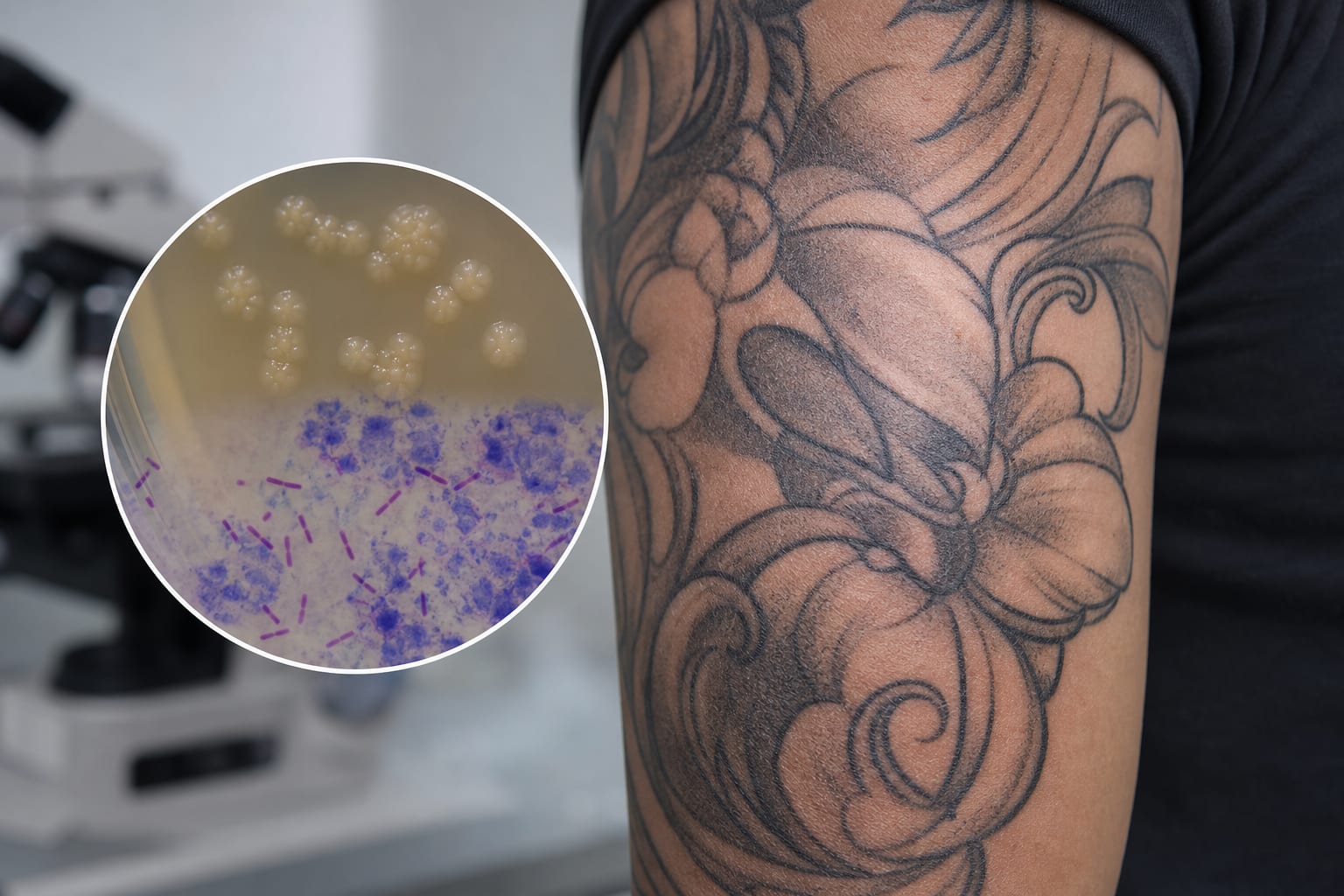
Image-guided biopsy, or occasionally surgical biopsy, can support diagnosis through histological or microbiological analysis.
Management
Treatment is predominantly medical, with antituberculosis therapy and, in some patients, an external brace.
Surgery may be required for spinal cord compression, neurological deficits, or instability.
As summarized in the article, UK guidance recommends 6 months of treatment without additional central nervous system (CNS) involvement; American Thoracic Society guidance favors 9 months, potentially extending to 12 months according to severity; World Health Organization guidance proposes 9 months.
The authors suggest individualizing duration using clinical and radiological response, while acknowledging the need for prospective trials.
Monitoring & Follow-up
The study reviewed clinical and MRI findings at diagnosis, mid-treatment (4–8 months), and approximately 12 months.
Patients were followed for 1 year after treatment completion. Long-term complications were defined as TB-related conditions continuing more than 6 months after completion.
MRI abnormalities may persist despite microbiological cure and should be interpreted alongside clinical findings.
Risks
Potential complications include chronic pain, neurological impairment, spinal deformity, and cord compression.
Paradoxical reactions occurred in 10/62 patients (16%), with enlarging collections or new disease sites during treatment.
Drug-related adverse effects required medication changes in 6/62 patients (10%).
Patient & Prescribing Data
Among 62 patients, 45 (73%) were male, median age was 33 years, and 52 (84%) were migrants. All were HIV-negative.
Initial treatment included rifampicin, isoniazid, ethambutol, and pyrazinamide in 58 patients (94%), followed by dual therapy after 2 months. Median treatment duration was 12 months: 41 patients received 12 months, 7 received 6–11 months, and 14 received longer courses. Corticosteroids were prescribed in 39 patients (63%), and 16 (26%) received an external brace.
Clinical Best Practices
Consider spinal TB in patients with acute or chronic back pain who have lived in countries with high TB incidence, even without neurological deficits.
Combine clinical assessment with serial MRI when evaluating treatment response.
Recognize that persistent MRI abnormalities or increasing bone destruction do not necessarily indicate treatment failure.
Assess worsening findings for paradoxical reactions, drug resistance, and complications.
Individualize treatment decisions; this study does not demonstrate that longer treatment is superior to a 6-month course.
Related Resources & Content
Clinical and radiological outcomes of spinal tuberculosis: a retrospective study — Akhilesh Sharma, Rebekah Merriman, Sinead Foley, et al. — International Journal of Infectious Diseases. 2026;173:109153. doi:10.1016/j.ijid.2026.109153.
Tuberculosis NICE guideline — National Institute for Health and Care Excellence — NICE. 2016.
Official American Thoracic Society/Centers for Disease Control and Prevention/Infectious Diseases Society of America clinical practice guidelines: treatment of drug-susceptible tuberculosis — Nahid P, Dorman SE, Alipanah N, et al. — Clinical Infectious Diseases. 2016;63(7):e147–e195.