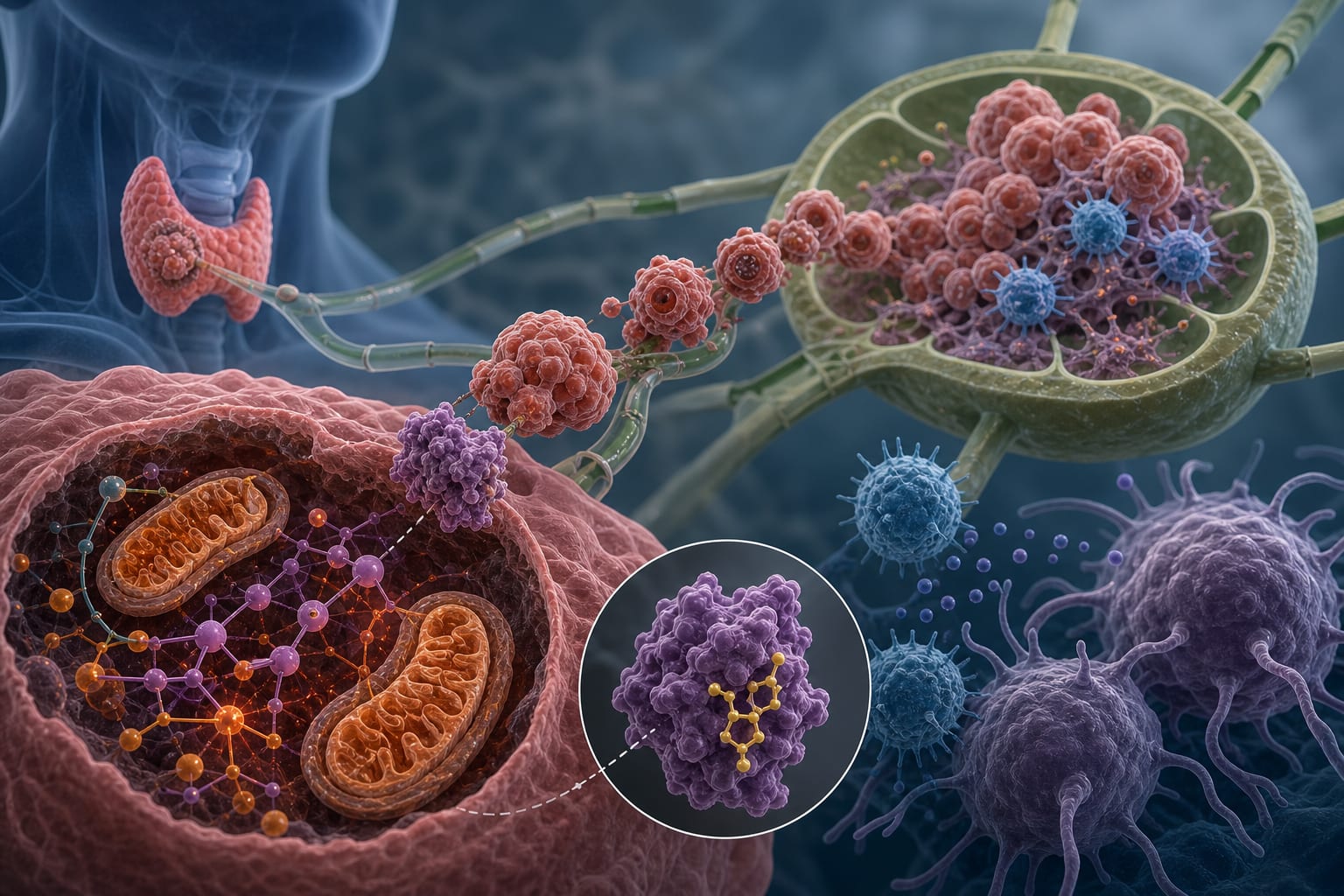
Clinical Scorecard: MGST1 facilitates lymph node metastasis in papillary thyroid carcinoma through alterations in mitochondrial metabolism and immune evasion
At a Glance
Category
Detail
Condition
Key Mechanisms
Mitochondrial metabolic reprogramming and immune evasion (as identified in the study)
Target Population
Care Setting
Key Highlights
MGST1 identified as a core predictor of lymph node metastasis in PTC (source needed)
High-risk 'Mito-high' subtype characterized by metabolic reprogramming and immunosuppression (source needed)
Pharmacological inhibition of MGST1 with Toxoflavin suppresses tumor proliferation and migration (source needed)
MGST1 serves as a biomarker for metastatic risk stratification (source needed)
Integration of multi-omics data enhances understanding of PTC metastasis mechanisms (source needed)
Guideline-Based Recommendations
Diagnosis
Utilize MGST1 as a biomarker for assessing metastatic risk in PTC patients (source needed)
Management
Consider pharmacological inhibition of MGST1 for high-risk PTC patients (source needed)
Monitoring & Follow-up
Monitor immune landscape changes in response to MGST1 inhibition (source needed)
Risks
Lymph node metastasis correlates with increased risk of recurrence and poor outcomes (source needed)
Patient & Prescribing Data
Toxoflavin may reverse immune evasion in MGST1-driven PTC (source needed)
Clinical Best Practices
Integrate multi-omics approaches for comprehensive patient profiling (source needed)
Assess mitochondrial metabolic signatures in PTC for personalized treatment strategies (source needed)
Utilize machine learning frameworks for identifying key predictors of metastasis (source needed)