Disruption of a GalR2–mitochondrial axis in the ventral hippocampus contributes to depression-like phenotypes after prenatal stress - Scorecard - MDSpire
Advertisement
Disruption of a GalR2–mitochondrial axis in the ventral hippocampus contributes to depression-like phenotypes after prenatal stress
Clinical Scorecard: Alteration of the GalR2–mitochondrial pathway in the ventral hippocampus is associated with depression-like behaviors following prenatal stress
At a Glance
Category
Detail
Condition
Depression-like behaviors following prenatal stress
Key Mechanisms
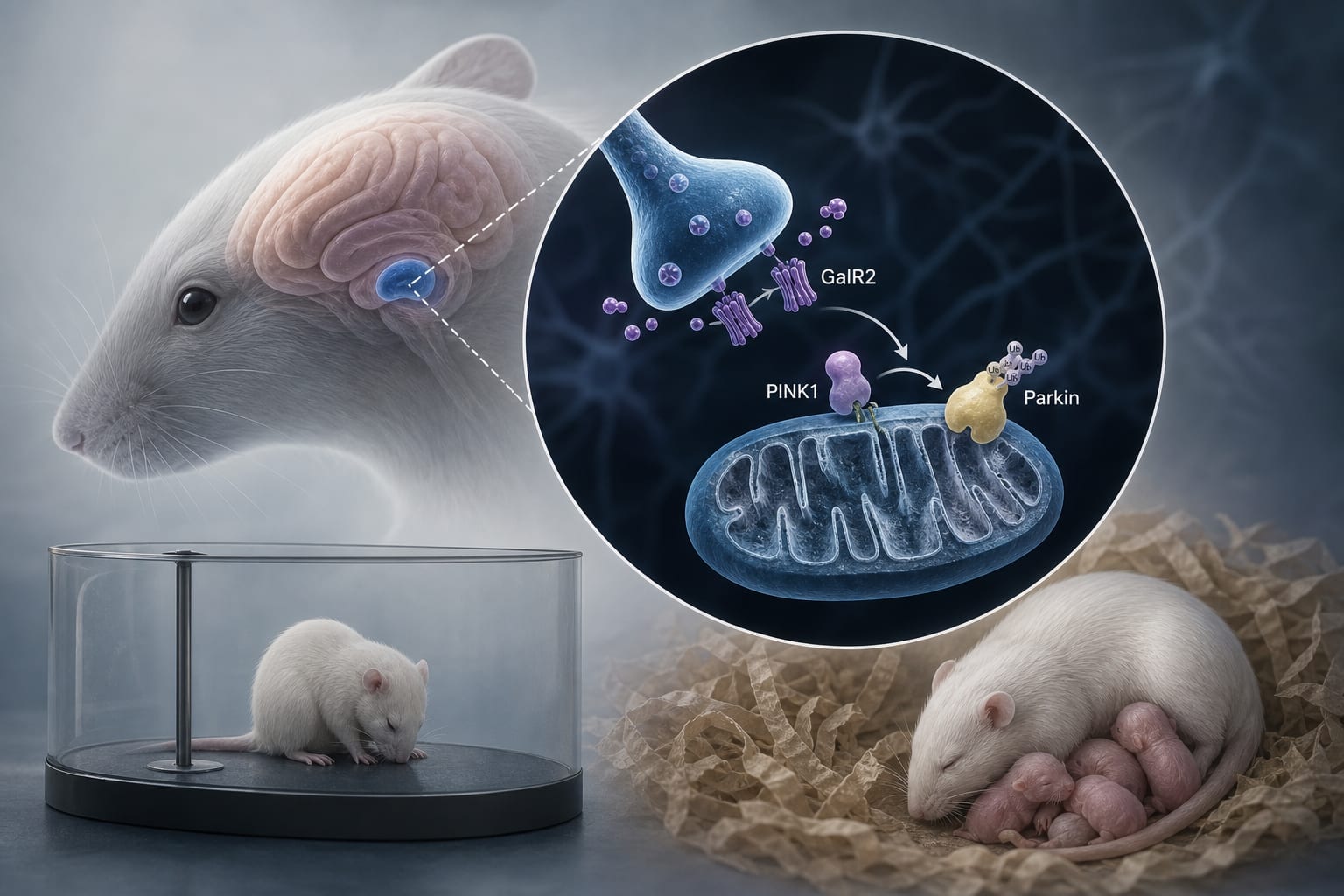
Disruption of GalR2 signaling and mitochondrial quality control via PINK1/Parkin pathway
Target Population
Offspring exposed to prenatal stress
Care Setting
Animal model research
Key Highlights
Prenatal stress induces persistent anhedonia-like behavior and despair in adult offspring.
Mitochondrial dysfunction and downregulation of GalR2 and PINK1/Parkin signaling observed in the ventral hippocampus.
Intranasal administration of GalR2 agonist AR-M1896 partially normalizes behavioral deficits.
Direct infusion of AR-M1896 into the ventral hippocampus elevates ATP and PINK1/Parkin levels.
Glucocorticoid exposure suppresses mitochondrial function, while GalR2 activation enhances it.
Guideline-Based Recommendations
Diagnosis
Assess for depression-like behaviors in offspring following prenatal stress exposure.
Management
Consider pharmacological activation of GalR2 as a potential intervention for mitigating depressive-like behaviors.
Monitoring & Follow-up
Monitor mitochondrial function and GalR2 signaling in the context of prenatal stress.
Risks
Increased vulnerability to depression and stress-related disorders due to prenatal stress.
Patient & Prescribing Data
Offspring of mothers experiencing prenatal stress.
AR-M1896 may serve as a therapeutic agent to restore mitochondrial function and alleviate depressive symptoms.
Clinical Best Practices
Utilize animal models to explore the effects of prenatal stress on mood disorders.
Investigate the role of neuropeptide receptors in stress-related psychopathology.
Evaluate mitochondrial health as a potential target in managing depression.