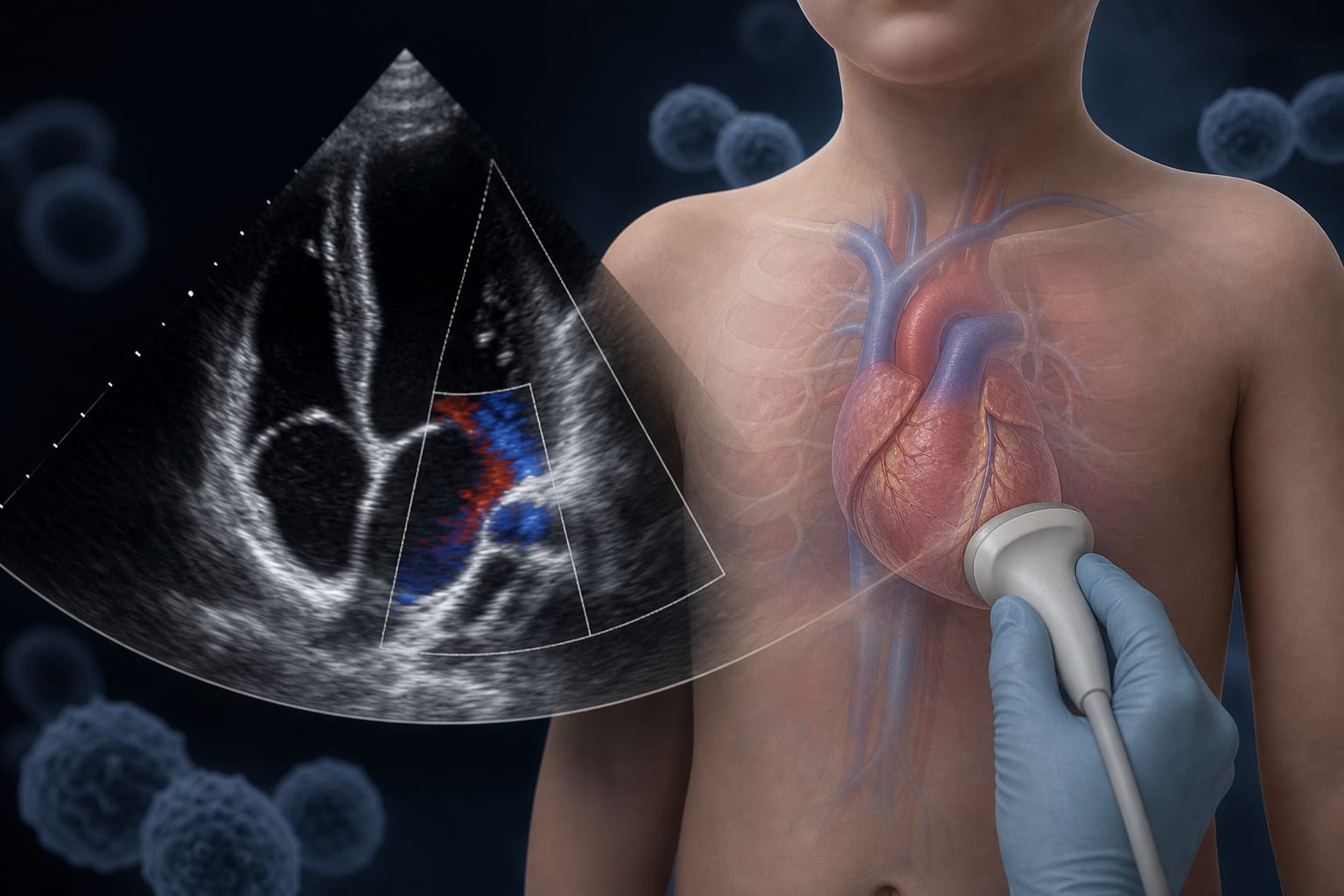
Clinical Scorecard: Transthoracic Echocardiography Utilization in Pediatric Patients with Staphylococcus aureus Bacteraemia: A Retrospective Study Across Multiple Centers
At a Glance
Category
Detail
Condition
Staphylococcus aureus bacteraemia (SAB)
Key Mechanisms
Risk of infective endocarditis (IE) associated with SAB, particularly in children with established risk factors.
Target Population
Children aged ≤18 years with SAB.
Care Setting
Multi-centre pediatric care across North West London hospitals.
Key Highlights
5.6% of children undergoing TTE were diagnosed with infective endocarditis.
All IE cases were in children with established risk factors.
TTE group had longer hospital stays compared to the no-TTE group (median 17 vs 4 days).
Embolic phenomena and persistent bacteraemia were significantly associated with IE.
Guideline-Based Recommendations
Diagnosis
Consider TTE in children with SAB who have established risk factors for IE.
Management
Perform TTE when clinical features suggestive of IE are present.
Monitoring & Follow-up
Monitor for embolic phenomena, persistent bacteraemia, and other clinical signs indicative of IE.
Risks
Increased length of hospital stay and potential for unnecessary investigations in low-risk children.
Patient & Prescribing Data
Children diagnosed with SAB across six hospitals.
Risk-stratified approach to TTE may reduce unnecessary procedures in low-risk patients.
Clinical Best Practices
Utilize a risk-stratified approach for TTE in pediatric SAB cases.
Avoid TTE in children with structurally normal hearts and no established risk factors.
Research highlights expanding diagnostic capabilities but persistent gaps in antiviral therapy and vaccine coverage for pediatric enterovirus infections.