Early Immunological Biomarkers for Personalized Treatment Selection in Severe COVID-19: Post Hoc Machine Learning Analysis of a Randomized Clinical Trial - Scorecard - MDSpire
Advertisement
Early Immunological Biomarkers for Personalized Treatment Selection in Severe COVID-19: Post Hoc Machine Learning Analysis of a Randomized Clinical Trial
Clinical Scorecard: Identification of Early Immunological Biomarkers for Tailored Treatment Strategies in Severe COVID-19: A Post Hoc Machine Learning Evaluation of a Randomized Clinical Trial
At a Glance
Category
Detail
Condition
Severe COVID-19
Key Mechanisms
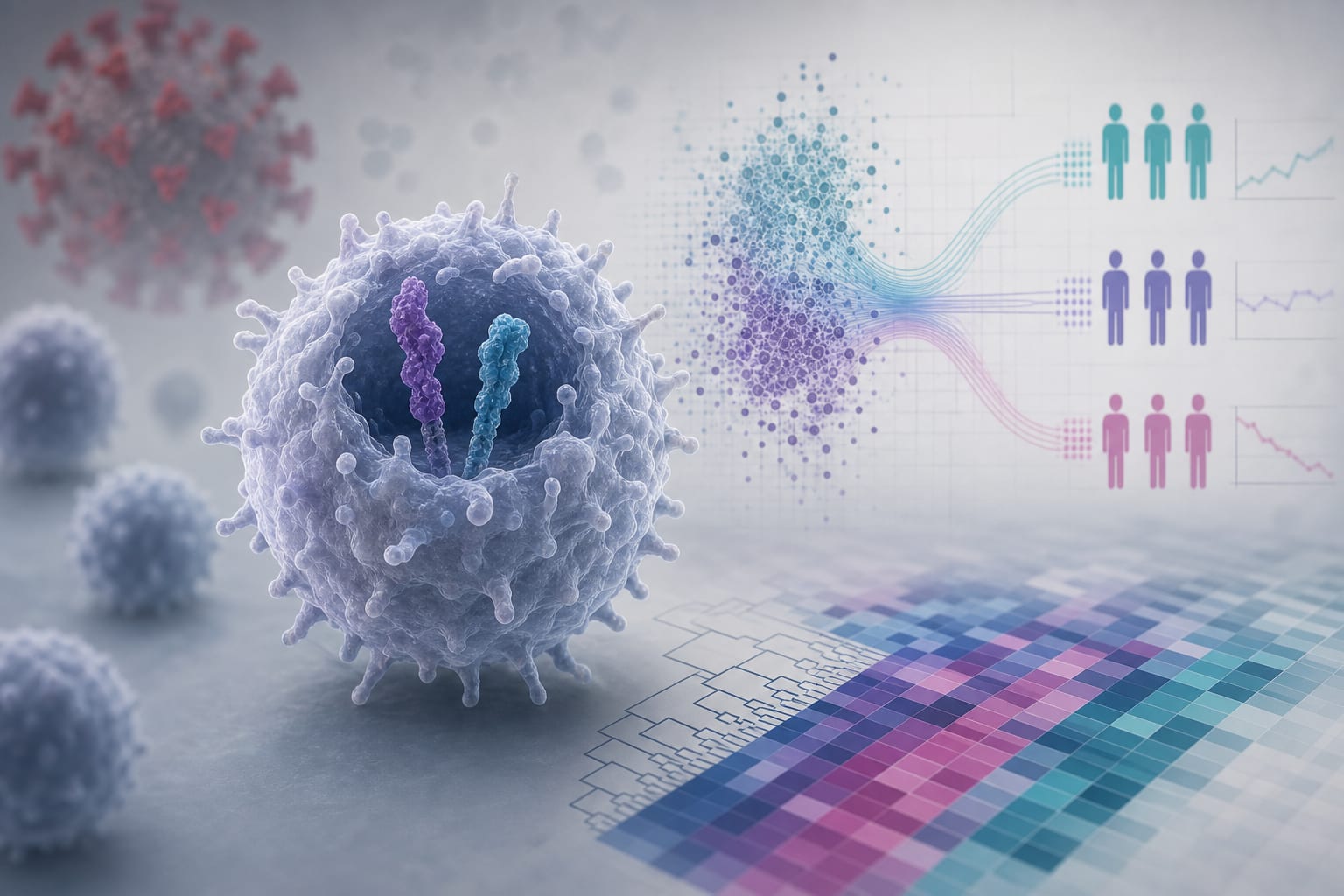
SARS-CoV-2–specific T cell responses and machine learning for biomarker identification
Target Population
Hospitalized adults with severe COVID-19 within the first 6 days of symptom onset
Care Setting
Hospitalized patients
Key Highlights
Adoptive transfer of CoV-2-STs combined with standard-of-care improved recovery rates and survival
Machine learning models can predict treatment outcomes and identify high-risk patients
Biomarkers include CRP, LDH, ferritin, and D-Dimers for risk stratification
Guideline-Based Recommendations
Diagnosis
Assess clinical data and laboratory biomarkers within the first 6 days of symptom onset
Management
Administer standard-of-care including dexamethasone and remdesivir, with consideration for CoV-2-STs in high-risk patients
Monitoring & Follow-up
Monitor serum cytokines and T cell responses using ELISpot assays
Risks
Patients with high cytokine levels may require additional therapies such as tocilizumab
Patient & Prescribing Data
Patients with severe COVID-19 and specific elevated biomarkers
CoV-2-STs can be administered within 24 hours of randomization to improve outcomes
Clinical Best Practices
Utilize machine learning for patient risk stratification and treatment optimization
Ensure comparability in treatment administration between study groups