Deep vein thrombosis as a public health priority: wHO’s agenda for Africa 2030
-
By
-
Emmanuel Ifeanyi Obeagu
-
June 24, 2026
-
Clinical Scorecard: Addressing Deep Vein Thrombosis as a Key Public Health Concern: The WHO's Strategy for Africa 2030
At a Glance
| Category | Detail |
|---|
| Condition | Deep Vein Thrombosis (DVT) |
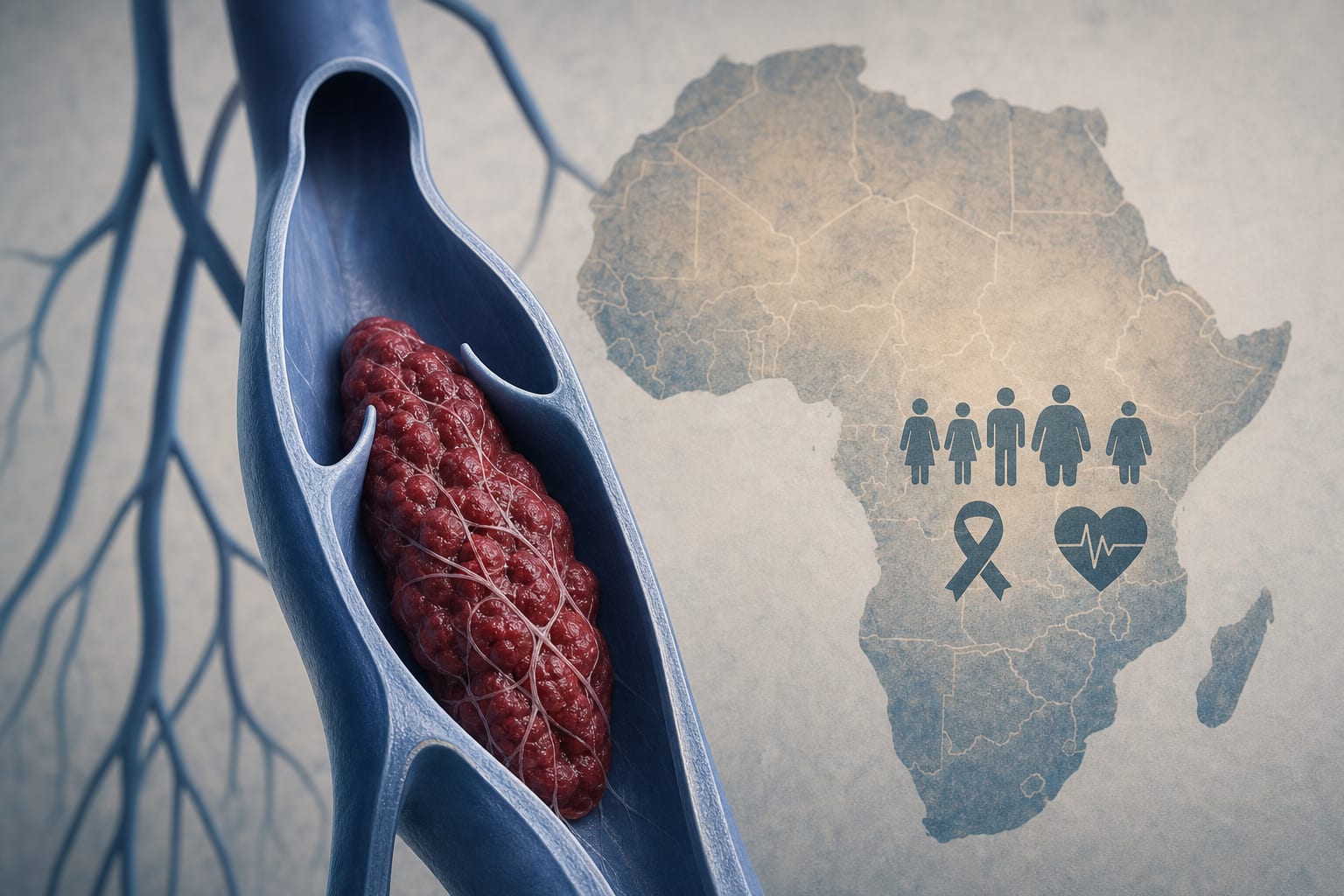
| Key Mechanisms | Formation of blood clots in deep veins, primarily in lower limbs, influenced by venous stasis, endothelial injury, and hypercoagulability. |
| Target Population | African populations, particularly those with risk factors such as obesity, HIV, and sedentary lifestyles. |
| Care Setting | Public health strategy and healthcare systems in Africa. |
Key Highlights
- DVT is a significant public health issue in Africa, often under-recognized.
- Rising risk factors include obesity, HIV infection, and sedentary lifestyles.
- WHO emphasizes DVT control as part of its 2030 health strategy for Africa.
- Challenges include inadequate infrastructure and limited access to anticoagulant therapies.
- DVT contributes to substantial morbidity and mortality, with many cases preventable.
Guideline-Based Recommendations
Diagnosis
- Enhance epidemiological surveillance and diagnostic capacity.
Management
- Implement evidence-based thromboprophylaxis guidelines.
Monitoring & Follow-up
- Increase healthcare provider and community awareness.
Risks
- Address sociocultural barriers and resource constraints.
Patient & Prescribing Data
Individuals at risk for DVT, including surgical patients, trauma patients, and those with infectious diseases.
Access to anticoagulant therapies is limited in many African settings.
Clinical Best Practices
- Prioritize DVT within the healthcare agenda.
- Adopt a multisectoral approach for capacity building and resource mobilization.
- Focus on early risk assessment and timely diagnosis.
Related Resources & Content