Time-restricted eating versus calorie restriction for improving biomarkers of age in adults with overweight or obesity and incipient fatty liver disease: protocol for the ENSATI randomized controlled parallel groups trial. - Scorecard - MDSpire
Advertisement
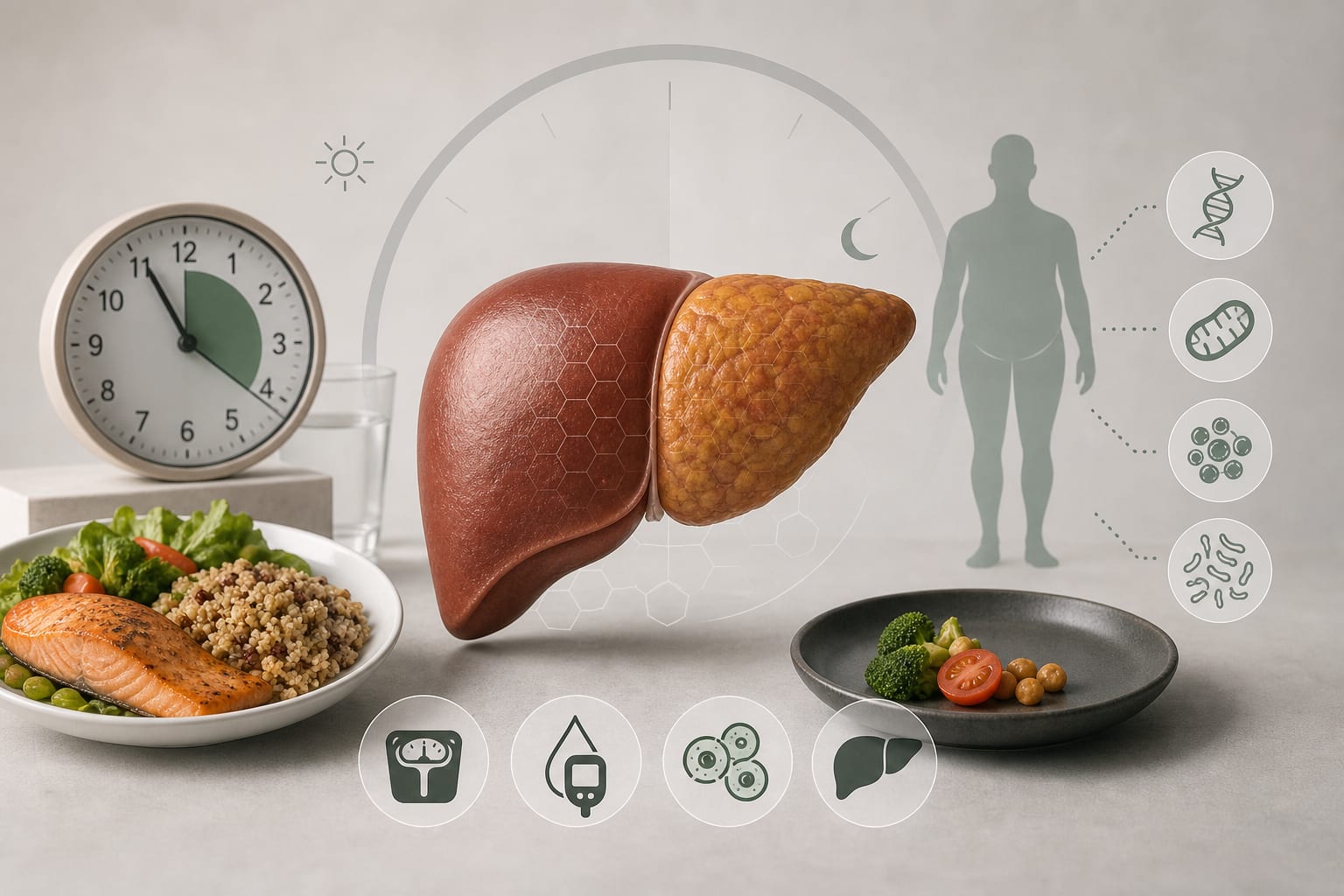
Time-restricted eating versus calorie restriction for improving biomarkers of age in adults with overweight or obesity and incipient fatty liver disease: protocol for the ENSATI randomized controlled parallel groups trial.
Clinical Scorecard: Comparative Study of Time-Restricted Eating and Caloric Restriction on Age-Related Biomarkers in Overweight or Obese Adults with Early Fatty Liver Disease: Protocol for the ENSATI Randomized Controlled Trial
At a Glance
Category
Detail
Condition
Key Mechanisms
Dietary interventions including caloric restriction and time-restricted eating (14-hour fasting/10-hour eating window) over six months
Target Population
Care Setting
Key Highlights
Randomized, open-label, controlled study with three parallel arms: active dietary counseling control, 25% calorie restriction, and time-restricted eating
Primary outcomes include changes in body composition, hepatic fat, and metabolism
Secondary outcomes include glucose regulation, gut microbiome profiles, and molecular biomarkers of aging
Study duration of 12 months with six months of post-intervention monitoring
Rigorous dietary monitoring and comprehensive molecular and physiological profiling
Guideline-Based Recommendations
Diagnosis
Enrollment of participants with overweight/obesity and incipient fatty liver disease
Management
Active dietary counseling control, 25% calorie restriction, and time-restricted eating
Monitoring & Follow-up
Continuous glucose monitoring and validated assessments for psychological, cognitive, sleep, and dietary factors
Risks
Potential confounding factors to be adjusted in analyses
Patient & Prescribing Data
177 adults aged 50–70 years
Interventions include caloric restriction and time-restricted eating over six months
Clinical Best Practices
Intention-to-treat approach for analyses
Mixed-effects models adjusted for potential confounders
by Celada, José A., Rubio-Gordón, Laura , Jiménez-Perez, Yolanda , López-Lora, Lorena , López-González, Andrés , Delbuono, Sara , Huertas, Ana , Martínez-Urbistondo, Diego , Ordovas, Jose M, de la O, Víctor , Daimiel, Lidia
Preoperative use was associated with fewer revisions and no increase in short-term complications among patients with obesity, although benefits appeared concentrated in select subgroups.