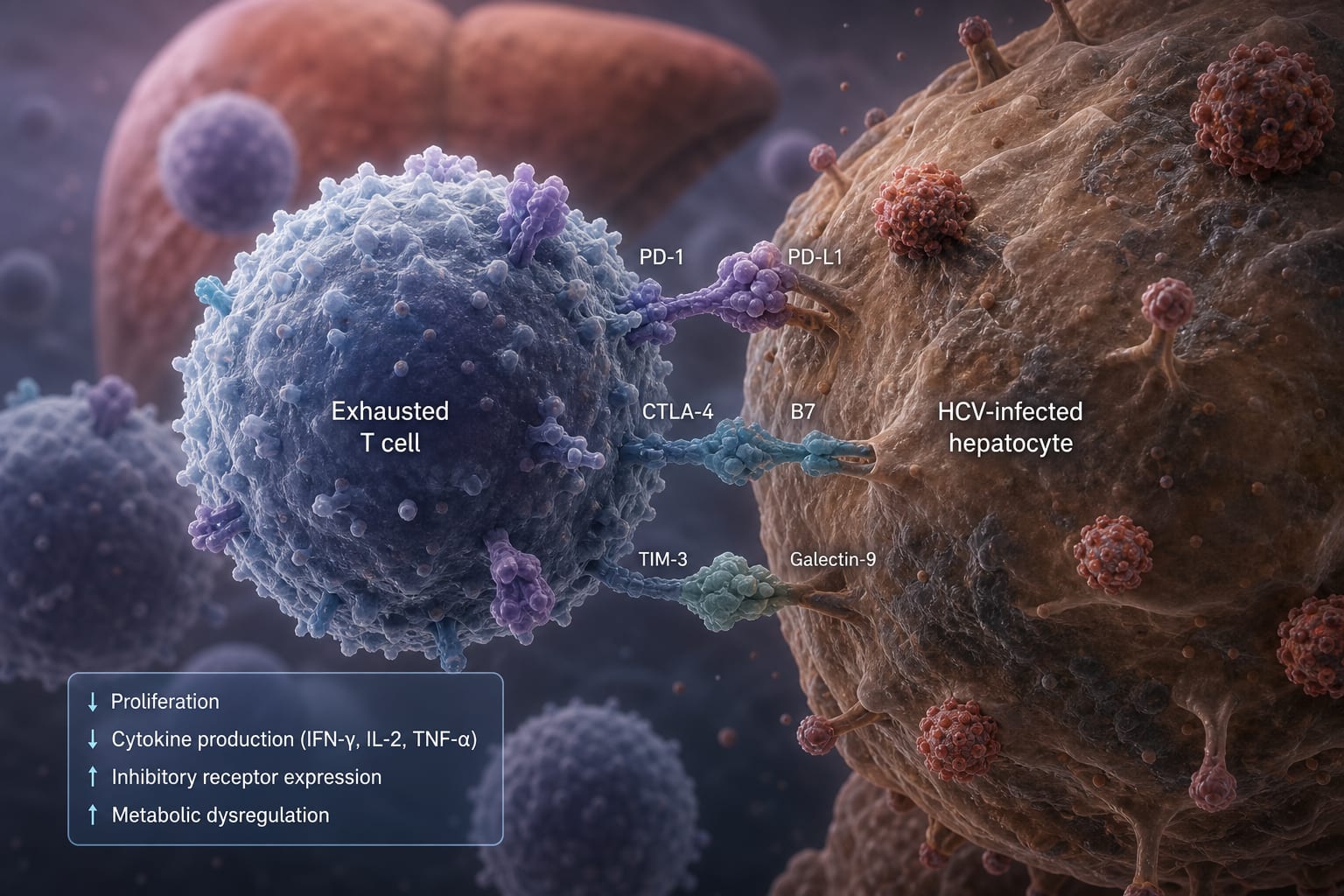
Impairment of T cell function and metabolic alterations in persistent hepatitis C virus infection
-
By
-
Bhavya Sajeet
-
Uma Ganapathi
-
Kiruthika Naganathan
-
Aarthi Parthasarathy
-
Pramod Darvin
-
Varun Sasidharan Nair
-
June 1, 2026
Clinical Scorecard: Impairment of T cell function and metabolic alterations in persistent hepatitis C virus infection
At a Glance
| Category | Detail |
|---|
| Condition | |
| Key Mechanisms | T cell exhaustion, immune evasion, metabolic dysfunction |
| Target Population | |
| Care Setting | |
Key Highlights
- Chronic HCV infection leads to T cell dysfunction characterized by exhaustion and impaired cytokine production.
- Viral evasion mechanisms include rapid sequence variation and disruption of innate antiviral signaling.
- Metabolic alterations such as oxidative stress and impaired bioenergetics contribute to immune dysfunction.
Guideline-Based Recommendations
Diagnosis
- Delayed diagnosis is common due to asymptomatic acute infection.
Management
- Direct-acting antivirals (DAA) have improved treatment outcomes.
Monitoring & Follow-up
- Monitor for long-term complications associated with chronic liver disease.
Risks
- Ongoing transmission through unsafe medical practices and injection drug use.
Patient & Prescribing Data
Patients with chronic hepatitis C infection
DAA therapy can lead to viral eradication but immune dysfunction may persist.
Clinical Best Practices
Related Resources & Content