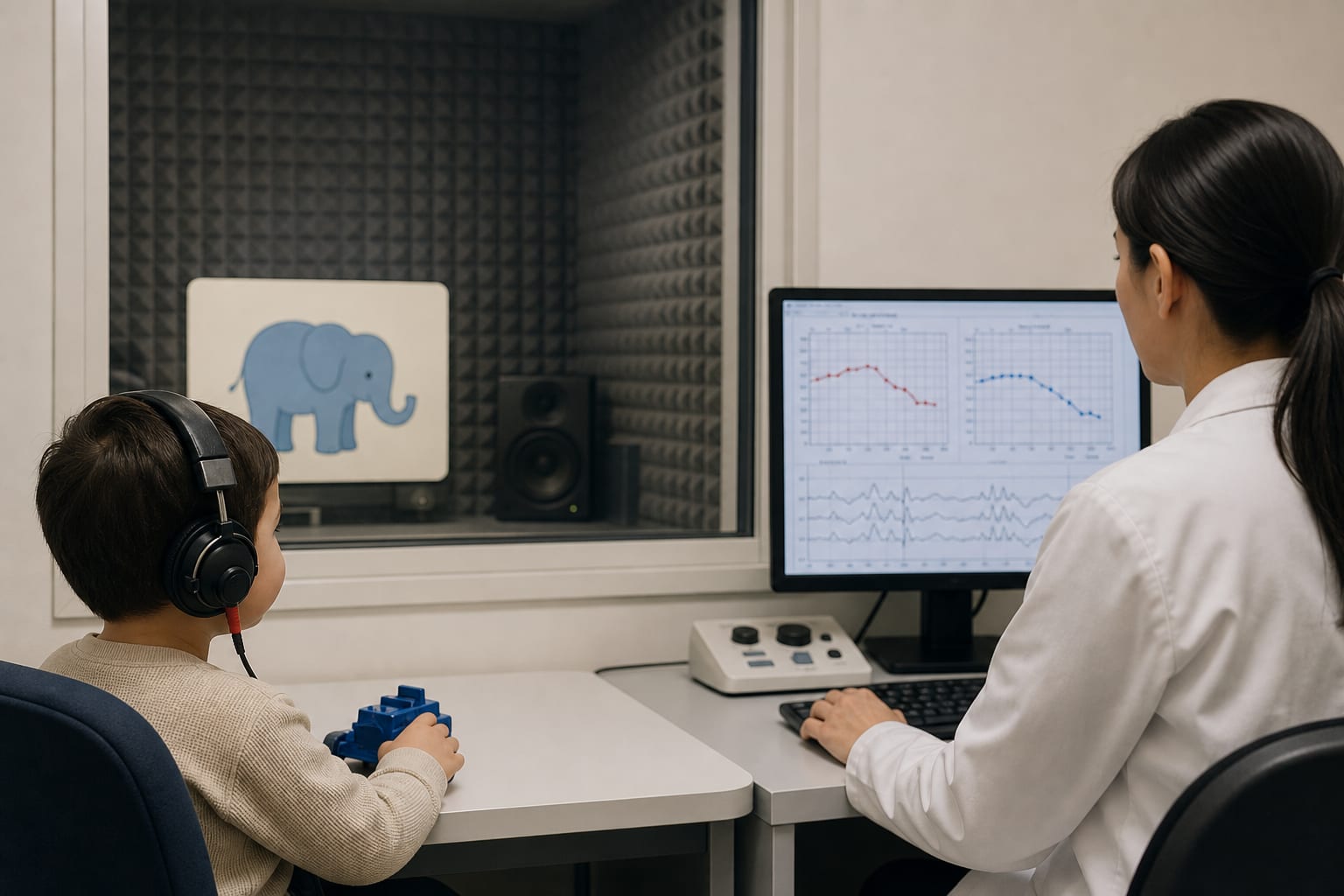
Assessment of a Hearing Evaluation Protocol for Children with Communication Challenges or Autism Spectrum Disorder
-
By
-
Eriel J. Confer
-
Alyssa M. Fosnight
-
Lindsey R. Wheeler
-
Angela Yarnell Bonino
-
June 22, 2026
Clinical Scorecard: Assessment of a Hearing Evaluation Protocol for Children with Communication Challenges or Autism Spectrum Disorder
At a Glance
| Category | Detail |
|---|
| Condition | Hearing evaluation in children with communication challenges or autism spectrum disorder |
| Key Mechanisms | Standardized hearing assessment protocol to determine hearing status and eligibility for further evaluations |
| Target Population | Children aged 18 months to 8 years, with and without autism diagnosis |
| Care Setting | Pediatric audiology |
Key Highlights
- 93.9% of children met speech criteria for further evaluations
- 56.6% of children met discharge criteria from audiology care
- Autistic children required nearly twice as many encounters to meet criteria
- Physiological measures were relied upon more heavily for autistic children
- Many autistic children met criteria by the second encounter
Guideline-Based Recommendations
Diagnosis
- Hearing evaluation is recommended for differential diagnosis in autism spectrum disorder.
Management
- Incorporate tailored supports for sensory sensitivities and communication differences in hearing assessments.
Monitoring & Follow-up
- Assess hearing status quickly to avoid delays in developmental assessments.
Risks
- Consider health contraindications for sedation during auditory brainstem response testing.
Patient & Prescribing Data
Children with communication challenges or autism spectrum disorder
Physiological assessments provide partial information about auditory function.
Clinical Best Practices
- Utilize a combination of behavioral and physiological assessments for comprehensive hearing evaluation.
- Refine protocols to better accommodate the unique needs of autistic children.
Related Resources & Content